BOTTOM LINE
Murphy Shines, Story Stumbles
PLATFORM
NETFLIX
RUNTIME
1Hr 52 Mins
What Is the Film About?
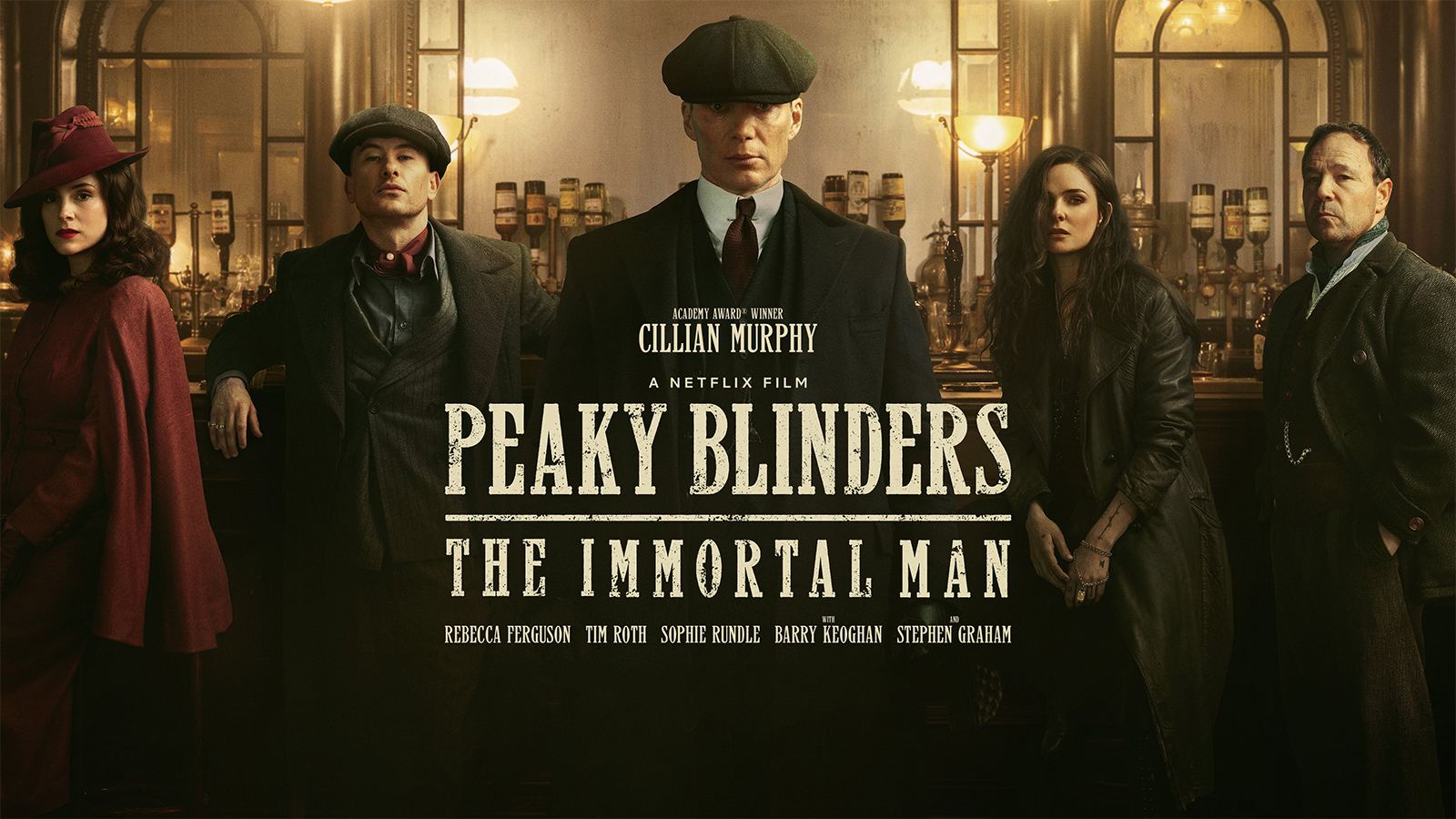
Set in 1940s Birmingham, Peaky Blinders: The Immortal Man delivers a more reclusive Tommy Shelby (played by Cillian Murphy). Punishing himself by deciding to live his remaining life in exile, with the ‘ghosts’ of his past haunting him constantly, he tries to write a book about what has been one hell of a rollercoaster of a life. However, the peace of the countryside is shattered by the Birmingham Blitz and a high-stakes Nazi conspiracy.
A fascist agent (Tim Roth) has launched a plot to destabilise the British economy using counterfeit currency. When Tommy’s estranged son, Duke (Barry Keoghan), now leading the Peaky Blinders, becomes entangled in this dangerous game, Tommy is forced back into the smoke and soot of his hometown. To save his family and his country, the “immortal” gangster must navigate a world of political intrigue and personal reckoning for one final, explosive job.
Performances
Peaky Blinders: The Immortal Man brings back Cillian Murphy as the legendary gangster, Tommy Shelby, for one final ride. And this ride, despite some noticeable bumps along the way, ends on a satisfying note for the Academy Award winner.
The film’s acting department doesn’t let us down. Murphy completely lives his character. However, gone are Tommy’s iconic style and swagger. Instead, we see a weary, exhausted, and lonely version of Tommy, with a heavy, haunted stillness. His portrayal of an ageing Tommy conveys years of accumulated grief and the weight of the Birmingham Blitz.
But even with this much restraint, Murphy leaves the strongest impact among the cast. Even when he’s not speaking, the actor manages to show Tommy’s internal tug-of-war between his violent instincts and a desperate wish for peace. It’s a soulful, weary performance that feels like a natural evolution from the TV series.
Also, we have Rebecca Ferguson, the “new matriarch” for the Peaky Blinders makers this time. She enters the Peaky-verse as Kaulo, a mysterious Romani woman with a deep connection to Tommy’s past. She takes on the impossible task of filling the void left by Aunt Polly. While it’s impossible to fill the gap left by Helen McCrory, she does a wonderful job and stands out from the cast on her own.
Ferguson brings a “witchy”, commanding energy to the screen, acting as a spiritual mirror to Tommy. She doesn’t try to imitate McCrory, but she captures that same blend of authority and mysticism.
Plus, her chemistry with Murphy is electric. Their scenes are filled with unspoken tension and a mutual respect that grounds the film’s more explosive moments. She’s the one who provides the gentle push Tommy needs to step back into the world of men.
Analysis
Helmed by Tom Harper, with a script penned by the veteran Stephen Knight, Peaky Blinders: The Immortal Man is a moody, high-stakes farewell that mostly sticks the landing. It trades the slow-burn tension of the TV show for a more cinematic, “race-against-time” vibe.
The story seamlessly blends the old, familiar “Peaky” vibe with the chaos and struggle that the outside world brings as it changes with time. Set during the 1940 Birmingham Blitz, it literally puts Tommy’s world under fire. The narrative follows a classic “one last job” structure, but with a twist, this time, it’s not just about money, it’s about a father trying to protect his son and, most importantly, his legacy from a rising fascist threat.
The main emotional core of The Immortal Man lies between Tommy and his so-called Gypsy son, Duke (Barry Keoghan). This dynamic doesn’t feel forced. Plus, the chemistry between Murphy and Keoghan feels seamless and natural, making their interactions on screen enjoyable to watch.
However, because we are dealing with a “movie” format rather than a six-episode season, some of the subplots, including the counterfeit currency scheme, feel a bit rushed. Moreover, some side characters don’t get the breathing room they deserve. The narrative marks a major pivot from the TV show’s “rise to power” arc. Instead of expansion, this is about liquidation.
Director Tom Harper brings a massive sense of scale to the film. The pacing is much faster than the series, but the movie does feel a bit slow in the middle. It also uses much less of the iconic slow-motion walking, instead focusing on gritty, claustrophobic settings like the BSA munitions factory and bombed-out ruins.
However, The Immortal Man is far from perfect. One of the biggest issues with the film is how it handles the demises of legacy characters such as Ada and Arthur, Tommy’s beloved siblings. We always knew that none of the Shelby siblings would get happy endings, but the manner in which Ada’s death is handled feels rushed.
And then we have Arthur. We know Paul Anderson has been having a rough time in real life due to his ongoing health issues and legal troubles. However, Arthur’s chapter clearly needed better closure than what we get. The “darker than dark” approach the makers take to write him off will surely not sit well with a large section of the audience. Some may find this treatment realistic, while others may feel it doesn’t align with the show’s spirit.
The title itself, The Immortal Man, serves as a bit of a tease. It’s a narrative choice that frames Tommy not as a man who can’t die, but as one whose legacy (through Duke and the memoirs) becomes the “immortal” part.
The dialogue retains that “Peaky” grit but also carries a noticeable sense of wartime weariness. Stephen Knight delivers sharp, rhythmic one-liners that feel good. While the iconic, confident swagger remains, there is a new layer of vulnerability, the words feel heavier and more reflective.
The movie’s first half works well, largely because of Murphy’s weary and haunting take on the protagonist, along with his seamless on-screen chemistry with Ferguson. However, the second half, while it may have looked good on paper, struggles to condense a season’s worth of political intrigue into a tight cinematic window.
The transition from the atmospheric “Birmingham Blitz” setup to the high-stakes Nazi conspiracy feels a bit abrupt. Some important subplots, such as the counterfeit currency one, are resolved without enough tension.
Narrative shortcuts replace the show’s signature slow-burn development, leaving little breathing room for the supporting cast. The pacing shifts from a moody character study to a frantic race towards the climax, making the final confrontation feel more like a checked box than a fully earned emotional payoff.
Overall, Peaky Blinders: The Immortal Man is a stylish, wartime farewell anchored by Cillian Murphy’s haunting, weary performance. While the film excels in technical craft, boasting a “witchy” turn by Rebecca Ferguson and a gritty 1940s atmosphere, it stumbles in its second half.
The transition to a “race-against-time” Nazi plot feels rushed, leaving legacy characters like Arthur and Ada with unsatisfying closures. It’s a must-watch for fans, even if the cinematic format sacrifices the show’s signature slow-burn.
Performances by Others Actors
Tim Roth, as the villainous John Beckett, is easily one of the film’s highlights. He plays the Nazi agent with a quiet, menacing vibe that feels like a throwback to his best Tarantino roles. Instead of being a shouting, moustache-twirling villain, Roth is terrifying because he’s so calm.
Barry Keoghan takes over the role of Duke Shelby from Conrad Khan, and he brings a frantic, unpredictable energy to the screen. He seems unhinged at times (particularly in the first half), and we mean it in the best possible way. He acts like the “Next Big Man” of Birmingham, who’s not afraid to be ruthless and cocky.
But he still struggles to fill his father’s massive shoes. However, as we move towards the movie’s final act, the intrigue associated with his character development almost vanishes, as his dynamic with Tommy falls into those same clichéd “father-son” tropes.
Sophie Rundle returns as Ada Thorne. Ada has evolved from the family rebel into a sophisticated political powerhouse, and Rundle plays that maturity with a grace that makes her eventual fate in the film hit hard.
Stephen Graham reprises his role as Hayden Stagg. The actor looks quite comfortable, but he remains severely underused here. The rest of the cast looks solid.
Music and Other Departments?
The cinematography, led by George Steel, swaps the polished and smoky look of the original series for something far more raw. To reflect the wartime setting, the camera work is darker and grainier, making the bombed-out streets of Birmingham look both haunting and beautiful.
Instead of the usual heroic wide shots, we get a lot of tight, claustrophobic close-ups that really focus on the ageing lines and “tired eyes” of the cast.
The score, by Antony Genn and Martin Slattery, leans heavily into anachronistic cool, featuring heavy-hitters like Fontaines D.C. and Massive Attack. The music doesn’t just sit in the background, it drives the action.
The editing by Mark Eckersley is snappy and sharp, moving away from the slow-burn pace of the TV series. While it occasionally feels a bit rushed in the second half, the way it cuts between Tommy’s PTSD-fueled visions and the gritty reality of the Birmingham Blitz is seamless. Moreover, the costumes look more rugged and heavy to suit the troubling times in the 1940s.
Highlights?
Cillian Murphy’s Performance
Rebecca Ferguson stands out
Tim Roth feels like a worthy villain
Amazing soundtrack and score
Good costume design and production
Drawbacks?
A rushed second half
Graham remains underused
Mishandling legacy characters
Weakening of Duke’s character arc (second half)
Did I Enjoy It?
Liked the moody, “end of an era” atmosphere and Cillian Murphy’s haunting, stripped-back performance, though the rushed second half leaves us wanting a bit more of that classic slow-burn tension.
Will You Recommend It?
Definitely recommend it to fans for the closure and the incredible technical craft, but if you’re new to the Shelbys, the heavy reliance on nostalgia and the fast-paced plot might feel a bit overwhelming.
Peaky Blinders: The Immortal Man Movie Reviewed by M9 News
Festival releases are usually a dream for film producers for better openings and a chance…
Yashasvi Jaiswal has started working on wicketkeeping ahead of the 2026-27 Ranji Trophy season, but…
