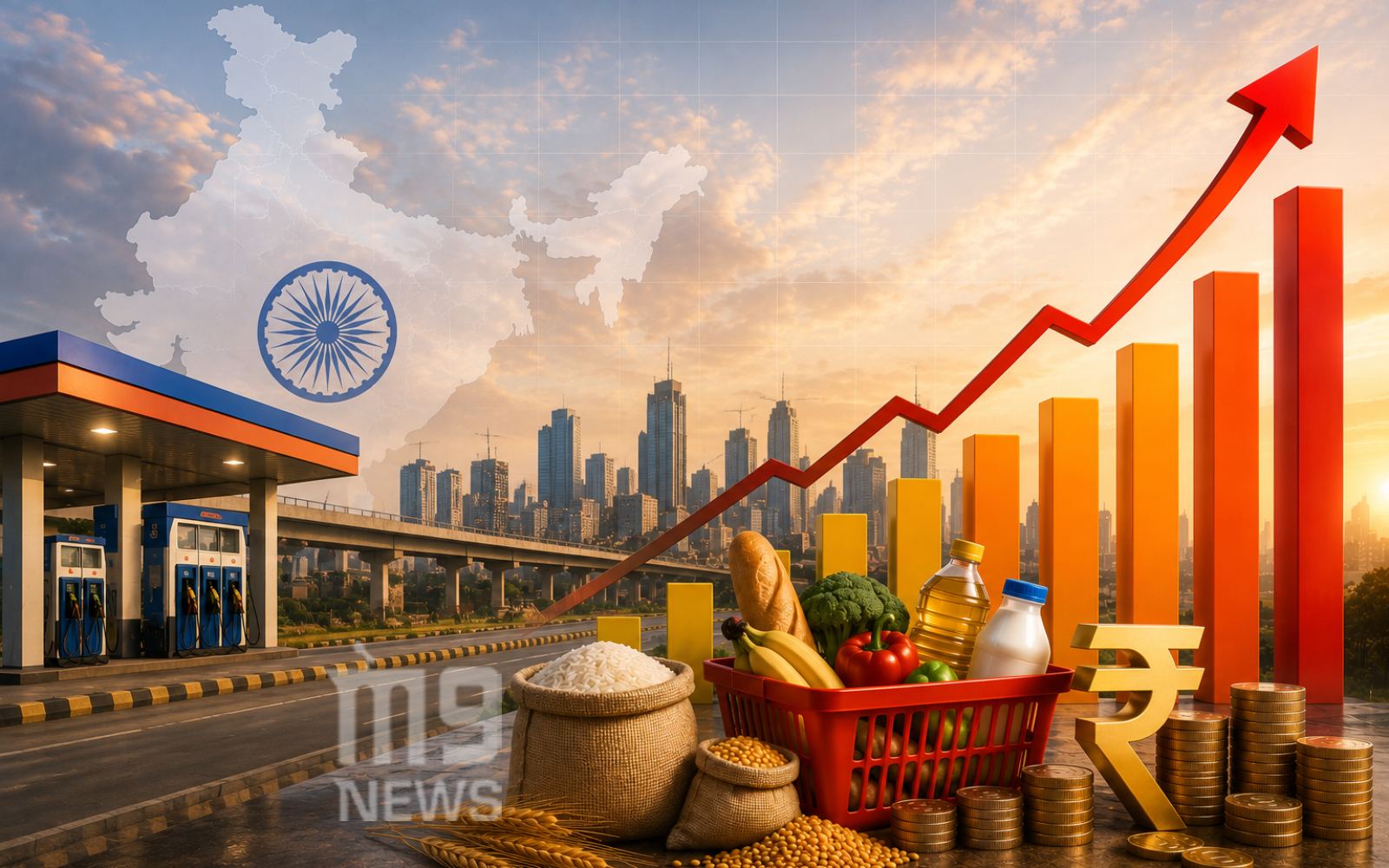
Rising petrol and diesel prices may only be the beginning of a much larger inflation problem.
Economists are now warning that the impact could slowly spread beyond fuel stations into food prices, transport costs, agriculture, manufacturing and everyday household spending.
That warning became more serious after Oxford Economics’ Head of Middle East Research, Alexander Hermann Prasad, said inflation pressures in India could rise beyond RBI expectations, especially toward the end of the year.
The concern is not just about crude oil becoming expensive globally. The bigger fear is the chain reaction that usually follows fuel price hikes.
Once petrol and diesel prices rise, transport becomes costlier, supply chains slow down, factories spend more on operations and logistics expenses increase across sectors. Over time, those additional costs quietly reach consumers.
That is why economists say even moderate fuel hikes can gradually turn into broader inflation pressure over the next few months.
For Andhra Pradesh and Telangana, the effects may become visible relatively faster because both states heavily depend on road transportation and agriculture-linked logistics.
Recent fuel price hikes in both states are already expected to affect transport services, auto fares, delivery costs, movement of construction materials and agricultural transportation.
Diesel prices, in particular, carry much larger economic impact than many people initially realize because they influence everything from farming activity to wholesale market movement.
Food inflation is now becoming the next major concern.
Economists warn that if fuel prices remain elevated, transportation of vegetables, milk, rice and daily essentials becomes more expensive. Fertilizer supply and storage costs may also rise, eventually increasing pressure on wholesale and retail food prices.
Unlike fuel hikes, food inflation directly affects almost every household emotionally and financially.
The timing is also sensitive because India is entering a crucial agricultural season linked to monsoon sowing and fertilizer demand.
States like Andhra Pradesh and Telangana, with large paddy cultivation belts and strong dependence on agricultural transport, may feel the pressure more sharply if input costs continue rising.
Another concern is the Reserve Bank of India’s position.
Until recently, RBI believed inflation would remain manageable. But newer estimates now suggest inflation could rise much higher than expected. Oxford Economics estimates inflation could move close to 5.9% in FY 2026-27, higher than RBI’s own projections.
If inflation rises further while the rupee remains weak, RBI may eventually face pressure to increase interest rates again.
And that could impact home loans, EMIs, business borrowing and overall household spending.
One major reason fuel prices did not rise sharply earlier was because governments and oil companies absorbed part of the pressure for several weeks. But analysts believe that may become difficult to sustain if global crude prices remain unstable.
That is why economists increasingly feel this may not be just another temporary fuel price increase.
The real concern is whether fuel inflation slowly turns into wider household financial stress over the coming months.
As we all know, the third week in the Bigg Boss house is about Temptation…
The trend of South films being made in Bollywood is not new. It is something…
