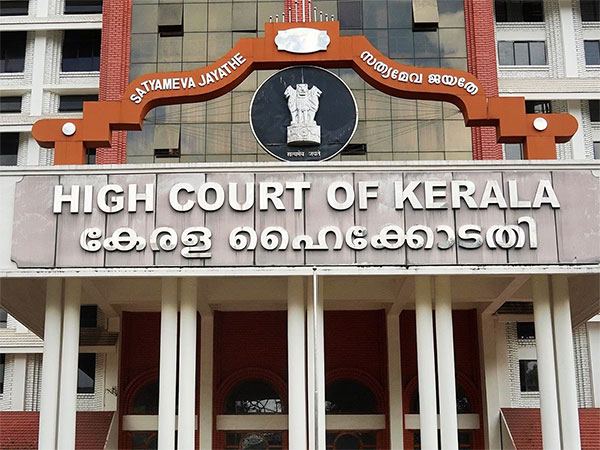
The case involved a 33-year-old woman rights activist who faced charges under the Protection of Children from Sexual Offenses (POCSO) Act for allowing her two minor children to paint on her semi-nude upper body. The woman had posted a video on social media platforms showing this act, which caused significant outrage and led to the registration of a case against her by the police in Kochi.
However, the high court quashed the case against her, emphasizing that society’s morality and individual sentiments cannot be the basis for criminal charges. The judge stated that an action is permissible as long as it doesn’t violate any laws. Morality and criminality are not necessarily the same, as what might be considered morally wrong does not always equate to being legally wrong.
The court acknowledged the existence of a double standard, where the male body is often displayed without shirts or with muscular physiques, while the female body is sexualized in a different manner.
Overall, the court’s ruling emphasized the need to distinguish between nudity as a sexual act and nudity as a form of self-expression or a critique of societal norms. It highlighted the subjective nature of social morality and underlined that actions should be evaluated based on whether they violate the law rather than being judged solely on moral grounds.
The November 4 midterm election results have sparked renewed debate. The question is immigration enforcement…
After Rohith's eviction, the Bigg Boss game has been mostly one-sided. With Trigun getting a…

