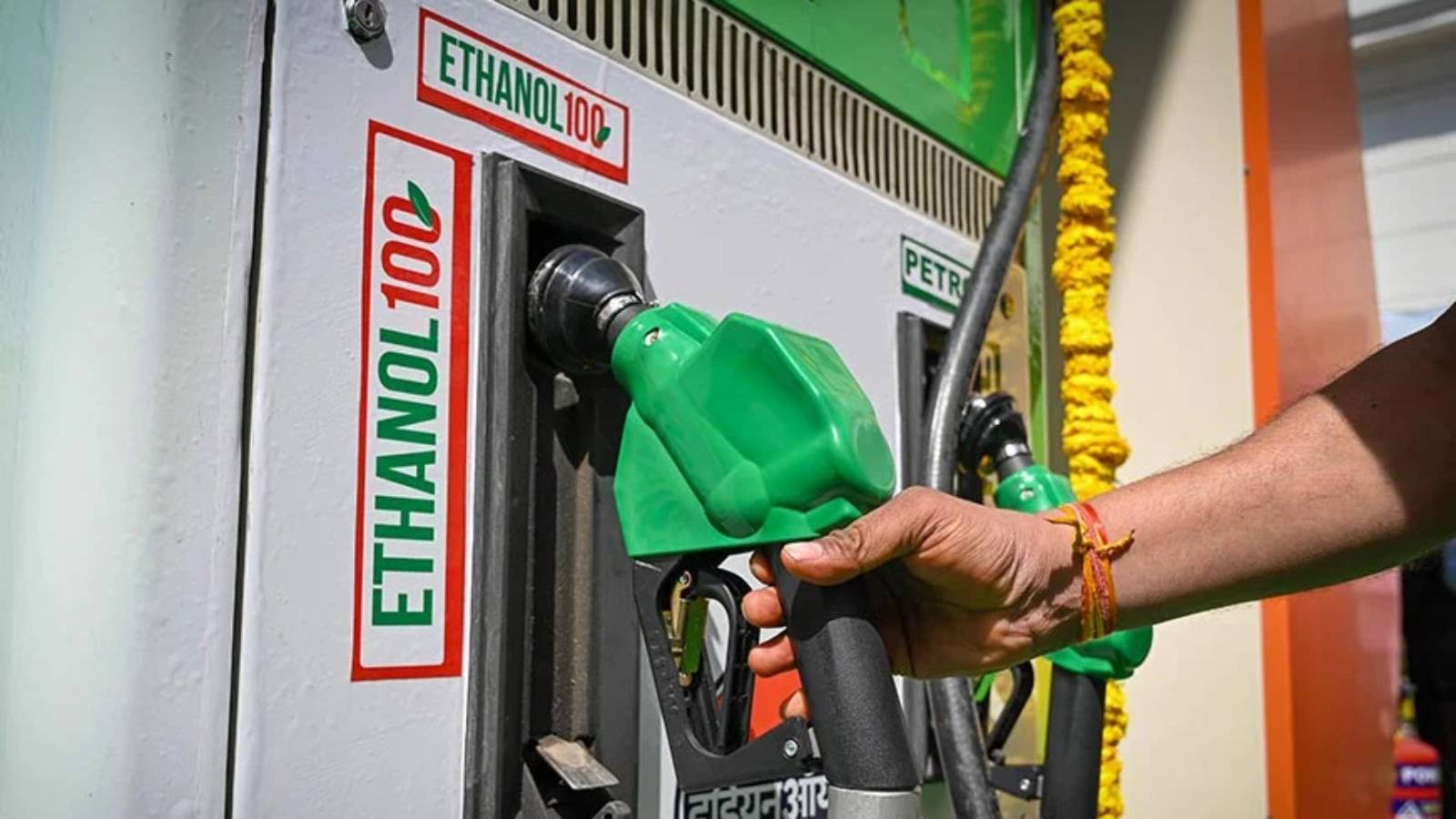
The Indian government has advanced its green mobility timeline by notifying quality specifications through the Bureau of Indian Standards (BIS) for petrol variants with higher bio-fuel content, establishing regulatory frameworks for E22, E25, E27, and up to 30% ethanol blending (E30).
While this policy shields against global crude oil volatility and rising shipping costs due to geopolitical supply disruptions in West Asia, it introduces financial and operational concerns for regular car and bike owners. Because ethanol carries roughly 33% less energy density than pure petrol, engines must burn a higher volume of fuel to generate equivalent power, leading to a noticeable drop in mileage that expands monthly fuel expenses.
Furthermore, ethanol is corrosive to specific metals like aluminum, rubber gaskets, seals, and plastic fuel lines utilized in older engine architectures. This poses a risk of long-term component degradation, fuel pump failures, and phase separation, a chemical process where moisture absorbed from humid air causes the water-ethanol mix to sink to the bottom of the fuel tank, triggering internal rust or starting trouble.
For middle-class consumers who purchased BS4 or early BS6 vehicles on long-term, 5-to-7-year high-EMI bank loans, this rapid fuel transition penalizes them with higher running costs and unexpected out-of-pocket maintenance bills. It also threatens to heavily depreciate vehicle resale values in a used-car market that is fast becoming wary of older, non-compliant machinery.
When analyzing international practices, global leaders like Brazil and the United States have scaled high-blend ecosystems smoothly due to advanced vehicle engineering. Brazil mandates a 27% to 30% ethanol blend across all regular gasoline stations, but their vehicles operate efficiently because virtually their entire automotive market consists of factory-built Flex-Fuel Vehicles (FFVs) engineered with corrosion-resistant fuel systems and adaptive Engine Control Units (ECUs) that dynamically optimize spark timing based on the exact fuel mix.
Similarly, the United States relies on a baseline E10 and E15 standard while offering deeply discounted E85 fuel for certified flex-fuel trucks, ensuring that consumers are never forced to run corrosive blends in un-optimized engines. The high efficiency of vehicles in these nations stems from the fact that their engines are modified with specialized oxygen sensors and hardened materials from the assembly line, allowing them to exploit ethanol’s high octane rating (around 108) to boost combustion efficiency and mitigate the inherent volumetric mileage drop.
To address the anxieties of legacy vehicle owners, the Indian government has initiated structured regulatory evaluations while defending the resilience of the current transition. The Ministry of Petroleum and Natural Gas highlighted that extensive testing by the Automotive Research Association of India (ARAI), Indian Oil Corporation, and the Society of Indian Automobile Manufacturers (SIAM) on E20 fuel parameters showed no catastrophic engine failures or abnormal wear-and-tear on legacy vehicles, confirming that everyday drivability remains safe.
As part of the long-term solution, authorities clarify that the physical impact is largely limited to standard rubber parts and gaskets, which can be replaced with ethanol-resistant materials during routine authorized workshop services. For the upcoming transition toward E25 and E30, the government has tasked ARAI to conduct real-world durability testing over 70,000 km on the existing fleet, while simultaneously reviewing standard retrofitting kits to safely upgrade older fuel lines and exploring proposals for a dual-fuel pricing strategy to protect consumers at the pump.
Sometimes, waiting for a bigger deal can turn into an expensive gamble. Yash’s Toxic appears…
Whenever India finds itself at the centre of an international controversy, Rahul Gandhi appears ready…
