Dilwali Diwali Netflix Movie Review
BOTTOM LINE
Template Festive Fare, Just Bearable
PLATFORM
Netflix
RUNTIME
1Hour 1 Min
What Is the Show About?
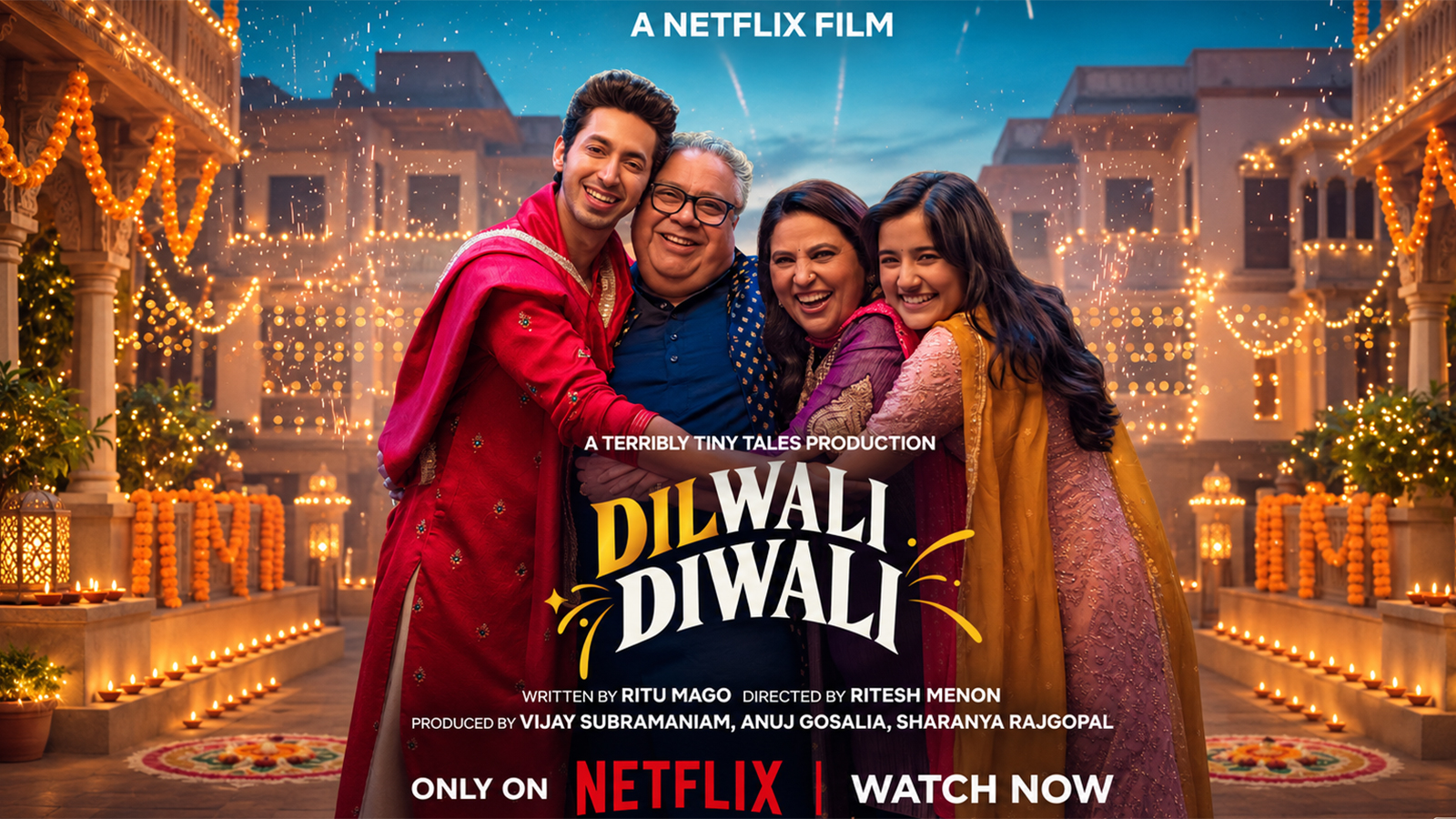
Ansh returns from abroad to visit his parents, Sudhir and Sukhmani, for Diwali, at the luxury high-rise apartment he bought them. When Ansh plans a festive bash, he realises a truth about their old home, and clashes erupt within the family. What is bothering Ansh, and who will have the last laugh?
Performances
It is the experienced hands who crystallise the essence of the film through their performances. Manoj Pahwa, as the father, Sudhir Sikka, is immensely transparent in his emotions, using his body language and expressions to communicate what the dialogues do not. Neelu Kohli’s single scene with her female neighbour is enough to prove what she is capable of. Mihir Ahuja is not at his best, and part of that is down to the writing, which gives Ansh worries to state rather than feelings to play. Aurra Bhatnagar Badoni is hardly around, and the film misses a chance to let her push back against being the protected younger sister.
Analysis
It is interesting how Netflix has channelled its energy towards churning out a slew of YouTube-style, grounded OTT originals featuring small-time actors lately. In fact, Dilwali Diwali is the second of the web projects tailored for the festive season, following the reasonably impressive Meethe Mein Kya Hai a week ago.
Ahsas Channa’s Greater Kalesh did something similar last year. Gradually, this is shaping up to be the equivalent of Christmas specials across digital platforms. A lot of these titles come your way, leave you with a warm, fuzzy feeling over the weekend, but it is highly unlikely that you would make time to revisit them.
Be it Greater Kalesh, Meethe Mein Kya Hai, or Dilwali Diwali, the plot points remain relatively similar. An estranged son or daughter lands at home for the festival, and it is a bittersweet feeling. Despite the reunion, a few issues remain unresolved. By the end, priorities are sorted, and everything falls into place.
As much as these titles serve their purpose for their target audience at this time of the year, it is slightly unfortunate that everything has to boil down to a familiar formula. The familiarity is not the problem, but rather the fact that these titles are treated like products from a content factory, with the expectation that viewers will fall for them time and again.
Dilwali Diwali is about the Sikkas struggling to feel at ease in a new apartment. The son, Ansh, who bought it, lives in Norway and is returning home after three years. Upon his arrival, there are plans to host a grand Diwali bash with family, friends, and neighbours. However, something else is brewing on Ansh’s mind.
The father longs for the simplicity and warmth of his ancestral home, finding it hard to make new friends. The mother has finally found her way into a gang of friends. The daughter no longer wants to be protected and wants the freedom to fly. Ansh feels the pinch of paying his EMIs, caught between valuing his father’s sentiments and dealing with mounting bills.
The resolution is quite predictable. There is an outburst of emotions as the topic of selling their old home and adapting to the new apartment comes up. The confrontation gives everyone an opportunity to understand each other better. At last, all is well, and the family finds a middle ground where everyone’s concerns are acknowledged. The problem is that the argument which should have been the film’s emotional peak passes too quickly. No one is allowed to sit with the hurt, so the patch-up feels arranged rather than earned.
One of the best parts of the film is Sukhmani’s heartfelt conversation with her neighbour, and how special she feels when she hears her full name after years. It encompasses everything she has been through in a nutshell: being a mum, a wife, and eventually losing touch with her own identity. It is the one scene where the film stops explaining its theme and simply lets you feel it.
The drama around the ancestral home is wrapped up too easily. The sister hardly has much of a say in the story, which is a pity because her desire for independence is the most modern thread in the film and it is left hanging. The warmth one expects to feel in such a story is missing. The performances are measured, and the visuals match the typical cosy Netflix aesthetic. While the basic idea behind the conflicts works, they are not fleshed out properly.
Dilwali Diwali is a bearable template film made for festive viewing, and it is just that, neither unbearable nor great.
Music and Other Departments?
Garvit and Priyansh’s Ghar Lagda is the film’s catchiest track, while Advait Nemlekar does the needful with the background score. The cinematography is passable, and the colour palette and grading are designed to please the Netflix gods, though they lack any distinguishing element. The story had scope to be written better and deserved a stronger climax, at the very least.
Highlights?
Performances
Universal theme of nostalgia and the feel-good factor
Drawbacks?
Too generic to impress
Lacks genuine emotion and has a convenient climax
Did I Enjoy It?
Only in parts.
Will You Recommend It?
If you want something familiar, safe, and fluffy for festive viewing with family, it may work. Do not expect anything out of the box.
Dilwali Diwali Netflix Movie Reviewed by M9 News
South India is witnessing a wave of film stars entering politics and tasting tremendous success.…
Andhra Pradesh faced back-to-back cyclones, Arnab and Murasu, leaving several parts of the state struggling…
