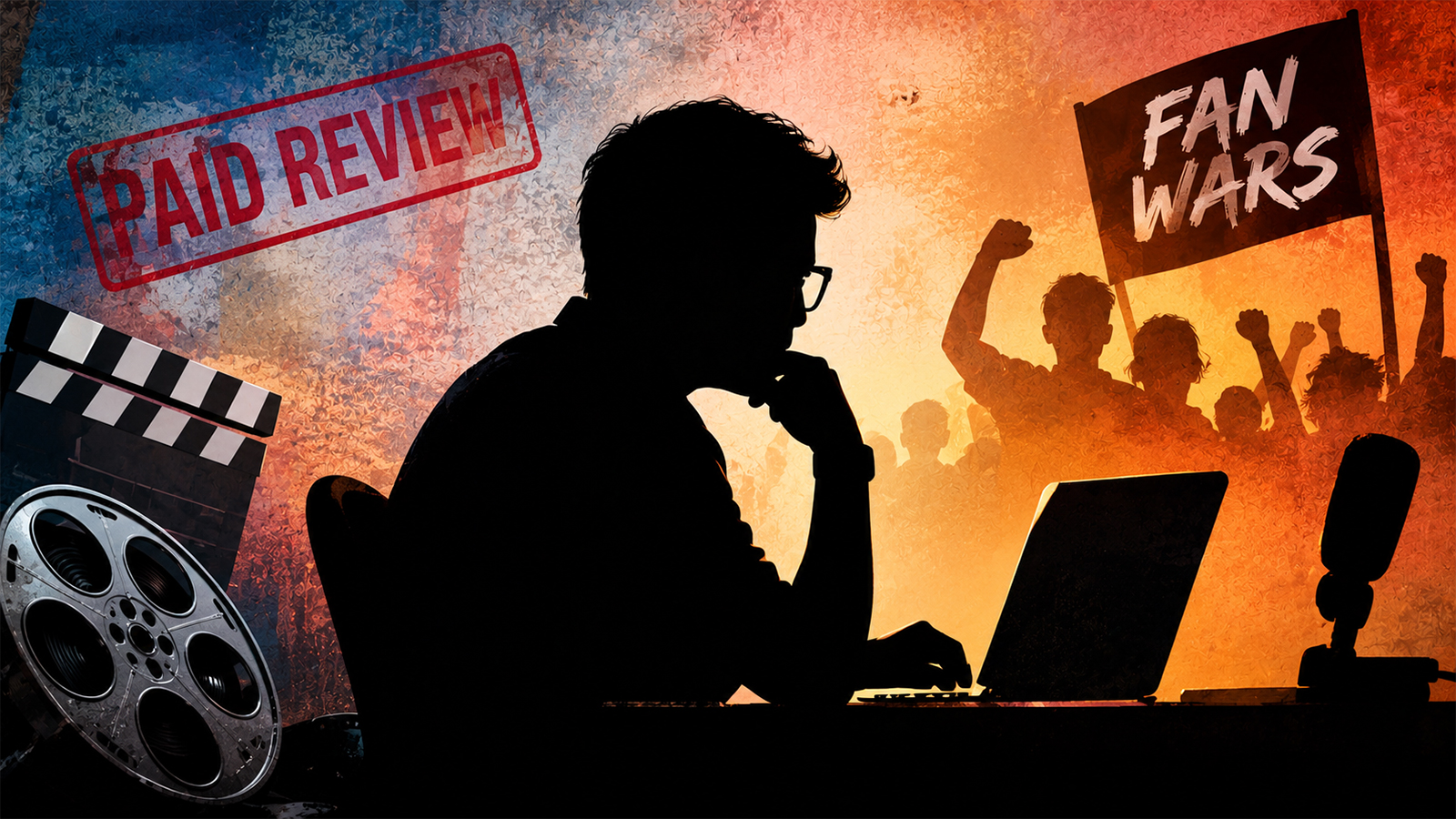
Paid reviews and fan wars affect critics
Film criticism in India is going through a disturbing phase. What was once a space for discussing cinema, storytelling and filmmaking has increasingly become a battle involving paid promotions, industry pressure, online abuse and political narratives.
One of the biggest problems is that critics are no longer simply reviewing films. They are increasingly expected to act like investigative journalists. Before discussing performances, screenplay or direction, they have to examine whether a film is pushing propaganda, rewriting history or using cinema to promote a particular political narrative. Cinema can no longer be viewed in isolation from the environment in which it is being made.
The credibility of film criticism has also taken a massive hit because of paid reviews and influencer-driven promotions. Special screenings, coordinated positive reactions, and brand deals have blurred the line between genuine opinions and marketing exercises. Audiences are increasingly finding it difficult to identify who is actually reviewing a film and who is simply promoting it.
The profession itself is becoming difficult to sustain. Full-time film criticism offers limited financial security, forcing many critics to take up multiple assignments and brand collaborations. Reviewing films, which should be their primary responsibility, often becomes just another part of their workload.
Then comes the hostility. Critics who express negative opinions about popular films are frequently targeted by fan groups and online mobs. Threats, personal attacks and accusations of being paid critics have become common.
For example, if a reviewer praises a film like Dhurandhar, he will be tagged as andhbhakt and if he rips it apart as a propaganda, he will be termed anti-national.
The discussion has also become painfully binary. You are either labelled a sellout or dismissed as a samosa critic. There is hardly any space left for a nuanced discussion about filmmaking.
The film industry deserves completely unbiased criticism, as every critic brings personal experiences and perspectives to a film. The real requirement should be honesty and transparency, not pretending to be completely objective.
Despite this depressing situation, professional film criticism still has an important purpose. It serves as an archive of cinema and its cultural environment. Years later, future generations should be able to understand what kind of films were being made, what narratives were being promoted and how audiences and critics responded to them.
That may be the most important point. Box-office numbers can record how much money a film made, but they cannot explain whether it was good cinema, propaganda or simply a product of aggressive marketing.
Indian cinema does not need critics who praise every big release. It needs critics who can question, analyze and disagree without fearing consequences. When honest criticism becomes financially unsustainable and expressing a negative opinion becomes dangerous, the entire film culture loses something valuable.
The real tragedy is that film criticism is slowly losing its independence at a time when Indian cinema needs honest voices more than ever.
Jr NTR's upcoming collaboration with Anil Ravipudi has already become a talking point among fans.…
అధికార పార్టీలు తమ రాజకీయ ప్రత్యర్ధులపై నమోదు చేసే కొన్ని పెద్ద కేసులు దివ్యాస్త్రాల వంటివే. వాటిని అవసరమైనప్పుడు వారిపై…
