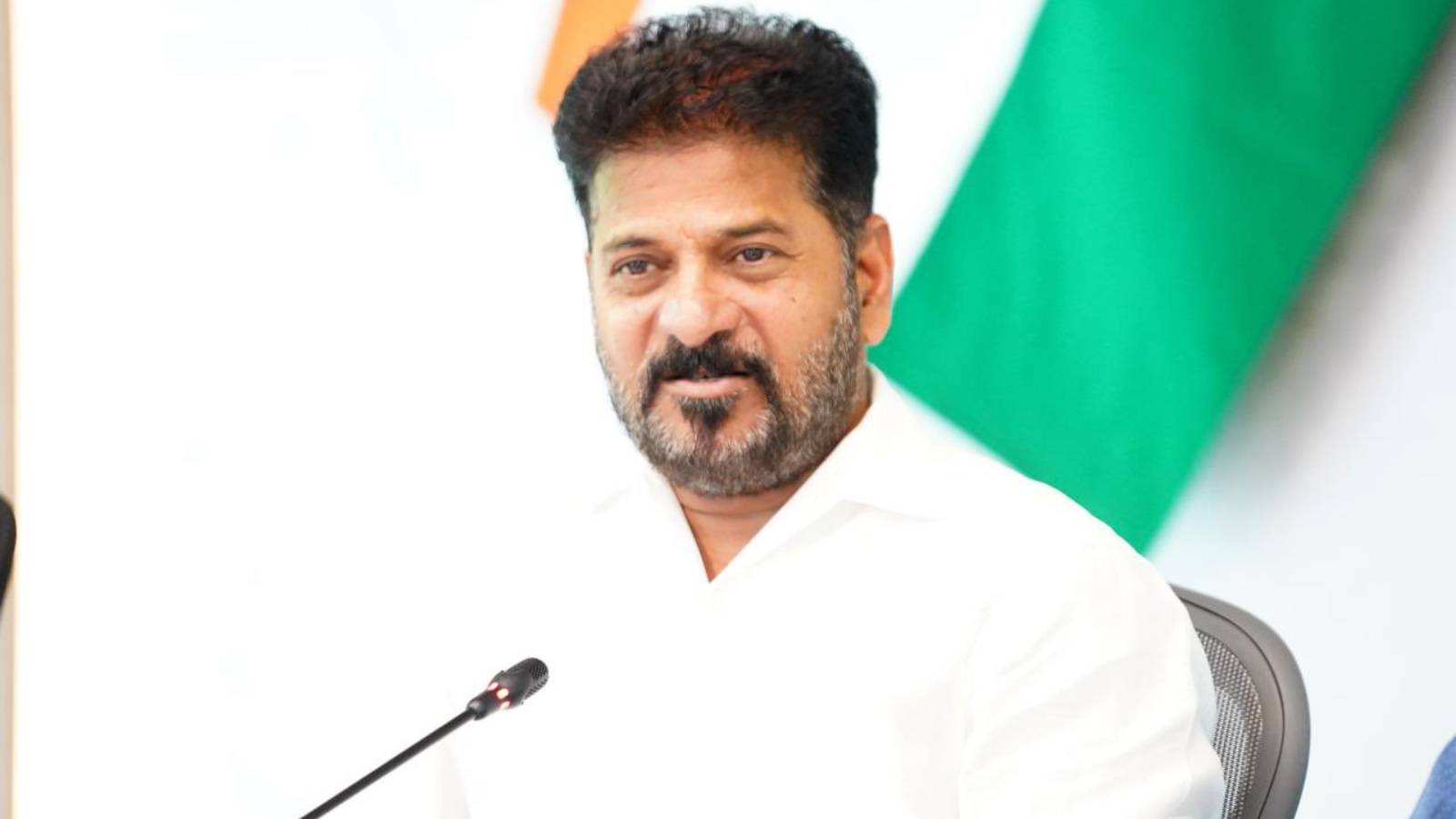
The Supreme Court’s verdict on the 550 acres of disputed land in Miyapur is undoubtedly a major victory for Telangana. After a long legal battle, the state has secured ownership of valuable government land. The government deserves credit for pursuing the case and protecting public property.
However, Chief Minister Revanth Reddy‘s announcement about selling this land to fund government schools, Indiramma housing schemes and irrigation projects raises an important question. Is selling valuable public land becoming the easiest way for successive governments to finance their promises?
Revanth Reddy has questioned the BRS leadership over its handling of government lands. He has specifically raised questions about the Padmalaya Studios and Lanco Hills allotments, asking why KCR and Harish Rao, who had opposed these allotments before Telangana was formed, failed to reclaim the properties during their ten years in power.
Revanth Reddy has also announced plans to establish Srikanthachari Martyrs’ Colony near KCR‘s Erravelli farmhouse. The proposed colony will provide house plots and homes to the families of Telangana martyrs.
The Chief Minister alleged that out of 388 acres of government land in Survey No. 325, only 345 acres have been identified so far, leaving around 43 acres unaccounted for. He accused KCR and his associates of occupying government land while farmers from Sher Venkatapur and Erravelli villages were denied justice.
Revanth has ordered a comprehensive survey of both villages and announced plans to distribute land pattas to eligible landless poor families. He has also warned of strict action against those who have illegally occupied government land.
The BRS government was no stranger to land monetisation. In July 2021, the KCR government auctioned nearly 50 acres at Kokapet and generated around Rs 2,000 crore. In August 2023, another round of auctions at Kokapet and Budwel, along with other locations, was expected to bring in approximately Rs 7,100 crore.
The Neopolis auction alone fetched Rs 3,319.60 crore. Budwel generated another Rs 3,625.73 crore. The BRS government also monetised the Outer Ring Road through a toll-operate-transfer arrangement, securing an upfront payment of Rs 7,380 crore.
Clearly, land monetisation was an important financial instrument for the previous government too. It cannot now be presented as an entirely new or exceptional strategy.
There was another problem. The CAG criticised the previous BRS government for repeatedly projecting higher revenue from land and property sales despite failing to achieve earlier estimates. Its report on the state’s finances for 2022-23 pointed out that land sale revenue expectations were unrealistic.
This is precisely where the larger question arises. Both governments have treated government land as a source of money to support their financial commitments. But valuable public land is a limited resource. Once sold, it cannot be brought back.
There is also a difference between generating money for long-term infrastructure and using one-time asset sales to support recurring expenditure. Building schools, completing irrigation projects and creating housing are important priorities. But welfare programmes require sustained financial support year after year. They cannot depend indefinitely on selling government land.
If every government sells a portion of public property to meet its commitments, what happens when the valuable land runs out? And what will be left for future generations?
Revanth Reddy has an opportunity to do things differently. Instead of simply announcing another round of land sales, his government should explain how much revenue it expects to generate, how the money will be spent and what safeguards will ensure that the proceeds are used for productive purposes.
The Miyapur verdict is about protecting public property from private claims. That victory should not automatically become a reason to liquidate the property.
The BRS government failed to establish a convincing long-term model for managing land revenues. The Congress government should not repeat the same approach while criticising its predecessor.
Telangana needs governments that create wealth, protect public assets and generate sustainable revenue. Selling the state’s assets to finance political promises may provide immediate money, but it is not a substitute for sound economic planning.
నవంబర్ -1 ఢిల్లీ కేంద్రంగా కాంగ్రెస్ నేత రాహుల్ గాంధీ చేపట్టనున్న నిరసన కార్యక్రమాలు దేశ రాజకీయాలలో చర్చనీయాంశంగా మారాయి.…
BOTTOM LINE Cult Attempt, but Nothing Cult RATING 1.75/5 Story, Screenplay,Director: Vishwaksen Cast: Vishwak Sen,…
