In discussions about development in India, education is widely considered the most reliable path to long term social and economic progress. Governments often highlight the importance of improving schools, raising literacy, and expanding opportunities for children, especially in rural regions.
However, household spending patterns sometimes reveal a different reality. Family level financial decisions do not always align with the national goal of investing more in education.
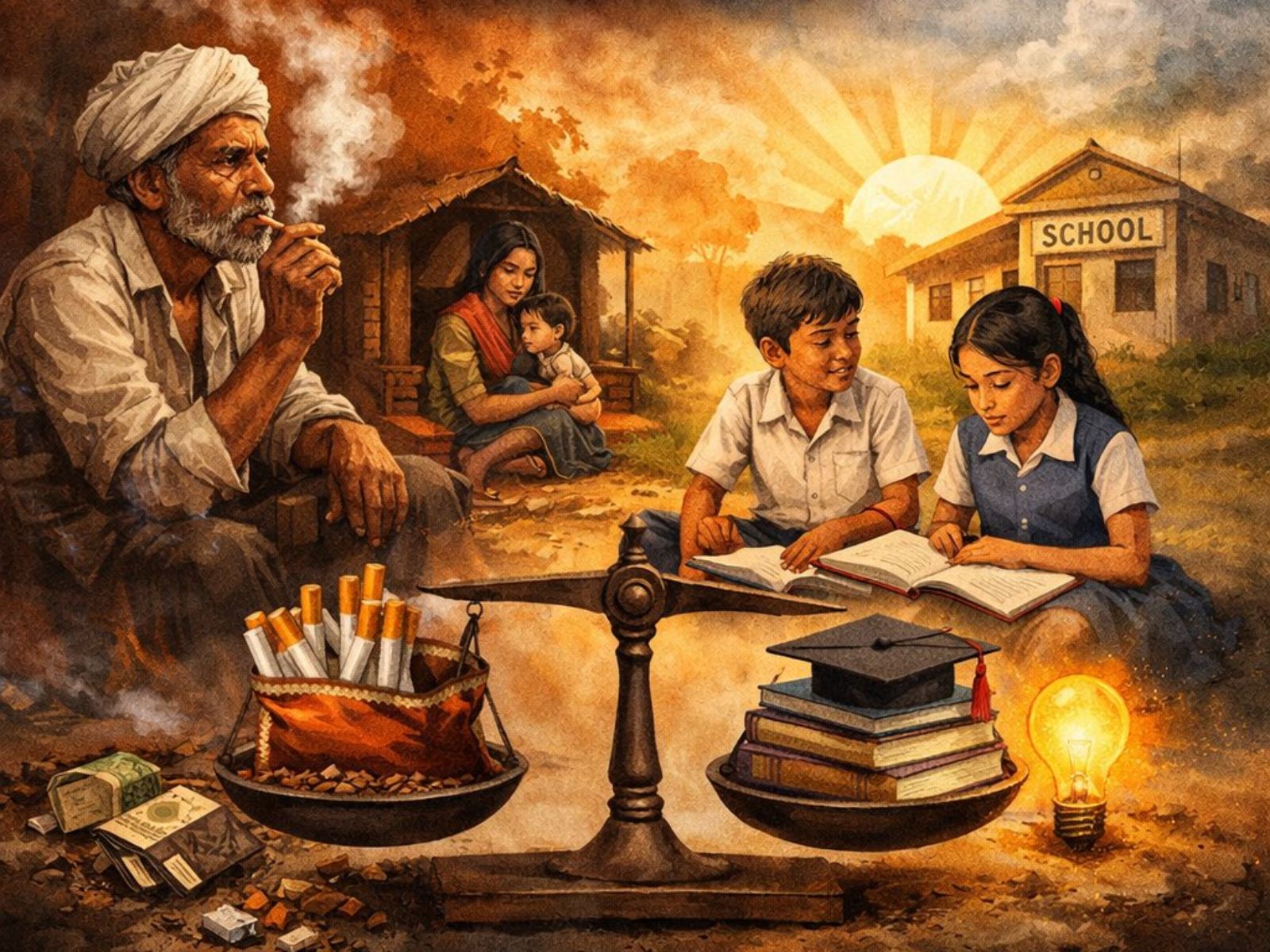
Data from the Household Consumption and Expenditure Survey highlights a notable contrast in rural spending habits. The figures indicate that rural households allocate only about 2.5 percent of their total consumption to education.
At the same time, around 4 percent of rural household spending goes toward tobacco products. A large portion of this expenditure is reportedly on gutkha, which remains widely available and inexpensive.
Although the percentage difference may seem small, it reflects a deeper issue. It shows how limited household income is often distributed between immediate consumption and long term investment.
Several factors contribute to this pattern. In many rural areas, education is still viewed as a long term investment that may not deliver immediate financial returns.
Families facing daily economic pressures may prioritise short term needs and habits. Products like gutkha are cheap and socially normalised, which makes them easier to purchase regularly.
Over time, such habits can consume a noticeable share of household budgets. This gradually reduces the amount available for education related expenses.
The data does not necessarily mean rural families undervalue education. Instead, it highlights a complex challenge for policymakers.
To strengthen human capital in India, multiple measures may be required. Awareness campaigns, improved access to quality schools, and stronger regulation of addictive products could help shift spending priorities toward education.
Rural India spends more on gutkha than education.
Rural households spend just 2.5% of their consumption on education, while 4% goes to tobacco products, largely gutkha.
(Household Consumption and Expenditure Survey) pic.twitter.com/EnBWc1V5NQ
— Indian Tech & Infra (@IndianTechGuide) March 5, 2026