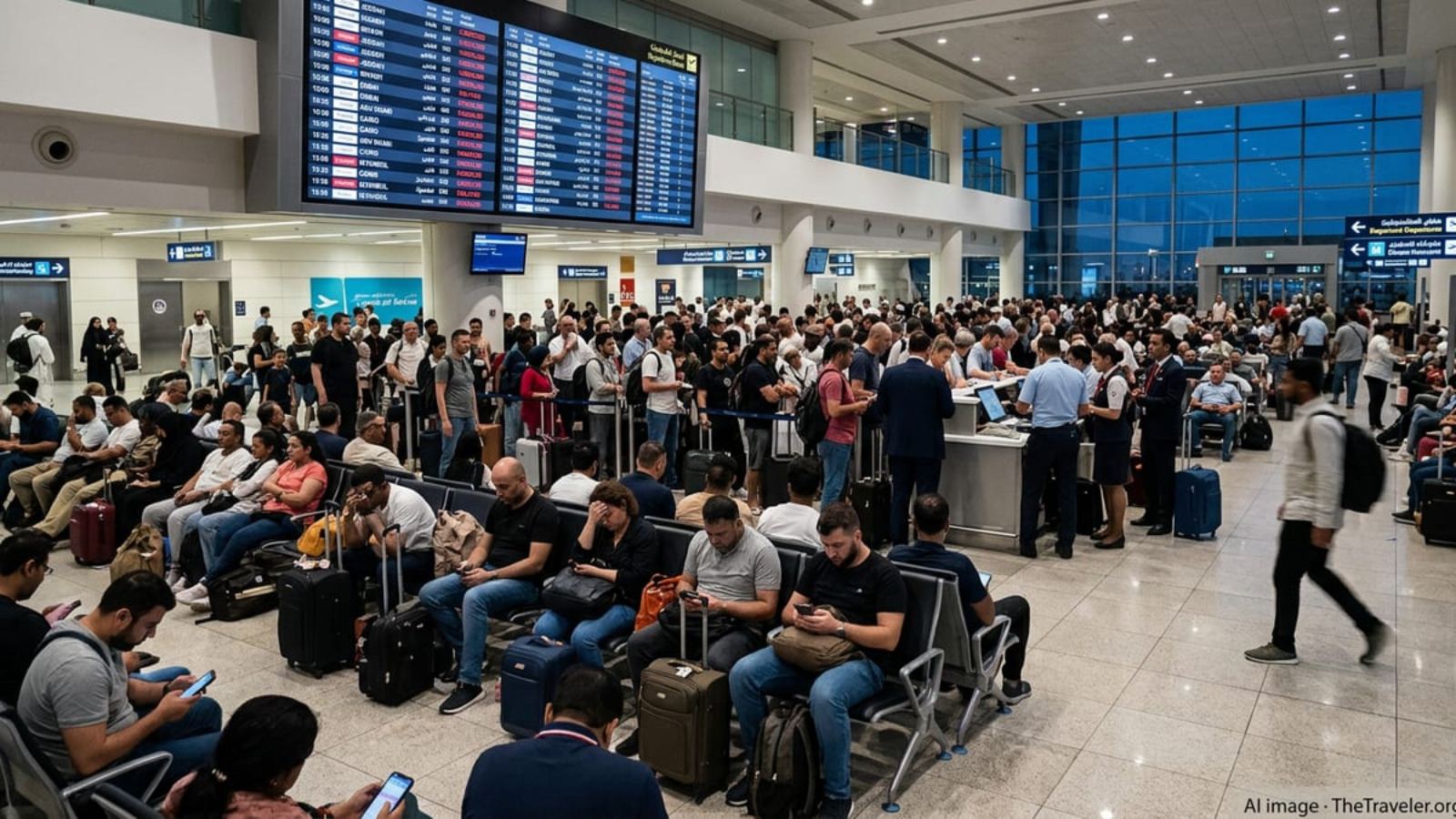
Long haul flight operations are increasing across Asia as airlines respond to rising travel demand after disruptions linked to the ongoing conflict in the Middle East. The situation has tightened global capacity and pushed several carriers to quickly adjust schedules.
The war in Iran has significantly affected major Gulf carriers including Emirates, Qatar Airways, and Etihad Airways. Many of their international services have been largely grounded since Saturday, disrupting important transit routes that connect Asia, Europe, and North America.
According to aviation consultancy OAG Aviation, the disruption has removed more than 10 percent of the world’s daily international flight capacity. Such a sudden drop has created pressure across the global aviation network and forced airlines in other regions to respond.
The reduced availability of flights has also caused a sharp increase in ticket prices. Travellers searching for alternative routes are facing steep costs, with airfares on some airlines rising by as much as 900 percent in certain cases.
Airlines outside the Gulf region are stepping in to handle the extra demand. Australia’s national carrier Qantas Airways has reported a surge in passengers choosing to travel through the United States to reach destinations that were earlier served through Middle East hubs.
To manage the demand, Qantas Airways deployed a spare Airbus A380 aircraft for a special service from Sydney to Heathrow Airport. The additional flight aims to support travellers affected by cancellations and disrupted connections across the region.
Air India has also increased capacity during the busy travel period. The airline added extra flights between March 5 and March 10, including three additional services from New Delhi to Toronto and Frankfurt along with another flight to Paris.
The airline indicated that more flights may be introduced after March 11 if strong demand continues. Airlines are closely monitoring passenger traffic while adjusting schedules to ensure connectivity during the ongoing disruption.
The situation highlights how geopolitical tensions can quickly affect global aviation networks. Airlines must react rapidly to operational challenges, while passengers face higher fares, limited options, and longer travel routes to reach their destinations.