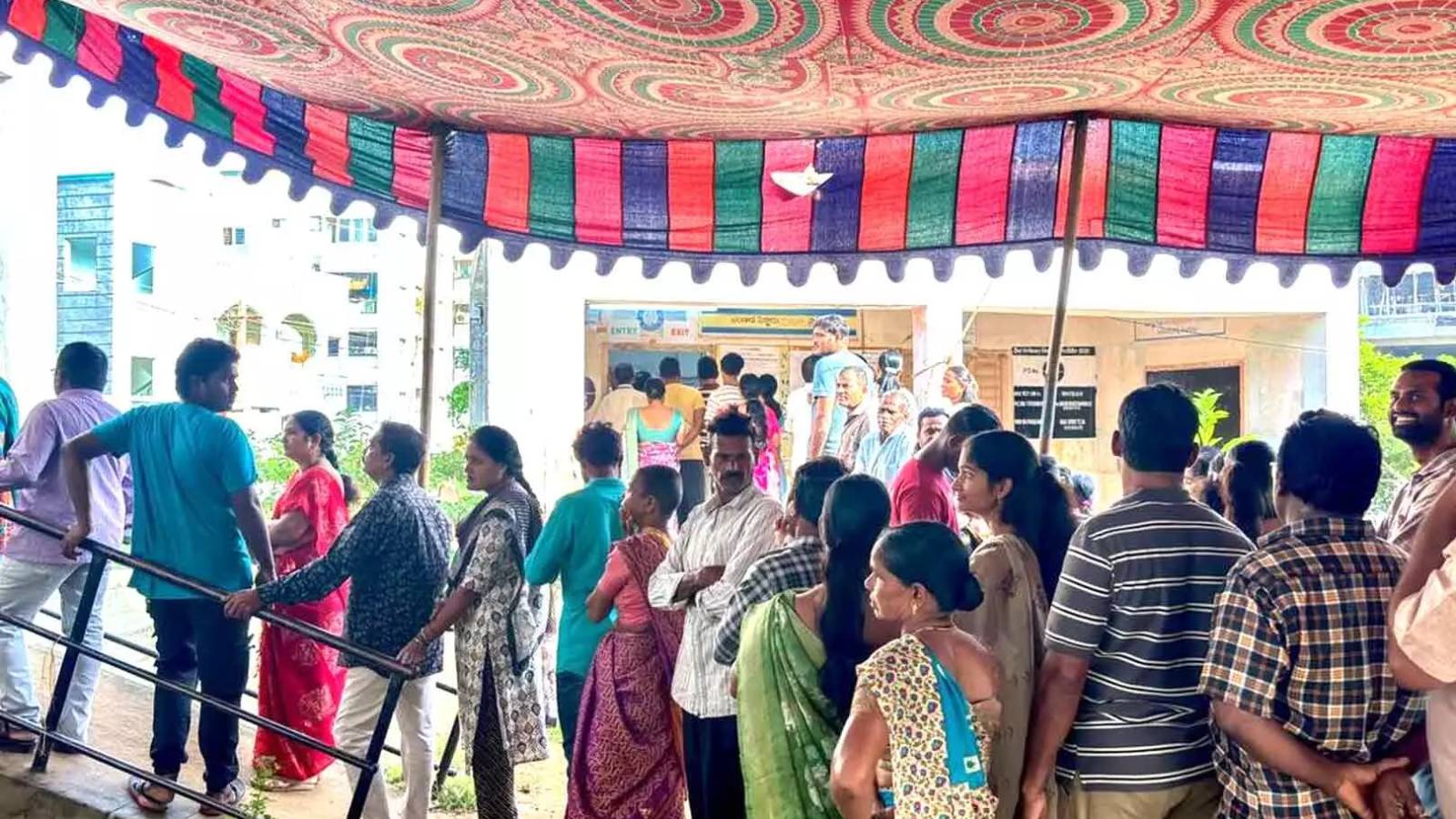
Municipal polling across Andhra Pradesh recorded 48.03% voter turnout by 3 PM on November 1. Despite the political activity surrounding the elections, voter participation remained below expectations in several areas. Many polling stations appeared relatively quiet, raising questions about the lack of enthusiasm among urban voters.
Puttur in Tirupati district recorded the highest turnout among the listed urban local bodies at 64.66%. Naidupeta followed with 59.36%, while Palakonda recorded 58.84% and Narasapuram 58.11%. Venkatagiri registered 54.77% and Sullurupeta recorded 53.37%. Eluru Corporation reported 43.8% by 3PM.
The relatively low turnout has led to questions about whether voters felt the contests were largely one-sided. Local elections usually see strong participation because candidates have direct connections with voters at the ward and division levels. This time, however, the perception that the ruling alliance had an advantage and the YSRCP was struggling to put up a strong fight may have kept some voters away. For voters who believed the outcome was already predictable, turning up at the polling booth may not have seemed important.
Some major urban centres reportedly saw better participation. There is also talk that candidates in places such as Vijayawada and Guntur made extra efforts to bring voters to polling stations.
Polling was not entirely peaceful either. In Adoni, tension prevailed near the polling stations in Wards 38 and 39. YSRCP leaders Madhusudhan and Manoj argued with the police, claiming that their party agents were not inside the booths. Police maintained that YSRCP agents were present and moved both groups away from the polling area.
An incident was also reported in Anantapur’s Hamali Colony. In Ward 30, YSRCP leaders accused BJP workers of casting bogus votes. A scuffle broke out between the two groups, and YSRCP mayoral candidate Ramesh Goud was allegedly pushed by BJP supporters. Police resorted to a lathi charge to bring the situation under control.
The clashes and complaints over polling agents added to the tension in several towns. Police were deployed at sensitive polling stations to prevent further trouble.
The turnout figures have also raised questions for political parties. Local elections are generally expected to draw more voters than Assembly or Lok Sabha polls because of the direct impact of local representatives on everyday civic issues. This time, the response appears more subdued. Whether this reflects voter apathy, the perceived lack of a close contest or other local factors will become clearer once the final polling figures are released.