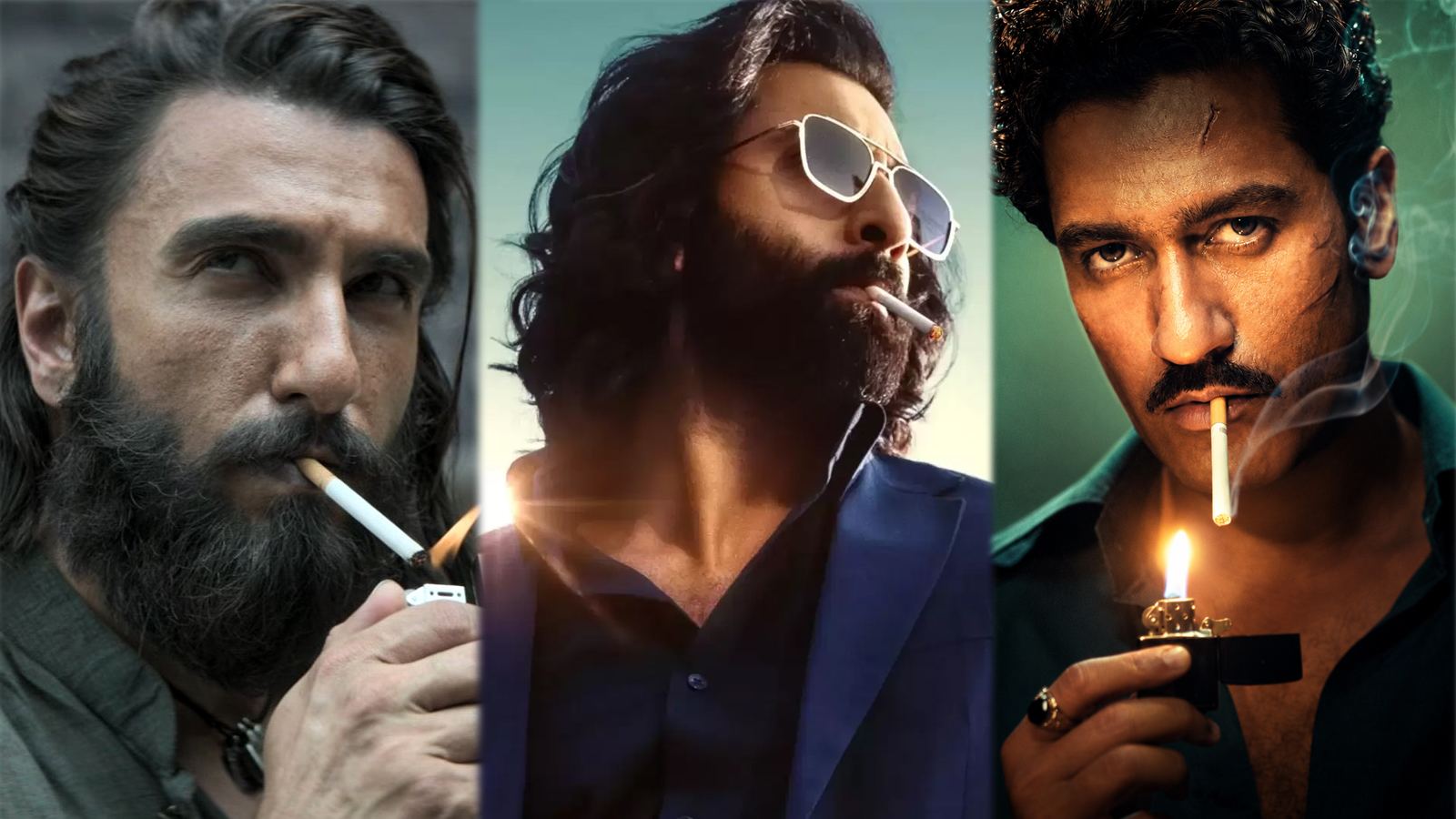
What is the point of those anti-smoking warnings before and during films when Bollywood itself keeps making cigarettes look cool?
Take Ranbir Kapoor’s Animal. The film’s first poster showed him smoking a cigarette while carrying an axe. Another promotional poster had him in sunglasses, holding a lighter and smoking. The cigarette was not some insignificant prop tucked into the frame. It was part of the character’s entire rugged, dangerous, “wild” visual identity.
Then there is Ranveer Singh in Dhurandhar. One of the film’s scenes showcased Ranveer walking forward with a cigarette. This made smoking part of the character’s instantly recognisable aesthetic. And that is where the contradiction becomes difficult to ignore.
Audiences are shown warnings about the dangers of tobacco before and during films, while the marketing surrounding those films can spend considerably more effort making a cigarette look stylish, intimidating and aspirational. A few seconds of a health disclaimer cannot exactly compete with a superstar, dramatic lighting, sunglasses, a killer look and a carefully designed poster that may stay on social media feeds for weeks.
Of course, cinema should be allowed to show characters who smoke. Not every character has to behave responsibly, and portraying a bad habit is not the same thing as endorsing it. But there is a difference between depicting smoking because the character smokes and turning the cigarette into part of the character’s cool factor.
That distinction matters even more when the people selling that image are some of the biggest stars in the country. The irony is almost absurd: “Smoking is injurious to health” appears on screen, while the poster is effectively saying, “But look how good he looks doing it.”