BOTTOM LINE
Partly Engaging, Partly Chaotic
PLATFORM
JioHotstar
RUNTIME
1hr 32 mins
What Is the Film About?
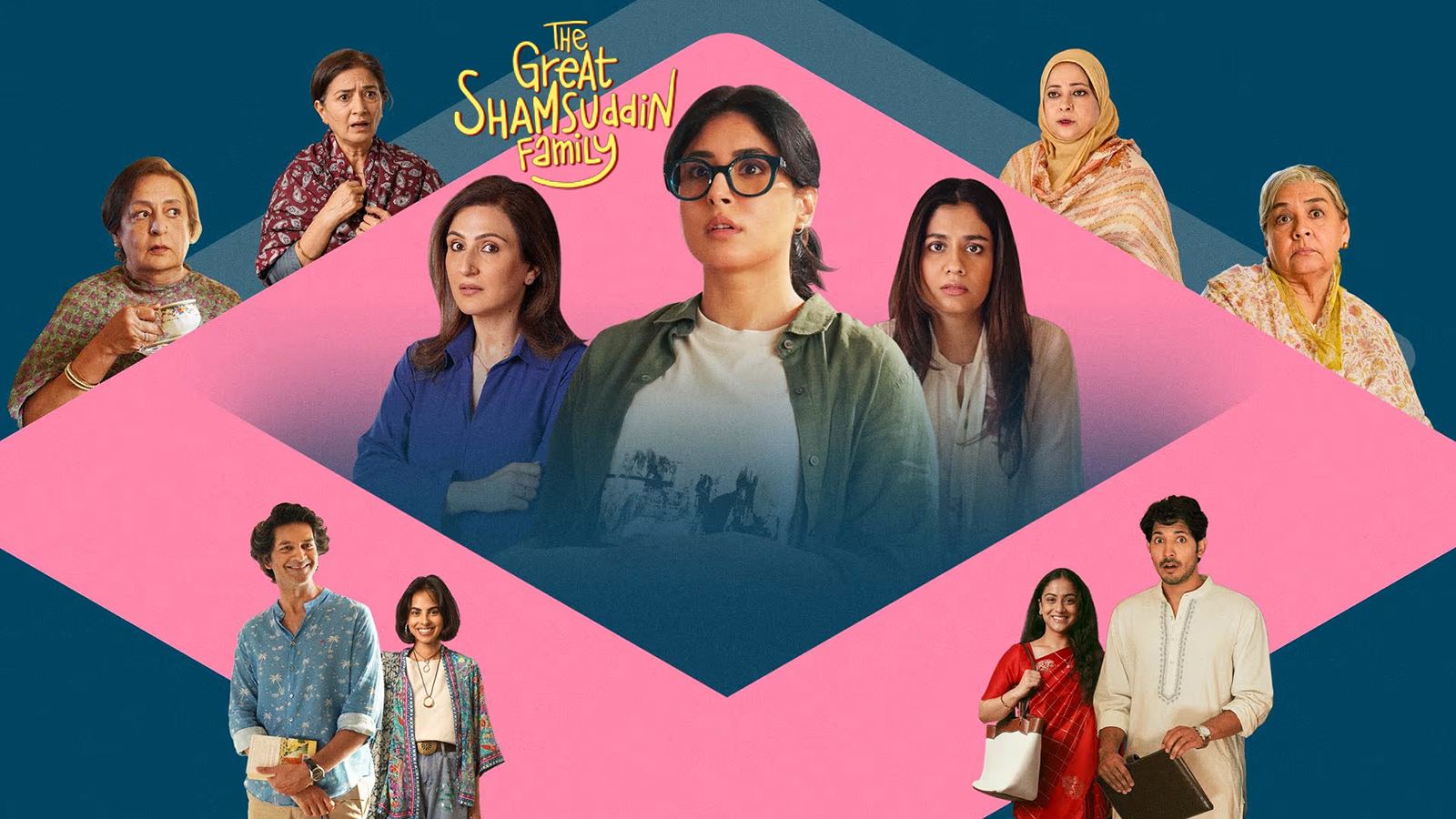
Jobless for months, a divorced Bani applies for a job at Berkeley. Iram is worried she has been duped over a business deal as her bank goes through a merger. Meanwhile, a friend, Amitav, turns up unannounced with his girlfriend, and cousin Zohaib has eloped with his lady love, Pallavi. Aunts, siblings, and friends queue up at the Shamsuddin household, inviting family drama in abundance.
Performances
The performances are generally good and in sync with the needs of the film. Kritika Kamra, in particular, holds the fort as a woman who’s just too overwhelmed. Shreya Dhanwanthary brings relatability to the erratic Iram, while Juhi Babbar Soni, Sheebha Chaddha, the good ol’ Farida Jalal, and Dolly Ahluwalia lend authenticity to the family dynamics. Purab Kohli is strictly okay.
Analysis
It’s a not-so-ordinary day at the Shamsuddin household in the heart of Delhi. Everything seems impossible. All that a tired, frustrated Bani wants is some calm to work on a job interview, but the drama keeps piling up. Everyone relies on her for solutions, and she finds them – not out of choice, but by the sheer habit of having done so for years.
Anusha Rizvi, the director of the path-breaking Peepli Live, returns after a decade and a half with The Great Shamsuddin Family. This deceptively simple, fly-on-the-wall (nearly claustrophobic) drama, set in the same house over a single day, uncovers the chaos among cousins, siblings, friends, and aunts, yet is equally political and suggestive of the polarised world beyond those four walls.
The Great Shamsuddin Family captures that one dramatic day when you’ve simply had enough. The entire family is under one roof, and too much effort is spent managing their wavy egos and temperaments. It’s a love-hate relationship: they’re family, and you can neither do without nor live with them. The women – ambitious, exhausted, cranky, hysterical – call the shots.
The drama captures the ever-altering family dynamic in modern-day India through its key characters. Among the Shamsuddin cousins, one is divorced and looking to move to the US, one wants to start a business, and one has eloped for love. The previous generation, partly conservative and partly progressive, apprehensively grapples with this change.
The narrative teems with coincidences; new characters are introduced in the drop of a hat, their arrival inviting problems – mostly domestic, but nothing unresolvable. There is long-lost love, gossip, and unending banter. A ‘liberal’ friend doles out unasked advice. The women wouldn’t have minded this any other time, but this day, they can only pray about not pulling each other’s hair.
The turbulent rhythm of the film (while intentional, given the cramped, populated house) is unsettling, especially in the beginning. You literally sense Bani’s need for some space. There is just too much happening at once, and it takes a while to adapt to its eccentricities. The fact that everything in the film is purely conversational makes it feel like a cacophony at times.
While not all of its stylistic choices (i.e., the form) work, its heart is in the right place. In times when every second story centred on Muslims focuses on victimhood, The Great Shamsuddin Family points its gaze towards their mundanity. The simple, run-of-the-mill talk at home is revealing, reflecting unhealed wounds and unexpressed fears.
When Zohaib voices his will to marry Pallavi, the tension of the love-jihad label arises, along with the worry that a mob may arrive at the doorstep. As Tauseef is enroute to the apartment, the news of communal riots in the vicinity grips the family with fear. Bani’s need to move to the US stems from frustration: how long can a writer censor her opinions without them being twisted out of context?
The happy ending is only a temporary relief for the characters – the drama has subsided for the day, but there are no easy solutions for the problems it addresses. The Great Shamsuddin Family is verbal diarrhoea in parts, and the domestic drama is a little too overblown to digest, yet it remains strangely relatable, holding a mirror to the conscience of the average family in India.
The film is a bitter-sweet ride: there’s warmth and simplicity, and it also leaves you slightly uneasy (for the right reasons).
Music and Other Departments?
Simran Hora’s score neatly binds many ends of a busy narrative without going overboard. A certain frustration creeps in because of the story’s static visual backdrop, but apart from that, the cinematography passes muster. The casting choices are impressive. Anusha Rizvi’s writing is a mixed bag: it tells an important story but gets slightly carried away by the form over the intent.
Highlights?
Unconventional story, writing choices
Impressive casting, performances
Variety in characterisation
Drawbacks?
Too chaotic to begin with
Inconsistent narration
Convenient cinematic liberties
Did I Enjoy It?
In parts
Will You Recommend It?
Certainly, for its story, but have some patience in the beginning
M9 Reviews vs Box Office: Simple Q & A Guide
The Great Shamsuddin Family Review by M9