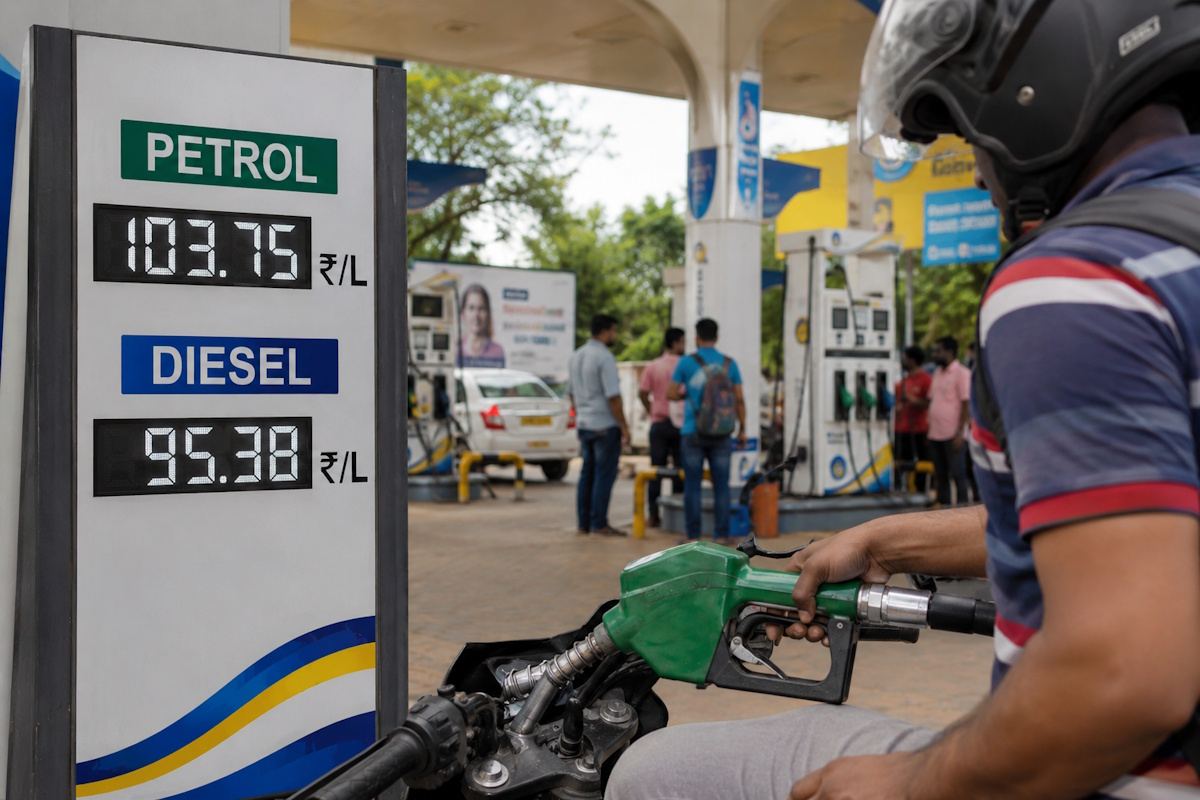
The long-awaited chill in fuel prices has finally broken, and it’s a cold wake-up call for the Indian consumer. On May 15, 2026, state-owned oil marketing companies authorized a ₹3 per litre hike for petrol and diesel, ending an eleven-week freeze. While the government had been absorbing the shock of $100+ per barrel crude, the pressure from the escalating West Asia conflict and the disruption of the Strait of Hormuz has made the current price tag unsustainable.
This isn’t just about a few extra rupees at the pump; it is an inflationary spark that will catch fire across the economy. With wholesale inflation (WPI) already hitting a 42-month high of 8.3% in April, this fuel hike will act as a direct tax on everything from logistics to your morning milk. In fact, companies like Amul and Mother Dairy have already raised prices, citing fuel and packaging costs. When transport becomes expensive, the “common man” pays twice, once at the fuel station and again at the grocery store.
The geopolitical timing couldn’t be worse. With the rupee weakening and the RBI warning of prolonged energy risks, this ₹3 hike is likely just the first wave. Analysts suggest this revision only covers a fraction of what’s needed for oil companies to break even. If the Iran-Israel tensions don’t cool down, the government’s ability to cushion the public will vanish, leaving the average citizen to navigate a high-cost 2026 alone.
The global energy war has officially come home. The ₹3 hike is a clear signal that the era of artificial price stability is over. As transportation costs surge and essential items follow suit, the Indian middle class is once again caught in the crossfire of international politics. For the government, the challenge is no longer just managing oil—it’s preventing a full-blown cost-of-living crisis from spinning out of control.