

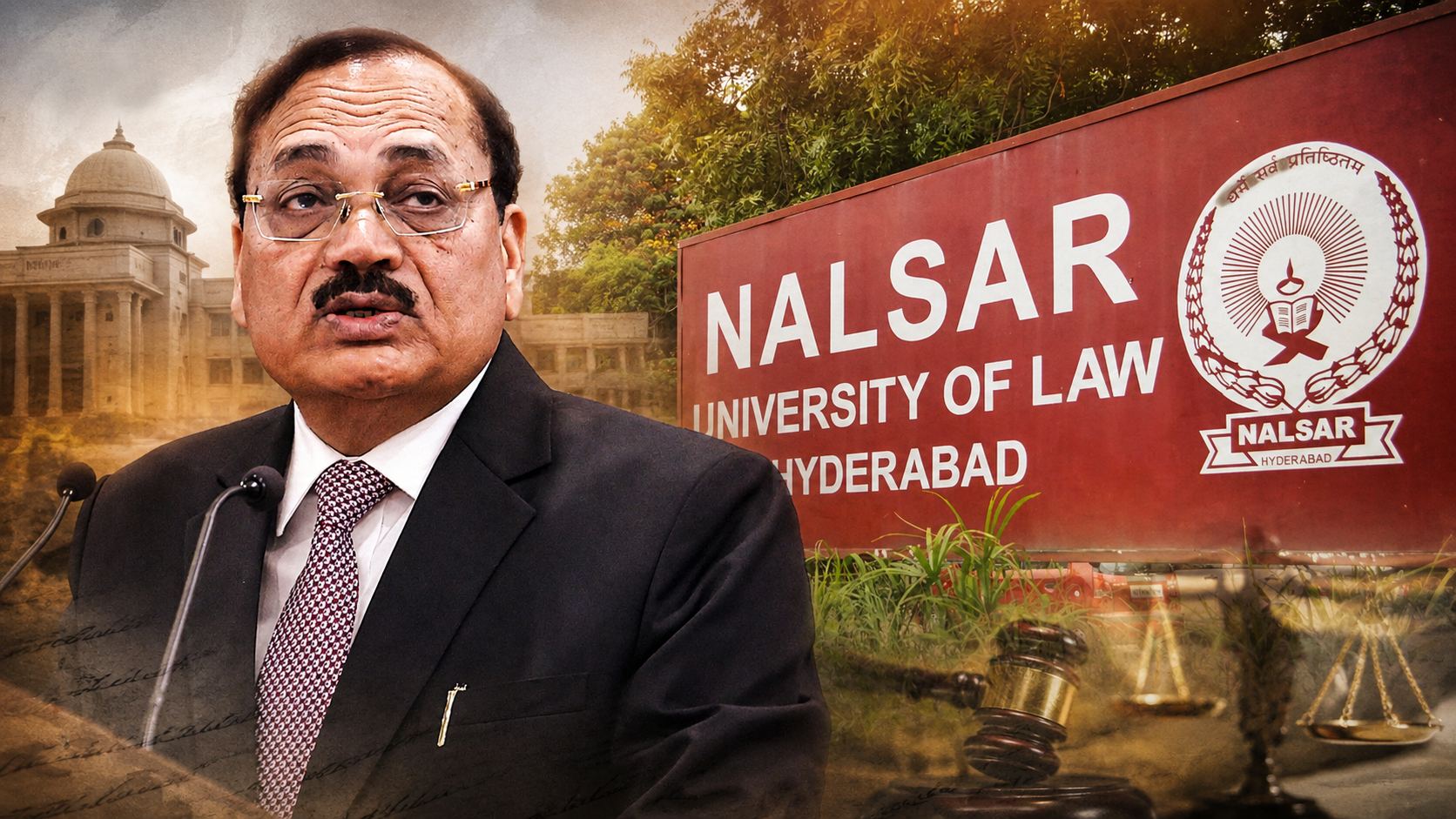
The famous NALSAR University of Law in Hyderabad has recently come under judicial scrutiny after a section of graduating students protested against the reported decision to invite Chief Justice of India Surya Kant as the chief guest for the upcoming convocation ceremony.
The students reportedly raised objections over Surya Kant’s conduct and remarks during proceedings related to allegations of police excesses against protesters in Delhi. A section of students felt that his reported stance was inconsistent with the values they had been taught at the law university.
The issue escalated when the Bar Council of India initially directed state bar councils not to enrol any student from NALSAR’s 2026 graduating batch as an advocate until further directions. The move triggered strong criticism as it affected the entire batch.
However, the BCI quickly modified and withdrew the controversial restriction. It clarified that the 2026 graduates would be entitled to seek enrolment with state bar councils, while the controversy surrounding the students’ campaign continued to draw attention.
The matter then reached the Supreme Court, where Chief Justice of India Surya Kant questioned the BCI’s intervention. He indicated that the issue was a matter of dialogue between him and the students and questioned the need for the Bar Council to interfere.
Surya Kant also made it clear that students have the right to express their opinions and raise objections. His remarks have effectively provided support to the NALSAR students who came under pressure following the initial BCI action.
The controversy has now turned into a wider debate over students’ right to dissent and the role of professional bodies in academic matters. With the BCI reversing its initial decision, it remains to be seen how the NALSAR issue eventually concludes.