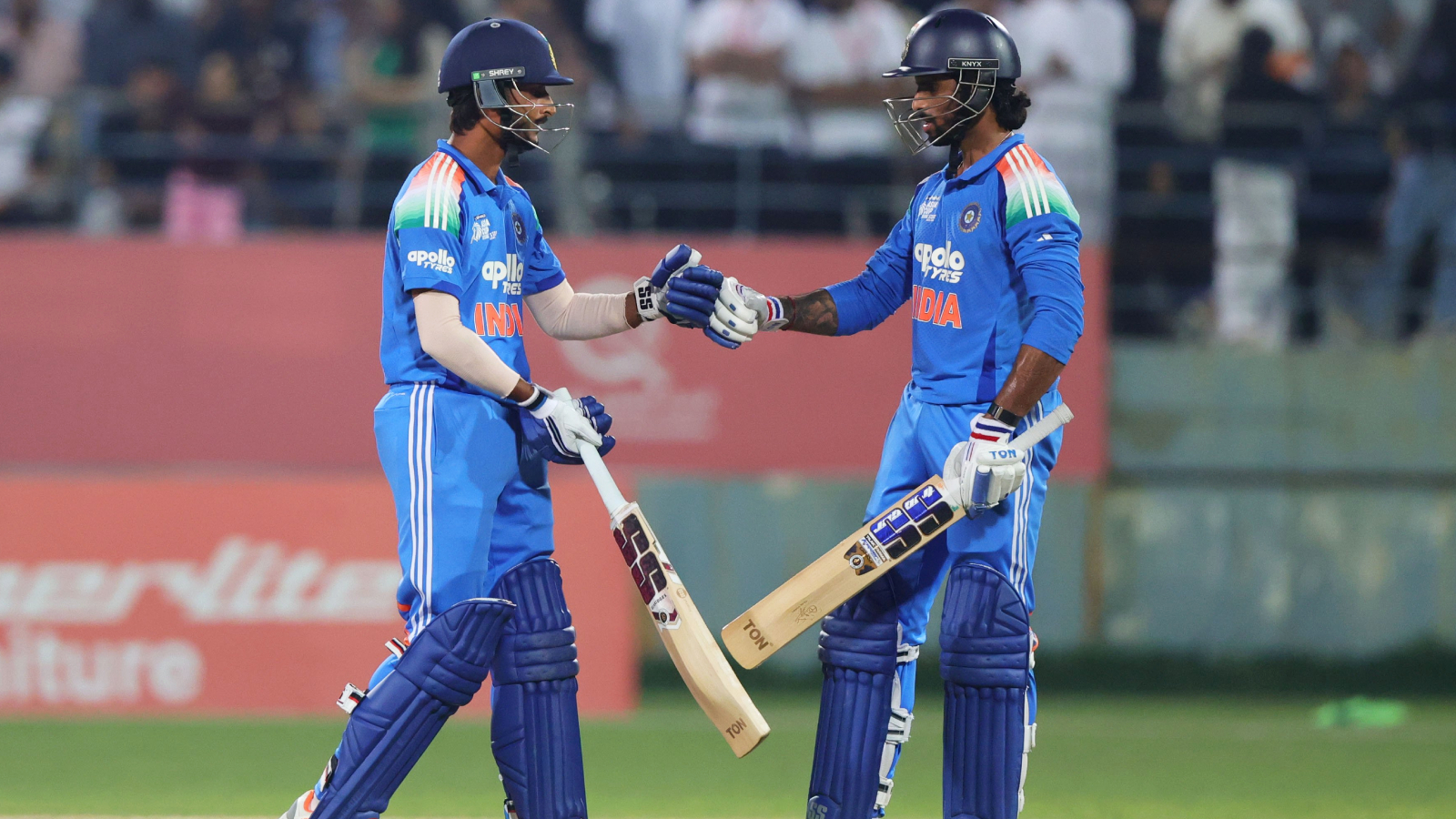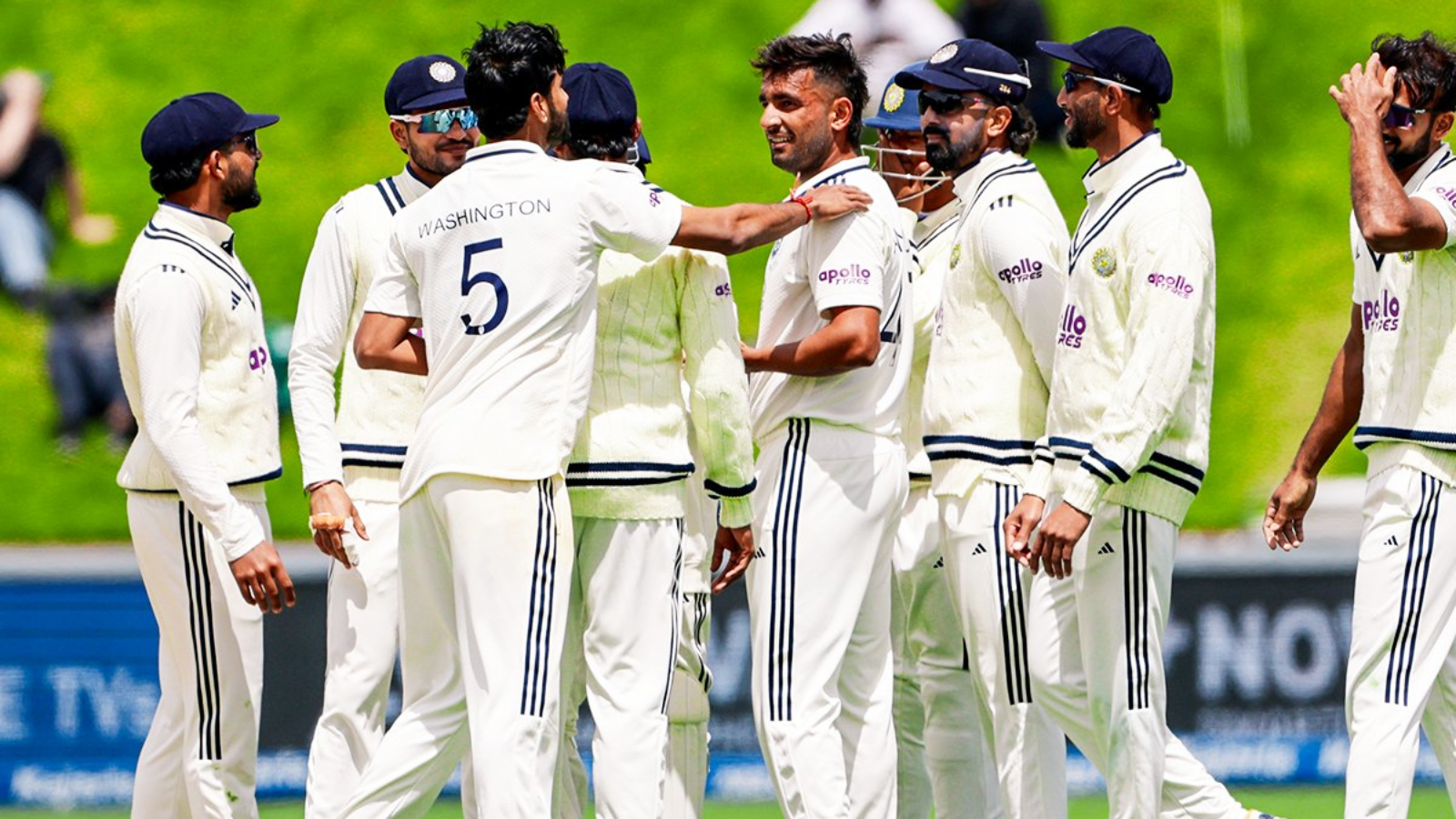
India failed to secure a win in the first Test against New Zealand at the Basin Reserve in Wellington, despite taking a massive 352 run first innings lead.
Team India had dominated large parts of the match, but New Zealand’s batting effort on the final day denied them a series opening win.
New Zealand finished their second innings at 239/5, with Daryl Mitchell and Glenn Phillips remaining unbeaten at 49 and 26, respectively. The pair added 63 runs for the sixth wicket and batted through the final session to secure a draw.
The result raises questions about India’s bowling plans and their ability to close out Test matches after establishing a commanding position.
India had declared their first innings at 720/9 after an impressive batting performance. Despite this, their bowlers took only three wickets on the final day, leaving New Zealand enough time to save the match.
India resumed the final day needing eight wickets to win, with New Zealand at 119/2 in their second innings. Team India made a promising start when Washington Sundar dismissed Devon Conway for 65.
Prasidh Krishna then removed Rachin Ravindra for 37, while Anshul Kamboj sent Tom Blundell back to the pavilion for 15. The three wickets reduced New Zealand to 176/5, leaving India with five more wickets to take.
Mitchell and Phillips refused to give the Indian bowlers another breakthrough. The pair showed patience, defended well and avoided taking unnecessary risks as the remaining overs passed. Their unbeaten 63 run partnership ensured New Zealand finished at 239/5 and saved the Test.
Jasprit Bumrah‘s workload on the final day is another aspect of India’s bowling performance that deserves attention. The fast bowler had taken four wickets in New Zealand’s first innings, but bowled only 11 overs on Day 5.
With India needing eight wickets at the start of the day, Bumrah’s role was always going to be important. Although the conditions did not offer consistent assistance to the fast bowlers, India needed to find ways to create pressure and break New Zealand’s partnerships.
The decision to use Bumrah for only 11 overs raises questions about India’s bowling rotation and the timing of his spells. However, the responsibility cannot rest on one bowler alone. The other bowlers also needed to find ways to dismiss the remaining batters.
India also missed opportunities to get Mitchell out, including a missed run out chance and a dropped catch.
The draw in Wellington also brings back memories of India’s second Test against Sri Lanka in Colombo in August 2026. On that occasion, India took a 213 run first innings lead and enforced the follow on, but Sri Lanka fought back to save the match.
Sonal Dinusha played a major role in that result, scoring 103 in the first innings and remaining unbeaten on 133 in the second. His batting, along with the support from the lower order, helped Sri Lanka finish at 429/9 and secure a draw.
The circumstances in Wellington were different, as New Zealand had to bat out the final day without being bowled out. Both results highlight a concern for India the team has struggled to turn commanding positions into wins in these two Tests.
Gill and Gambhir will have several questions to address before the next match. India’s batting performance in Wellington was outstanding, but a total of 720/9 and a 352 run lead should have put the team in a much stronger position to win.
With important World Test Championship points at stake, India cannot afford to overlook the missed opportunities in Wellington.
The second Test against New Zealand will give the team an opportunity to respond, but their bowling plans, execution and ability to finish matches will remain under scrutiny.