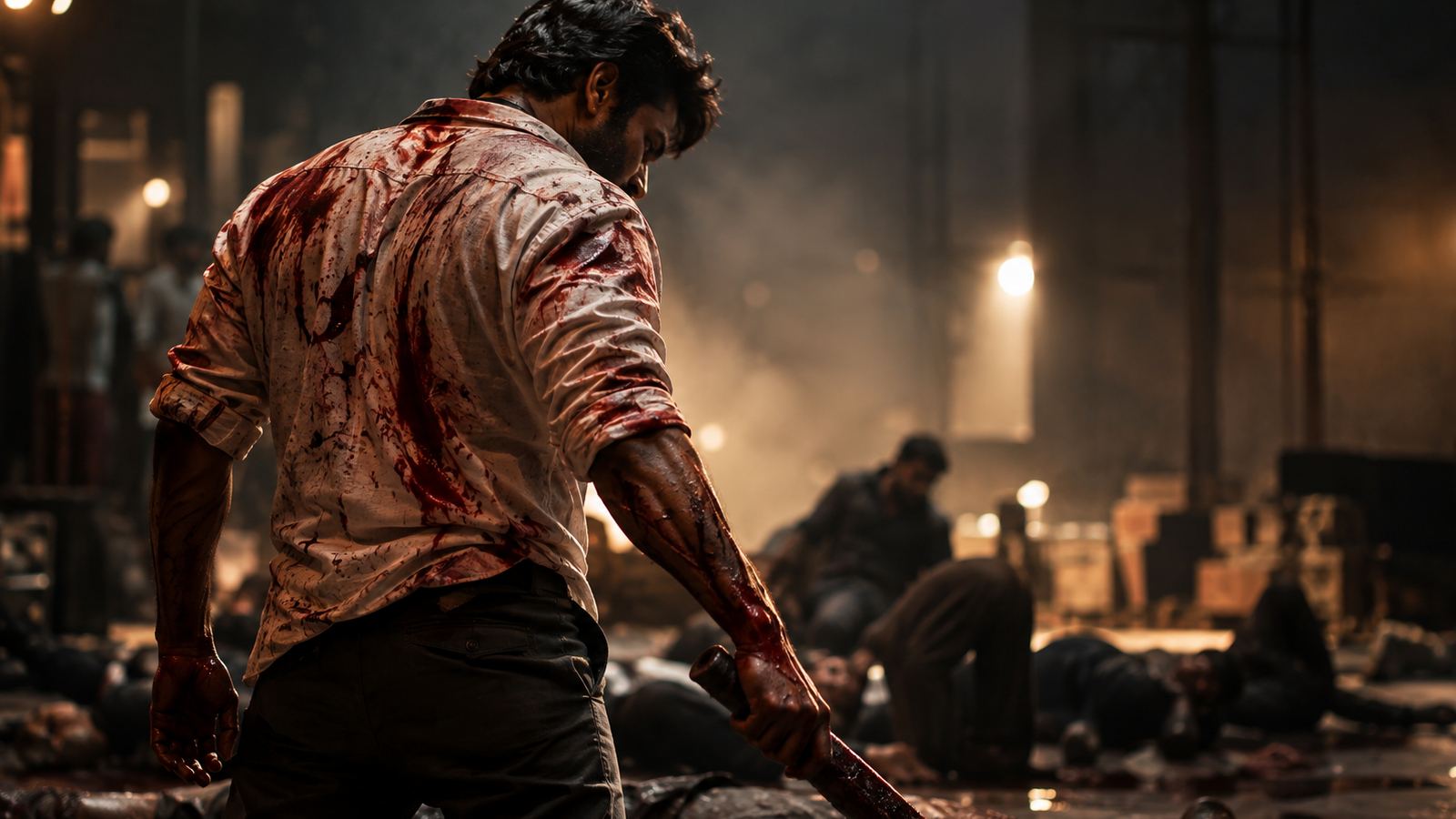
A hero covered in blood can create whistles. But blood alone cannot create a mass moment. That is where the line between powerful action and empty brutality begins.
Mass films have always had a special relationship with violence. A hero taking on a group of enemies, a revenge fight, a brutal interval block or a final showdown can become the scenes audiences wait for. But the action works when there is something at stake and the audience understands what has pushed the character to that point.
A revenge fight after a major loss feels different from a fight inserted simply to make the hero look more powerful. The punches have context, the confrontation has a purpose and the payoff feels bigger. That is when an action sequence can turn into a genuine theatrical high.
The problem comes when filmmakers keep increasing the brutality without giving the audience anything new to hold on to. More blood, more injuries and more graphic attacks may initially shock viewers, but repetition can quickly take away that impact.
This does not mean mass cinema needs to become less violent. Audiences have repeatedly shown that they can embrace extreme action when it fits the situation. The real test is whether the violence has a purpose beyond simply showing how brutal a film can be.
A mass hero needs stakes. A fight needs a reason. And the audience needs to feel that the eventual payoff was worth the build-up.
Violence can make a mass film louder, but it cannot make every scene powerful. When brutality becomes the destination instead of the payoff, even the biggest action block can end up feeling empty.