BOTTOM LINE
New Backdrop, Same-Old Sugarcoated Narration
PLATFORM
Amazon Prime Video
RUNTIME
4 Hours, 8 Mins (7 Episodes)
What Is the Show About?
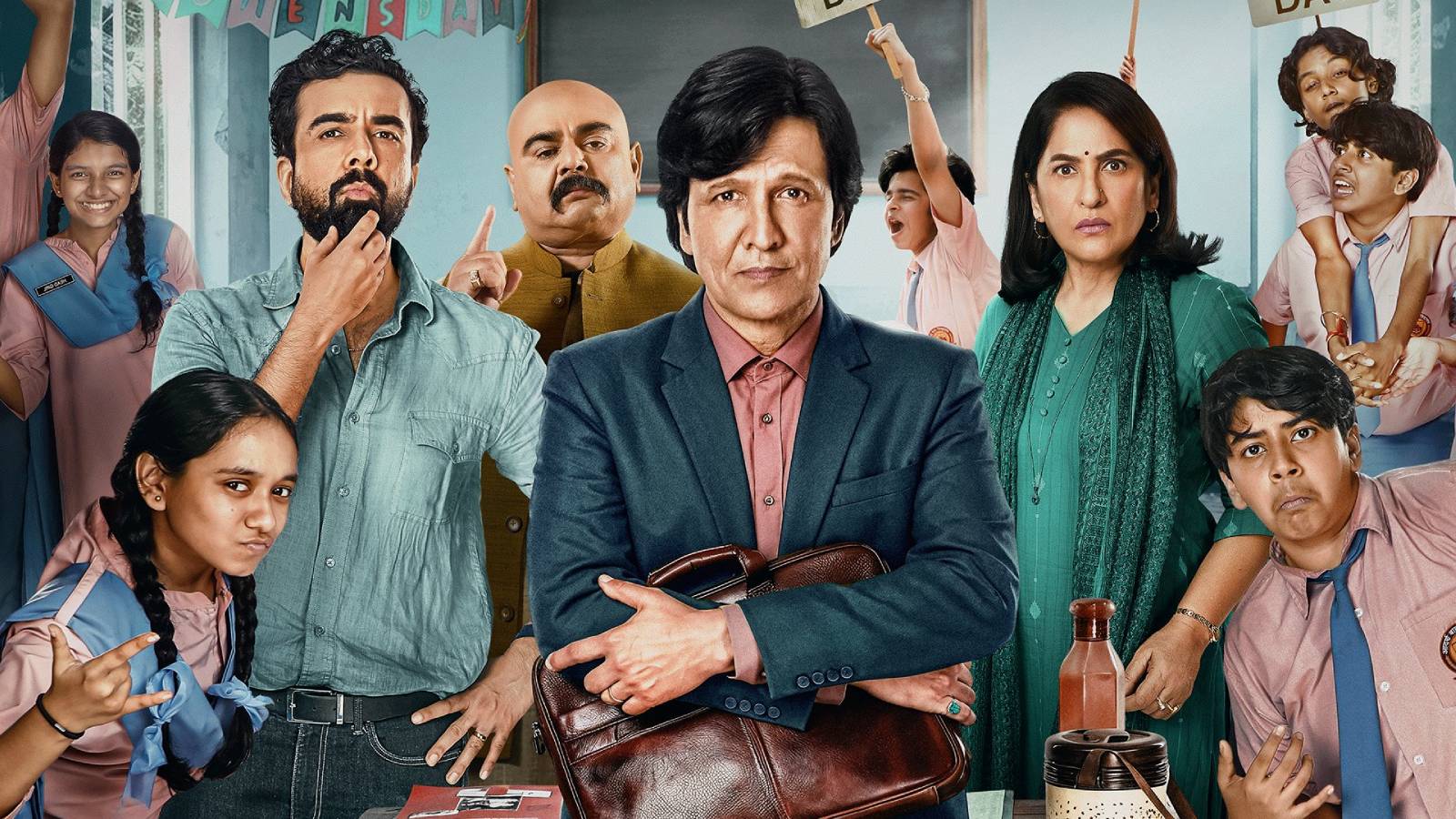
A laidback Delhi headmaster, Gyaneshwar Tripathi, is keen on a free trip to the UK with his wife, but his students never attend class. When an idealistic teacher, Kanchan, joins the school, she clashes with the chaotic staff, including Hansraj and Mukul, over several issues. Despite the systemic problems, the staff must choose between saving the students’ futures and chasing their own selfish dreams.
Performances
Kay Kay Menon is rock-solid as ever, adapting effortlessly to the low-stakes, quirky humour without making the ordinariness feel staged. His earnestness shines through in the scenes with his better half back home. The casting of Archana Puran Singh catches you by surprise, and she strikes up a warm on-screen rapport with Menon.
Naveen Kasturia appears typecast as a flawed do-gooder, and the performance doesn’t offer anything fresh. Abhimanyu Singh’s much-needed break from villain roles pays off well. As a timid man who puts on a tough-guy act in public, he is impressive. Prasanna Bisht delivers exactly what’s expected of her: a radiant presence at school who approaches work with optimism. Deven Bhojani is aptly cast as a narcissistic bureaucrat, while Prachi Shah’s grace brings warmth to the proceedings.
Analysis
When the very idea for a story begins with the intention to play safe, avoid upsetting those in power and romanticise systemic issues to steal a few silly laughs, you know there’s a problem with the storytelling. This has become a recurring pattern, from Panchayat to Aspirants to Kota Factory and the recent Gram Chikitsalay, where jugaad is glorified, masking a much larger problem as a minor aberration.
Adarsh Baal Vidyalaya is same same but different. It partly feels fresh because the story is set in a city, Delhi, and the focus shifts to children studying in a government school. However, that doesn’t change the content factory-like treatment. Every teacher has flaws but is a good person at heart, harbours big dreams, yet adjusts to local problems, just as they’ve done all their lives.
The setup, with its vibrant, colourful aesthetic, alternating between the realities of students and teachers at school and home, feels easy, comfortable and familiar. The show packs its episodes with at least a dozen pivotal characters, young, old and middle-aged, each with distinct personal lives. With scant resources and little support from those responsible, they hope to do the impossible and make a difference.
The show becomes hard to watch when it repeatedly glosses over the problems at school: no hygienic meals, zilch sporting facilities, poorly paid and trained staff, terrible academic records and tall egos curbing even the most basic amenities on the premises. It’s another matter that the characters somehow rise above these problems by hook or by crook, with all of it presented as their resolve, placing the blame squarely on one narcissistic politician.
A female teacher finds it awkward to discuss human reproduction with high school students and turns the chapter into a song that becomes an instant hit. Colleagues debate what’s better for the school: improving the grades of poorly performing students or focusing more on the brighter lot. A good-intentioned, long-retired sanitation worker continues to linger around the school.
Of course, there’s moral lecturing about ideals, ethics and the right approach to education. The fact that the show moves from classroom lectures to poking fun at bureaucratic oddities, while shedding light on interpersonal relationships beyond the school premises, makes it easier to digest. The narrative is constantly busy, and the viewer is spoon-fed at every turn.
Amidst the four walls though, the quirks get interesting. The headmaster’s equation with his wife is genuinely endearing, simply because of how they find happiness in each other despite having every reason to complain about what they lack. A widowed teacher struggles to be a compassionate father to his firmly opinionated daughter. Another middle-aged man works as a henna artist by night, making a quick buck at weddings.
The problem with Adarsh Baal Vidyalaya is the way it sugarcoats anything and everything. It is hellbent on making you feel good about the world you live in despite its constraints. Nearly every character has a tailor-made motivational response ready for any crisis. It wants you to see the beauty in the ordinary; you get it. However, the formula has lost its sheen, and it’s difficult to watch stories reduced to carbon copies.
With all its issues, Adarsh Baal Vidyalaya is still tolerable when treated like a fictional fantasy. But how long can the same approach work by merely changing the backdrop and actors?
Music and Other Departments?
Uyyala Jampala fame Sunny M R does justice to the show with a soft, cheeky score that complements the story, even if it isn’t particularly inventive. Shaz Mohammed’s cinematography puts the spotlight on bright, chirpy colours for a series desperate to be pleasant in every possible way, and that’s hardly a compliment.
The writing, especially towards the end, gets tiring because it attempts to provide closure for too many characters, making it difficult to keep track of their arcs. The four-hour runtime with its tried-and-tested treatment isn’t too much of a chore, but the show stops being fun after a point.
Highlights?
Good performances
Interesting personal quirks of the characters
Pleasant, feel-good vibe
Drawbacks?
Overstuffed with problems and convenient solutions
Formulaic treatment, lacks nuance
Lengthy, loses steam towards the end
Did I Enjoy It?
Only in parts
Will You Recommend It?
If you want something light, familiar or formulaic in the typical TVF style
Adarsh Baal Vidyalaya Web Series Reviewed by M9 News