BOTTOM LINE
Educative But Far From Engaging
PLATFORM
JioHotstar
RUNTIME
160 Mins (5 Episodes, Approx)
What Is the Show About?
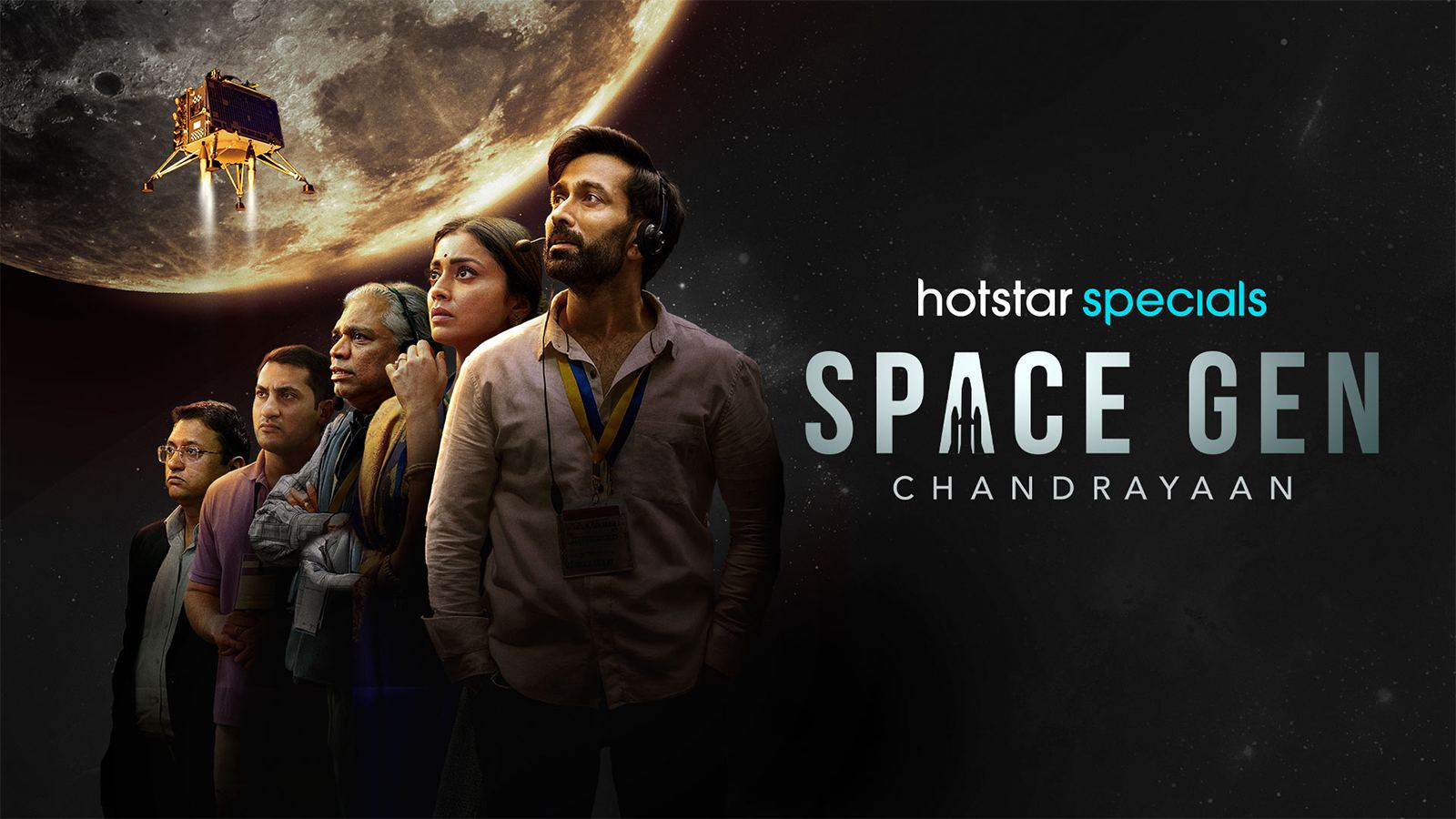
After the failure of Chandrayaan-2, programmer Arjun and mission coordinator Yamini face intense scrutiny and internal politics. As the Chandrayaan-3 mission begins, the team navigates budget cuts, political pressure, and the disruption of the COVID-19 pandemic. Under Ramaiah’s leadership, they must overcome technical setbacks and competition from Russia’s Luna-25.
Performances
Given the superficiality of the characters and the absence of a strong emotional conflict that drives them, it’s difficult to relate to any of the performances much. Among all, it’s Prakash Belawadi who impresses the most; he makes a genuine effort to ensure that the character’s tussle between his ideals and practicality comes to the fore transparently.
Shriya Saran is sincere to her character, and her styling as a firm yet grounded South Indian woman is a high point. Nakul Mehta is a disappointment, often exaggerating the character’s trauma and barely bringing earnestness to the portrayal. Gopal Dutt’s redundant dialogue delivery irks you at times, while Danish Sait and Pratik Gandhi are decent in their special appearances.
Analysis
Space Gen – Chandrayaan is a semi-realistic show documenting India’s journey towards its moon-landing mission. Backed by TVF and created by Arunabh Kumar, it personalises the narrative through the professional drama among ISRO colleagues and bureaucrats, while highlighting geopolitical tensions, technical setbacks, and the financial limitations under which they tasted success.
The series primarily deals with four characters: Arjun, Yamini, Ramaiah, and Mohanty. Arjun, a young ISRO scientist, is yet to come to terms with his father’s death in the Kargil war. The past keeps haunting him, and he cares two hoots for political correctness at work, landing in trouble frequently. An equally duty-bound Yamini speaks through her work, but deals with her temper better.
After his humble beginnings, Ramaiah finally lands a key leadership role at ISRO and almost gives it up due to self-doubt. Mohanty is the sceptic who handles the optics of the organisation: how it’s positioned in the public, negotiating with bureaucrats, finalising budgets, devising plans, doing the hard talk and taking tough calls. He is generally not liked by many around him; such is his role.
The show is all about the team putting the failure of Chandrayaan-2 behind them and working collectively for the success of Chandrayaan 3. Except for Arjun’s psychological ramifications and his angst, the screenplay strictly focuses on the mission, constantly operating within the ISRO workspace, dealing with the scientists and the way they rise above their differences and insecurities.
In its desperation to be an advert for India’s space programme, with constant references to the scientific progress we’re making as a nation, the writing is way too vanilla to evoke any interest. While the team may have done their homework around the technicalities of rocket/satellite launches, the drama is quite superficial. It’s hard to invest in it on a personal level.
The characters are sketchy and one-dimensional, without any effort to give some identity to their existence beyond the mission/work. Though you understand the larger significance of the events in the proceedings, the writing is too convenient, almost indifferent at times. The dramatisation is like ticking off events in a checklist, none of them carrying any strong cinematic merit.
Beyond a point, it’s hard to understand what’s plaguing Arjun and why he is a rebel without a cause. The repeated references to news debates and social media posts often make you wonder if ISRO is worried about public perception over getting the job done well. The character you relate with, to a certain extent, is Ramaiah, caught between his colleagues and superiors, pragmatism and geopolitics.
The circumstances leading to Chandrayaan-3’s launch (the budgetary limitations, transportation challenges, COVID-19 pandemic, and the competition from Russia) had every opportunity to be emotionally uplifting. It prods along quite mechanically and serves as a clear indicator that the show was put together in haste.
The dialogues are generally juvenile and feel like one-liners picked from a motivational speaker’s session. The show takes itself too seriously, lost in trivial details and character trajectories that don’t click, throwing in regular patriotic, self-conscious references to why this is necessary for the nation. The performances, too, are quite superficial.
Space Gen – Chandrayaan is like an under-performing student trying hard to please his master. It’s poorly written, in a hurry to stitch together events without any emotional connection or strong characters. At one level, it is educative, but it is far from engaging.
Music and Other Departments?
The music, by Rohan, probably in an effort to overcompensate for the deficiencies in the writing and the performances, is desperately tense and dramatic (the generic lyrics are a distraction). Shreedutta Namjoshi’s cinematography is alright, serving the purpose, but the CG/VFX work is fairly decent, going by its scale and the way it lends authenticity to the backdrop. The editing is too old-fashioned, and the writing is one of its weaklings, too, barely generating enough anticipation as we move from one episode to the next.
Highlights?
Informative
Technical detailing
Good VFX/CG
Drawbacks?
Lacks strong drama, screenplay
Underwhelming performances
Fact-heavy without emotional impact
Did I Enjoy It?
Only in parts
Will You Recommend It?
Only if you want to watch a show that feels like a Wikipedia entry
Space Gen – Chandrayaan OTT Series Reviewed by M9 News