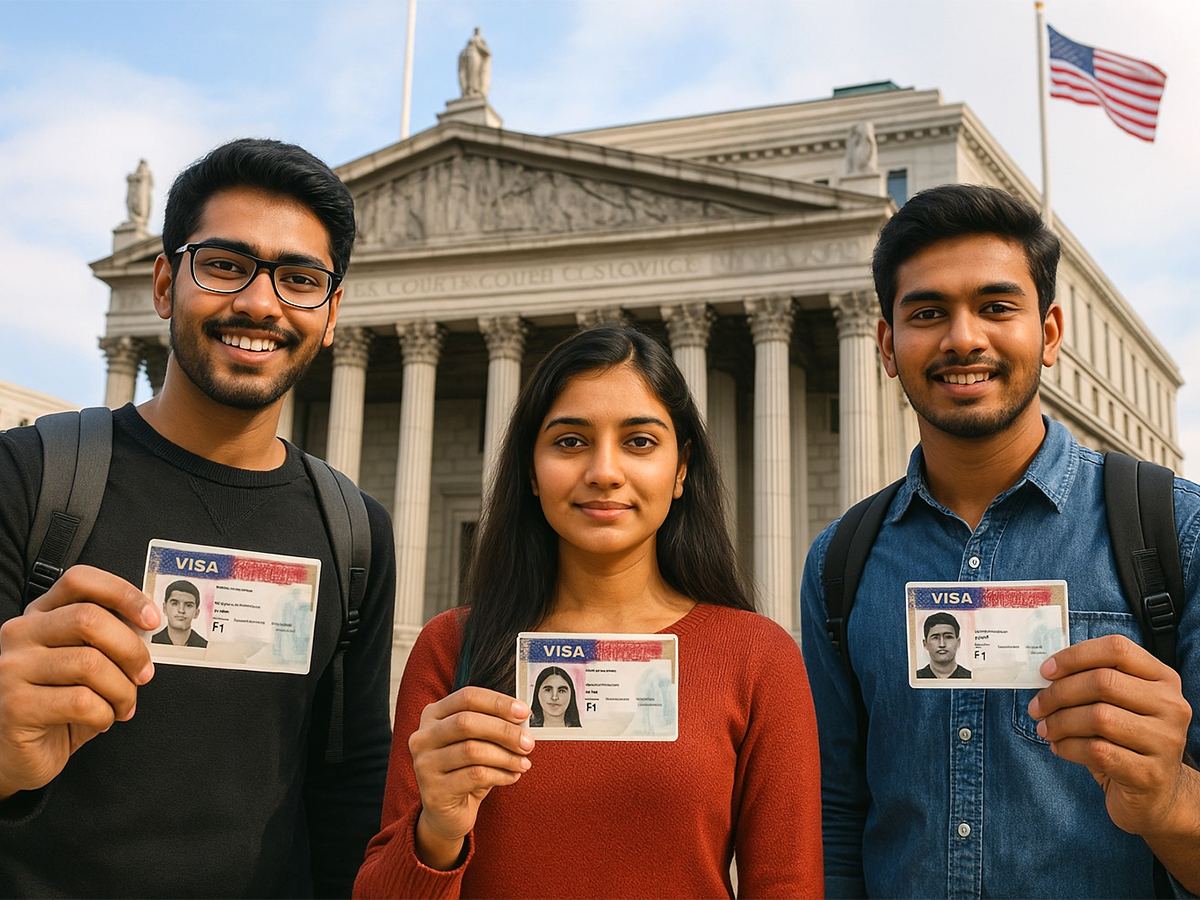
Something is quietly shifting, but it has the potential to significantly impact the lives of thousands of Indian students. The United States is mulling over a visa policy update that could soon change how long students are allowed to stay and study.
Currently, student visa holders can remain in the U.S. as long as they are enrolled full-time. This flexible arrangement is known as duration of status, allowing students to concentrate on their studies without the stress of visa expiration looming over them.
However, that flexibility might be on the chopping block. A new proposal aims to implement fixed visa durations for F, J, and I categories, which encompass students, exchange visitors, and even
foreign media professionals.
If this rule goes through, students would have to continuously apply for extensions as their visa dates come up. Experts warn that this could lead to more delays, increased paperwork, and a whole lot of uncertainty.
There’s also a legal twist. Right now, a student only starts to accumulate unlawful presence if immigration authorities formally note a violation. With the proposed changes, even unintentional overstays could result in immediate penalties.
For Indian students, who currently represent the largest international group in the U.S., this could be a game-changer. Recent data shows that over four lakh Indian nationals were enrolled in American universities in 2024.
This isn’t the first time such a rule has been floated. A similar proposal emerged in 2020 during the Trump administration but was ultimately shelved. Now, there’s growing concern that this rule could resurface and be enacted without any public feedback.
To add to the anxiety, many admitted Indian students are still waiting for F1 visa interview slots to become available. It’s already July, and classes for many are set to begin in August.
On social media, students are expressing their panic. One post mentioned that the individual hasn’t even packed or bought tickets because their visa interview is still not scheduled. That feeling of being stuck is spreading rapidly.
The message is pretty straightforward. The United States is reconsidering how much freedom it wants to extend to international students. What’s less clear, though, is how these students are meant to plan their futures when everything feels so uncertain.
Policies that create more anxiety than understanding often end up driving away the very individuals they aim to attract. When education turns into a constant calculation of visa requirements, it loses its essence as a place for learning and instead feels like an endless
exam.