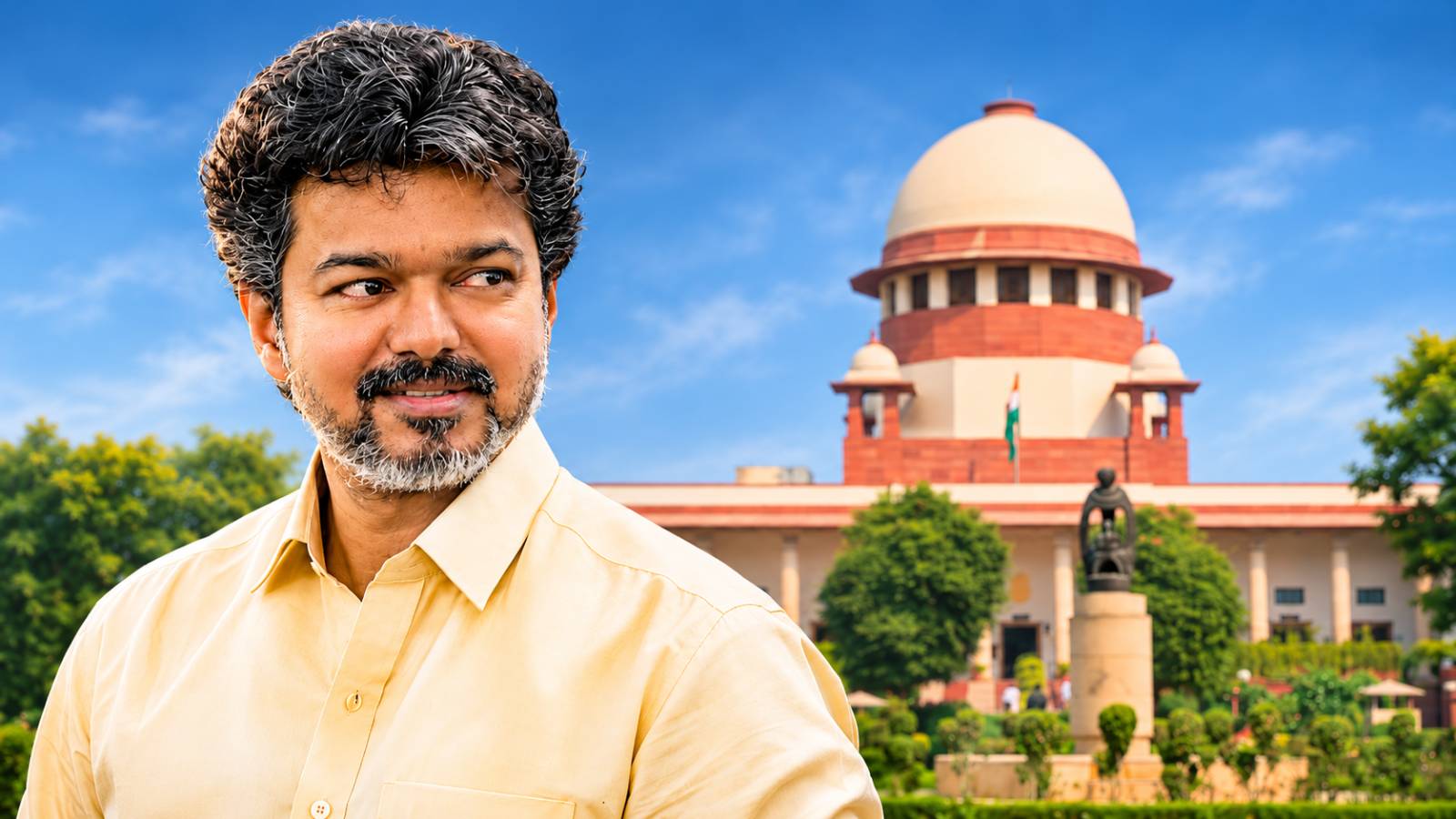
The Thiruparankundram Karthigai Deepam issue is turning into a difficult test for Tamil Nadu Chief Minister Vijay. The controversy is no longer just about where a religious lamp should be lit. It is also about why the government failed to follow the direction issued by the Supreme Court. On November 20th, the Supreme Court permitted an authorised team to light the Karthigai Deepam at the disputed Deepathoon on November 24th. The Court laid down clear conditions to avoid law and order problems and made the District Collector responsible for supervising the arrangements. It also clarified that the permission was only for that occasion and would not settle the dispute over the site for future years. But when Karthika Deepam arrived, the lamp was lit at the usual location near Uchipillaiyar Temple. The Deepathoon remained unlit.
An Apology after the Festival:
Madurai Collector Nishant Krishna has now apologised to the Supreme Court for failing to implement its direction. In his affidavit, he said the temple trustees opposed lighting the lamp at Deepathoon and wanted the ceremony to continue at its traditional location. He also stated that the administration had made efforts to carry out the order but could not proceed because of their objections. The temple administration maintains that Deepathoon is a historical survey stone and that there is no established tradition of lighting the lamp there. That claim is part of the larger dispute before the courts.
But the question remains: could the temple trustees’ objection take priority over a specific Supreme Court direction? The government was expected to ensure compliance while managing the concerns raised by the temple authorities. There is another reason why this failure has upset devotees. Karthika Pournami comes only once a year. Those who wanted to see the lamp lit at Deepathoon have missed their opportunity and must now wait another year. An apology after the festival cannot make up for that.
Will the Government Face Contempt Proceedings?
On November 25th, the Supreme Court declined to initiate contempt proceedings on its own but allowed the petitioners to file a separate contempt petition. This does not mean the government has been cleared, nor does it mean anyone has been found guilty of contempt. Under the Contempt of Courts Act, 1971, civil contempt requires wilful disobedience of a court order. The court will have to examine why the direction was not implemented and who was responsible. The government had also filed a review petition against the November 20 order. But filing a review petition does not automatically suspend the original direction. Unless the Supreme Court stays or modifies it, the order remains binding.
Would the Government Respond the Same Way to Another Religion?
The episode also raises a question about equal treatment. Would the government have allowed a major religious observance of another faith to pass in the same way despite a clear court direction? The government must show the same respect for religious sentiments and judicial orders, irrespective of the community involved. For Vijay, this issue needs more than an apology from the district administration. His government must explain why the Supreme Court’s direction was not implemented despite the safeguards laid down by the Court. The next round of proceedings will determine whether the failure warrants contempt action and where responsibility lies.
A government can challenge a court order through legal channels. But until that order is stayed or changed, it is expected to follow it. That is the basic principle at the heart of this controversy.