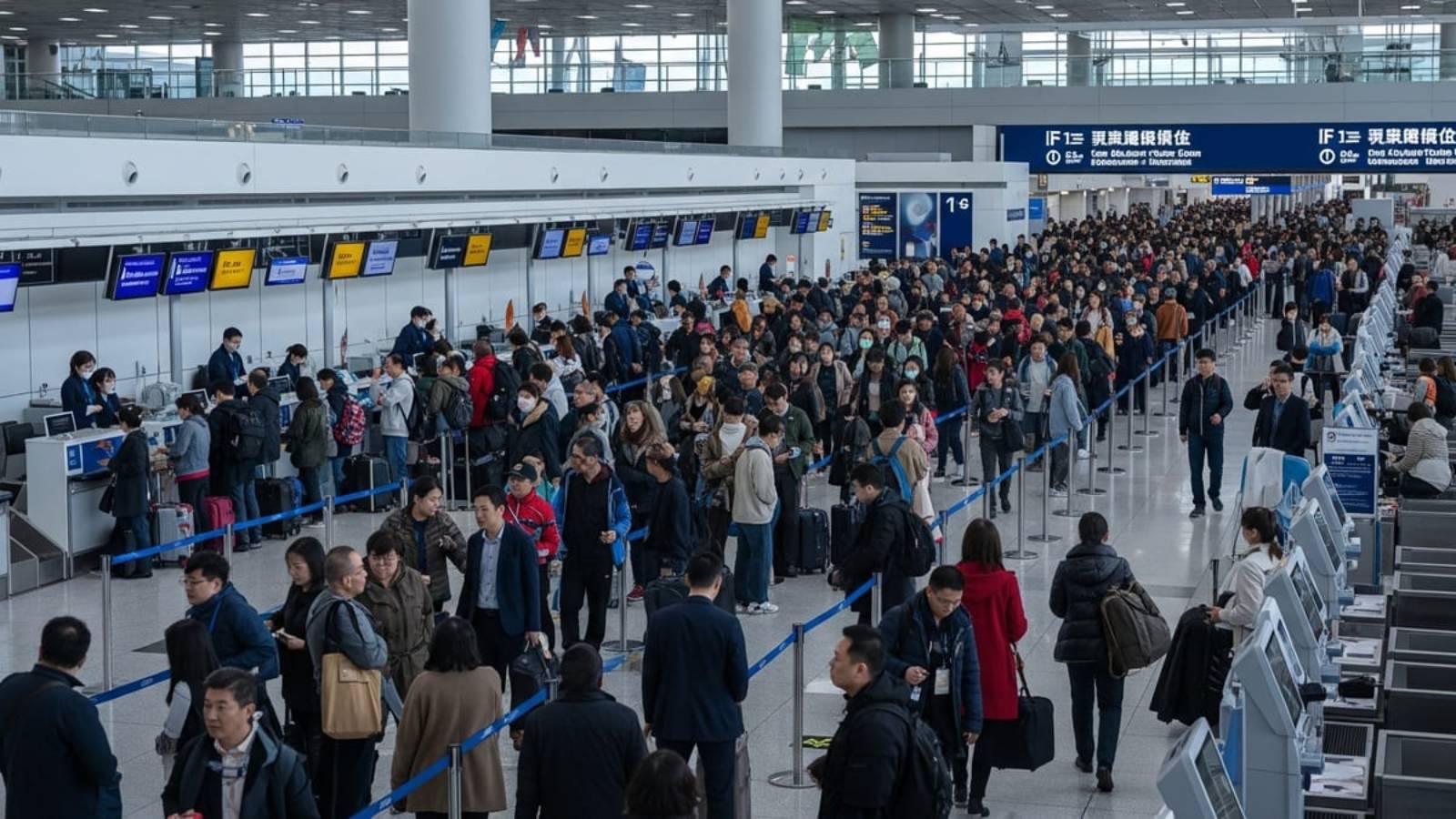
Thousands of passengers across Asia were left stranded on January 28, 2026. You faced widespread disruption as flight operations broke down at major aviation hubs, affecting travel plans across several countries in the region.
Disruptions hit major Asian aviation hubs
The disruption affected airports in Thailand, Japan, Singapore, India, Malaysia, Indonesia, and parts of China. You saw delays ripple across both domestic and international routes, impacting travellers moving through Asia’s busiest transit points.
Nearly 3,000 flights disrupted in a single day
Data shows 2,975 flight disruptions across 11 key airports. Of these, 2,903 were delays and 72 were cancellations. This pattern points to severe congestion rather than a complete shutdown of operations.
Delhi airport sees the worst impact
Indira Gandhi International Airport in Delhi faced the highest disruption. You experienced 696 delays and 17 cancellations here alone. The scale of congestion highlighted pressure on India’s largest aviation gateway.
Southeast Asian airports follow closely
Singapore Changi recorded 396 delays, while Kuala Lumpur International Airport saw 340 delays. You should note that both airports reported zero cancellations, indicating operational strain rather than grounded fleets.
Multiple regional airports affected
Other airports hit hard included Mumbai, Bangkok’s Suvarnabhumi Airport, Jakarta Soekarno Hatta, Tokyo Haneda, Chengdu Tianfu, and Phuket. You felt the impact regardless of whether you travelled short haul or long haul.
Airlines struggle across service models
IndiGO recorded the highest airline-level disruption with over 400 delays and 21 cancellations. Singapore Airlines, AirAsia group carriers, Scoot, Batik Air, Air India, Thai Airways, and Japan Airlines also faced operational challenges.
Congestion exposes system weaknesses
Both low-cost and full-service airlines were affected. While strong travel demand drove congestion, you can see how capacity limits, air traffic control constraints, and resilience gaps continue to strain Asia’s aviation systems.