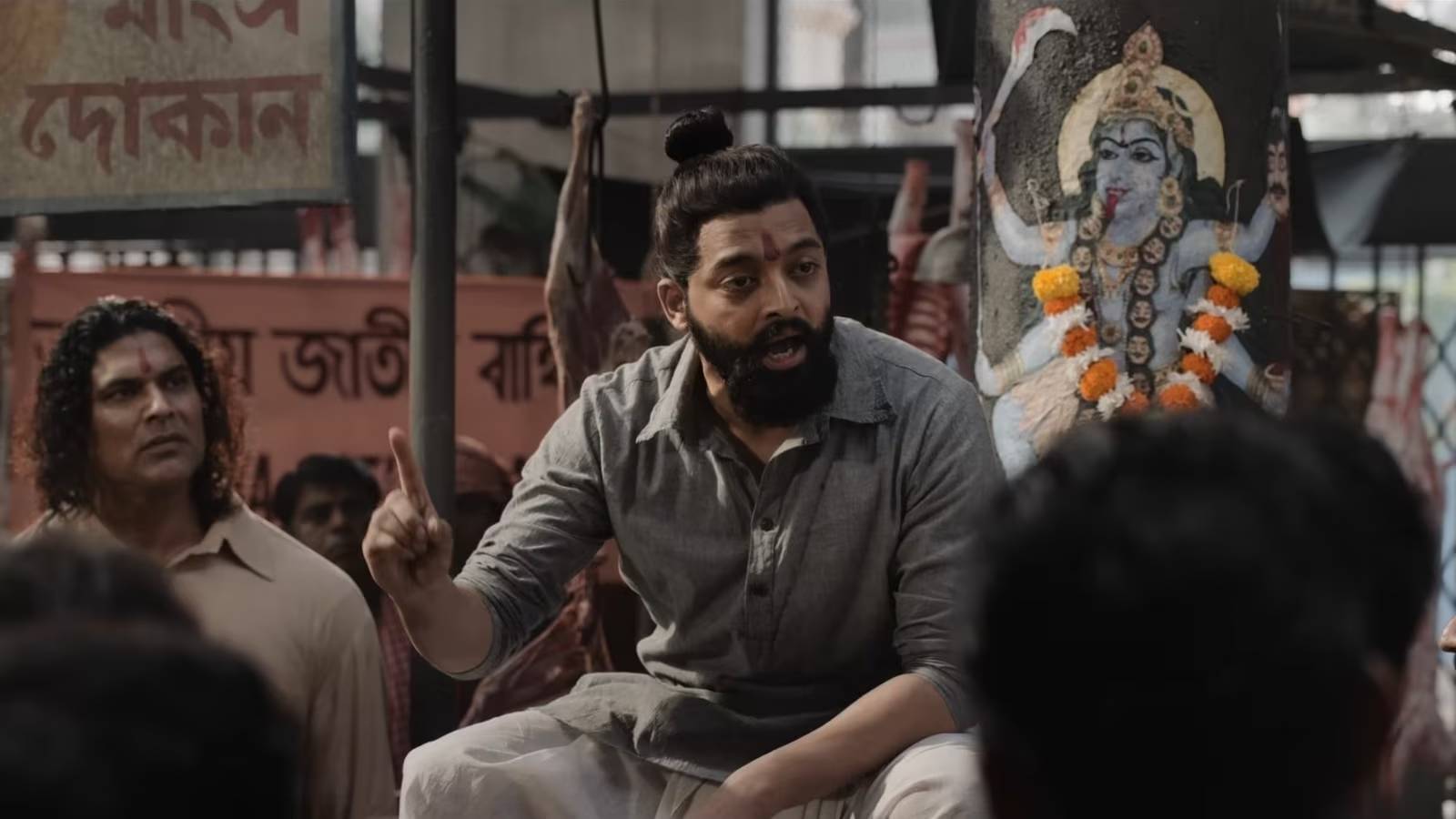
Imagine making a film about Bengal and still managing to offend Bengalis themselves. That’s exactly what director Vivek Agnihotri has done with his latest film, The Bengal Files.
The film explores Direct Action Day and the Noakhali riots, depicting the violence as genocide. It claims that these historical events were deliberately kept out of mainstream narratives.
Even before its release, the film sparked controversy. Now, it has upset many Bengalis who feel misrepresented.
In one scene, a Bengali girl is shown falling in love with a non-Bengali man. Viewers criticised this as reinforcing the tired stereotype of Bengali men being weak or unattractive.
This isn’t a new complaint. Fans argue that Bollywood has long portrayed Bengali men as timid or powerless, while mocking the Bengali accent for cheap laughs.
Bengali women, too, are often shown in an exaggerated light overly liberal, seductive, or even obsessed with superstitions like kala jaadu.
Festivals like Durga Puja, Kali Puja, and Saraswati Puja are often used merely as dramatic backdrops, not with cultural authenticity.
Critics feel that Bengal’s spiritual depth, artistic legacy, and its role in India’s freedom movement are frequently ignored by mainstream cinema.
These portrayals matter. Stereotypes, especially in films, influence how entire communities are perceived by wider society.
For instance, independent women in films are often shown smoking, drinking, and partying. But true independence goes far beyond these superficial traits.
Not every South Indian eats idli-sambar. Not every Bengali eats fish.
Cinema has a powerful role in shaping perceptions. It’s time filmmakers move past lazy stereotypes and start reflecting the true diversity and richness of India.