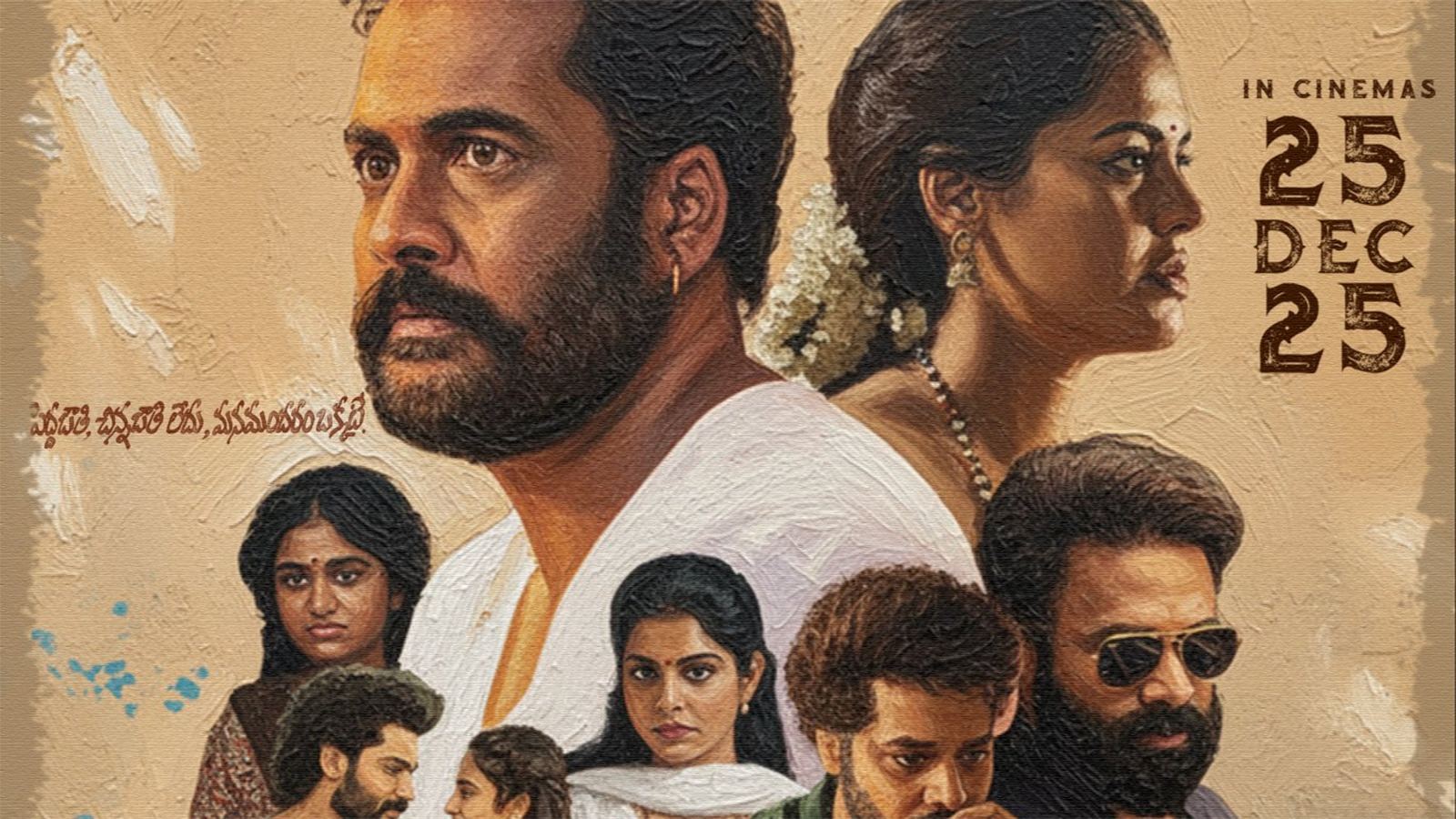
The makers of Dhandoraa have unveiled the film’s trailer, offering a compelling look into a rural social drama that places caste, dignity, and power at the centre of its narrative. Produced by Ravindra Banerjee Muppaneni under the Loukya Entertainments banner and directed by Muralikant, the film is conceived as an idea-driven work that reflects lived social realities rather than stylised cinema. With its emphasis on realism, dialogue, and performance, Dhandoraa signals a clear intent to engage audiences with uncomfortable yet necessary conversations.
The trailer begins with the evocative image of a dead body being carried across villages, immediately framing death as the catalyst for the unfolding conflict. A child’s simple question is met with the line “మన చావు పుట్టకలన్ని ఆ ఊరి అవతల రాసిండు రా దేవుడు,” laying bare the invisible but deeply entrenched boundaries that define social belonging. The narrative initially moves through everyday village life, marked by native humour and familiar rhythms, before steadily shifting into a more confrontational space. As the issue of cremation becomes contentious, dialogues like “చావు నుంచి అయిన తప్పించుకోవచ్చు కాని కులం నుంచి తప్పించుకోలేము” and “మన బ్రతుకులు మారాలంటే మనకి కావాల్సింది ఒక్కటే… చదువు” articulate the film’s ideological stance. The courtroom moment that follows, led by Shivaji’s restrained delivery of “కులం మత్తు… time పట్టింది,” encapsulates the film’s central argument with understated impact.
The trailer-driven buzz has been reinforced by the film’s promotional material. The first single “Pilla” struck a chord with audiences, crossing 3.2 million views and gaining traction through its widely shared hook step on social media. The release of the intense title track, composed by Mark K. Robin, further added to the film’s growing visibility, while the teaser’s grounded visuals and the line “చావు అనేది మనిషి ఇచ్చే ఆఖరి మర్యాద” strengthened its thematic recall.
As the film moves closer to release, Dhandoraa is gathering steady attention across digital and trade circles. With early overseas premieres scheduled from December 23, 2025, followed by a worldwide theatrical release on December 25, 2025, the film is positioning itself as a socially relevant year-end release aimed at provoking reflection and discussion across audiences.