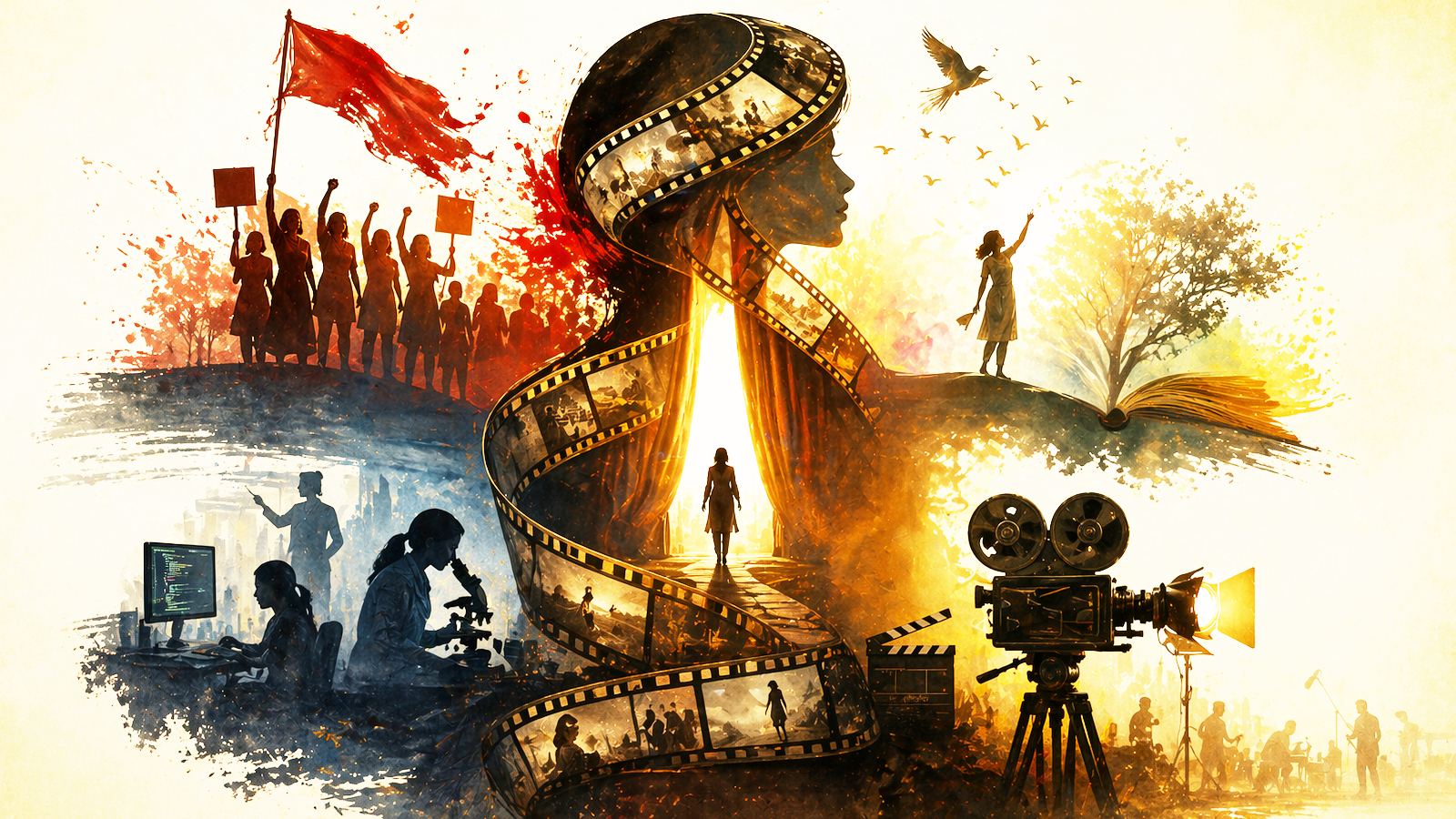
There was a time when Telugu cinema gave space to well-written female characters, not just as part of the story, but as its emotional core.
Filmmakers like Sekhar Kammula built narratives around women who felt real. They had flaws, individuality, and a voice of their own. They weren’t written to fit into a formula, they were written like people we know.
Even outside Telugu, directors like Gautham Vasudev Menon consistently created women characters who stayed with the audience. They were layered, expressive, and emotionally grounded, never just placeholders in a hero’s journey.
That kind of writing feels rare today.
Women are still present in films, but their roles have become limited. In many cases, they exist around the hero rather than within the story. Love interest, emotional support, or glamour, the depth has slowly faded.
And when films attempt women-centric narratives, they often swing too far, either becoming overly dramatic or turning into message-heavy projects that feel less organic.
So what changed?
The shift towards scale-driven cinema is one reason. With bigger budgets, pan-India ambitions, and hero-centric storytelling dominating the space, character-driven writing has taken a backseat, especially for female roles.
There’s also a hesitation around market viability. The assumption that women-led stories may not perform strongly in theatres has quietly shaped creative decisions.
But the result is a clear void.
Because strong female characters don’t just represent women, they strengthen the story itself. They add perspective, emotional weight, and authenticity.
That’s what filmmakers like Sekhar Kammula and Gautham Menon consistently delivered.
And now, with very few voices exploring that space, the absence is visible.
The audience hasn’t rejected such characters.
They simply aren’t being written anymore.