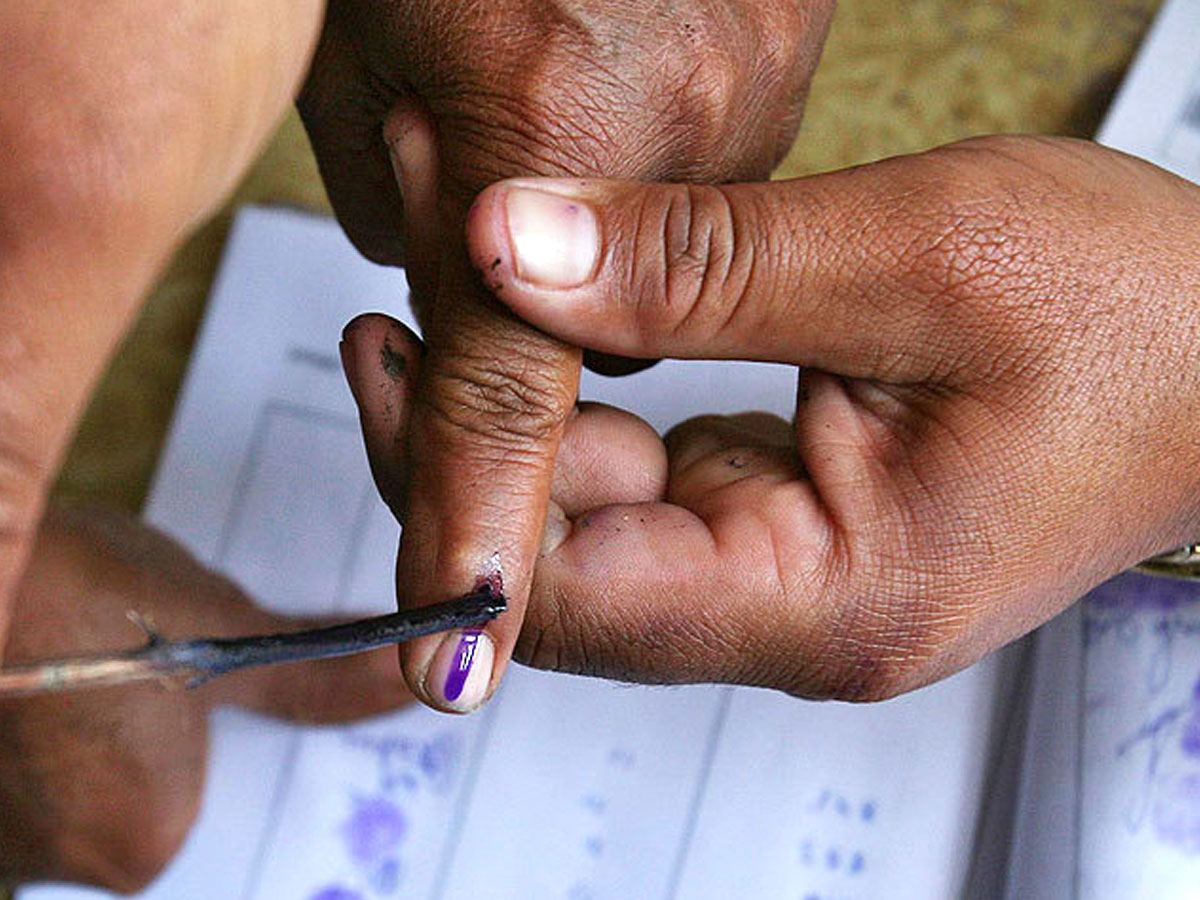
In the ongoing elections in India, the iconic purple-black ink mark on voters’ fingers is hard to miss.
This ink, made exclusively by Mysore Paints & Varnish Ltd., a Karnataka Government Undertaking, plays a crucial role in preventing fraudulent voting by marking individuals who have already cast their ballots.
Approximately 26.5 lakh small bottles of this indelible ink, each with a capacity of 10 ml, are produced for each election cycle.
The use of indelible ink to prevent multiple voting is a longstanding tradition in Indian elections.
Initially mentioned in the Representation of the People Act (RoPA) of 1951, the ink was applied to the thumb or finger of voters before they received their ballot papers.
This practice continued until the introduction of Electronic Voting Machines (EVMs), where the ink is now applied before voters cast their votes by pressing a button on the EVM.
The indelible ink contains silver nitrate and is designed to be resistant to soap, liquids, and detergents for up to 72 hours after application.
Its chemical composition and manufacturing process are closely guarded secrets, known only to a select few.
The ink was initially developed in the 1950s by scientists at the Council of Scientific & Industrial Research (CSIR) in response to the need to combat electoral fraud.
Mysore Paints & Varnish Ltd. has been licensed to manufacture the ink since 1962. Despite being a government undertaking, the company operates commercially and exports the ink to over 25 countries worldwide.
Interestingly, the application of the indelible ink can vary from country to country. For example, in Cambodia and the Maldives, voters dip their fingers into the ink, while in Burkina Faso, it is applied with a brush.