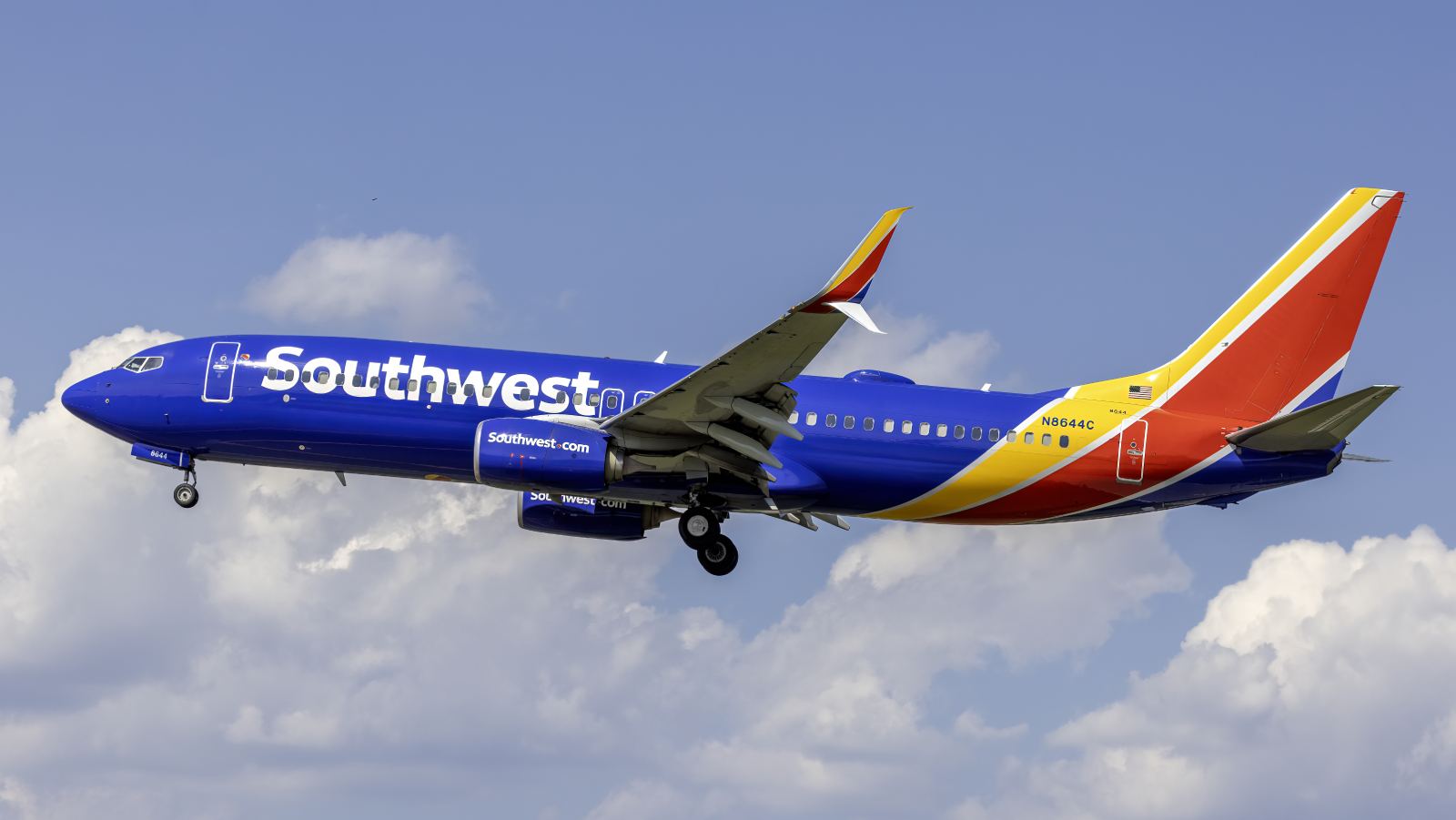
Southwest Airlines has announced plans to cut up to 30 routes from its network in March 2026 in an effort to improve profitability. The airline’s decision reflects a shift in strategy as it balances efficiency with passenger demand.
Biggest Impact: Denver and St. Louis
Denver International Airport (DEN) and St. Louis Lambert International Airport (STL) are the hardest hit, with each losing seven routes, according to Cirium schedule data.
The cuts include Denver’s nonstop flights to Albany, Buffalo, Hartford, Charleston, Charlotte, Norfolk, and Providence. From St. Louis, flights will end to Hollywood Burbank, Charlotte, Des Moines, Little Rock, Tulsa, Oklahoma City, and Wichita.
Permanent vs Seasonal Cuts
Most of the reductions are seasonal in nature, with only 11 considered permanent. However, all affected routes had been operating year-round until this change, making the decision a noticeable shift in Southwest’s scheduling.
Expansion Despite Cuts
Interestingly, the March 2026 schedule also introduces more than a dozen new routes, including a brand-new destination: McGhee Tyson Airport (TYS) near Knoxville, Tennessee.
New feeder routes will include Chicago Midway–Milwaukee and Nashville–TYS, alongside fresh connections from Dallas Love Field, Chicago, and other major hubs.
Shift Toward a Hub-and-Spoke Model
Southwest, traditionally known for its point-to-point network, appears to be testing a hybrid strategy. Four bases — Nashville (BNA), Denver (DEN), Chicago Midway (MDW), and St. Louis (STL) — will see coordinated flight “banks” to improve connections.
This move suggests that Southwest is leaning more toward hub-and-spoke operations while still retaining parts of its original network model.
Aligning With Wider Changes
These scheduling updates come as part of broader adjustments by the airline, which also include the introduction of seat assignments, bag fees, and extra-legroom seating options.
By cutting unprofitable routes and banking connections at major hubs, Southwest aims to improve revenue and efficiency across its network.
The Bigger Question
This strategy highlights how even popular low-cost carriers are adopting traditional legacy-style models to remain competitive. While the hub-and-spoke approach may maximize network utility, whether it will sustain Southwest’s growth and profitability in the long run remains uncertain.