Andhra Pradesh is facing a serious fuel situation, with petrol and diesel shortages causing widespread disruption across the state. Long queues at fuel stations, bunk closures and panic buying have pushed the issue to a critical stage.
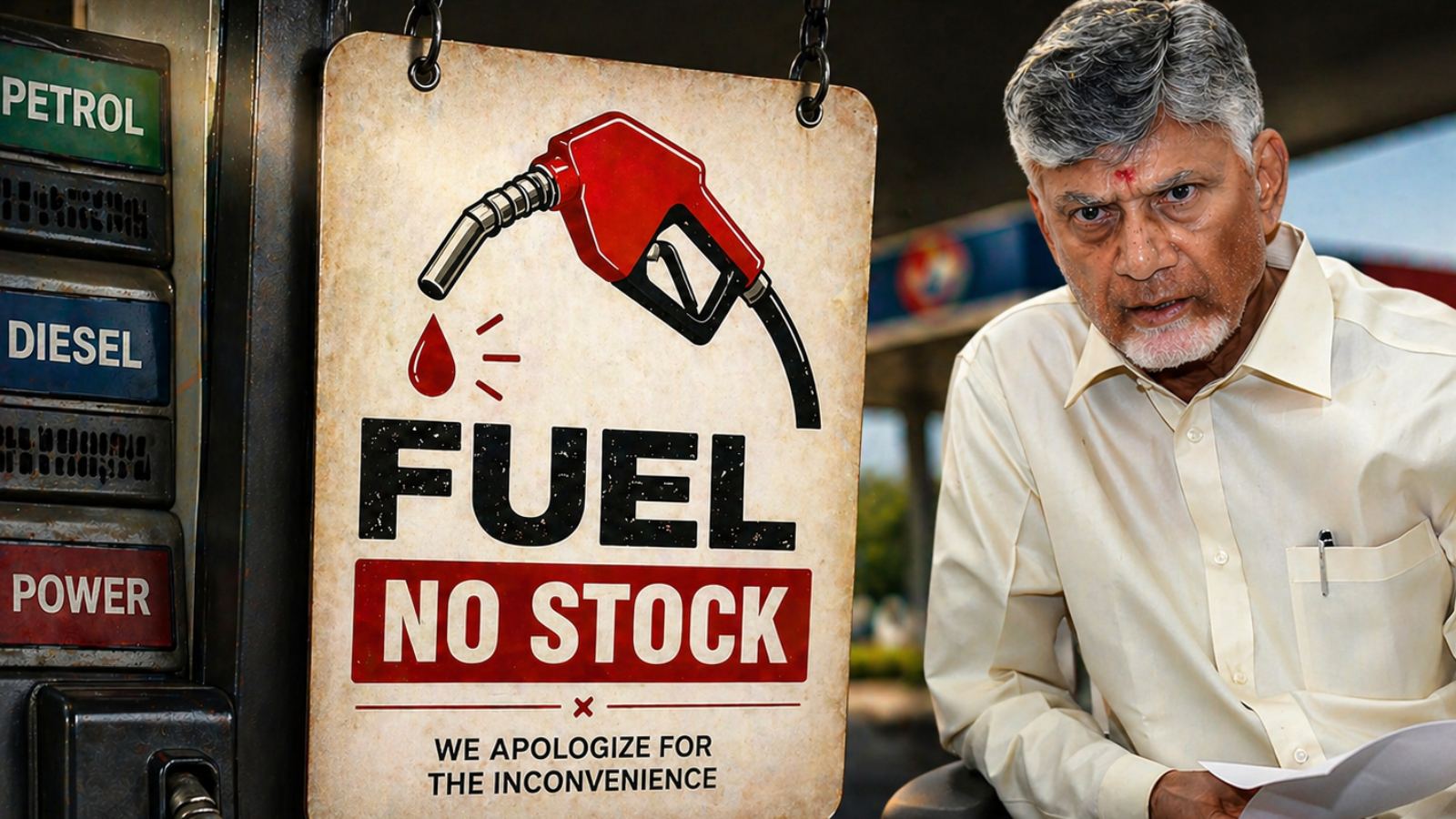
Chief Minister N. Chandrababu Naidu held an urgent review and expressed anger over the delayed response. He questioned officials and oil companies on why timely action was not taken despite early signs of the problem.
He directed that fuel supply must be improved immediately and made it clear that “no stock” boards should not be seen at petrol bunks. He also ordered an inquiry into how the situation escalated so quickly.
The impact is clearly visible on the ground. Out of 4,510 petrol bunks, around 421 are officially shut, though the actual impact appears higher in several districts. Vehicles are lining up in long queues at the few bunks that are open, and in some areas, travellers are getting stranded without fuel.
In Vijayawada, especially near Benz Circle, heavy rush is being reported. Similar scenes are emerging from multiple districts. Farmers are among the worst affected, with many waiting overnight carrying cans and drums to secure diesel for agricultural and aquaculture needs. Movement of crops has slowed due to lack of fuel.
The shortage has spread across regions. Guntur, Palnadu and Bapatla districts are seeing several bunks run dry. In Anakapalli, a large number of highway-side bunks are out of fuel. Tirupati is also affected, with closures reported even in Tirumala. Parts of Visakhapatnam are facing petrol shortages as well.
Officials point to multiple reasons behind the crisis. These include supply disruptions, panic buying, diversion of fuel to bulk users and reduced supply from some companies in recent weeks. While overall availability may not have dropped drastically, distribution gaps have created local shortages.
On normal days, the state consumes about 6,330 kilolitres of petrol and 9,048 kilolitres of diesel. Recently, demand has surged sharply, with petrol crossing 10,000 kilolitres and diesel over 14,000 kilolitres in a single day. This sudden spike has put pressure on existing supply.
To manage the situation, the government has ordered an immediate increase in supply, strict monitoring of oil companies and depots, and the setting up of a control room. A special task force is also being formed to oversee operations.
Chandrababu also suggested introducing a coupon system to ensure farmers get priority access to diesel. He warned oil companies against any negligence that affects the public and indicated that strict action could follow if the situation is not corrected.
Experts have also advised people to avoid overfilling fuel tanks during summer, as heat expansion can lead to leakage or fire risks.
The situation is expected to stabilise in the coming days, but for now, disruption continues across several parts of the state. The issue appears to be less about absolute shortage and more about supply gaps, panic buying and distribution failures.
In crises like this, it is not just availability that matters, but how quickly the system responds before panic turns a shortage into a statewide problem.