The municipal elections in Andhra Pradesh ended on November 1, but the political battle did not end with polling. Allegations of rigging, clashes between party workers and demands for repolling have put the spotlight on the conduct of the elections. While the YSRCP has accused the ruling coalition of using official machinery to influence the outcome, the State Election Commission has defended its arrangements and maintained that polling was largely peaceful.
For the ruling coalition, these elections are an opportunity to demonstrate that its political influence extends beyond the Assembly and into urban local bodies. For the YSRCP, the polls are equally important as it tries to retain its political relevance after losing power. This makes the municipal contest more than just a local election.
YSRCP Turns to the Election Commission
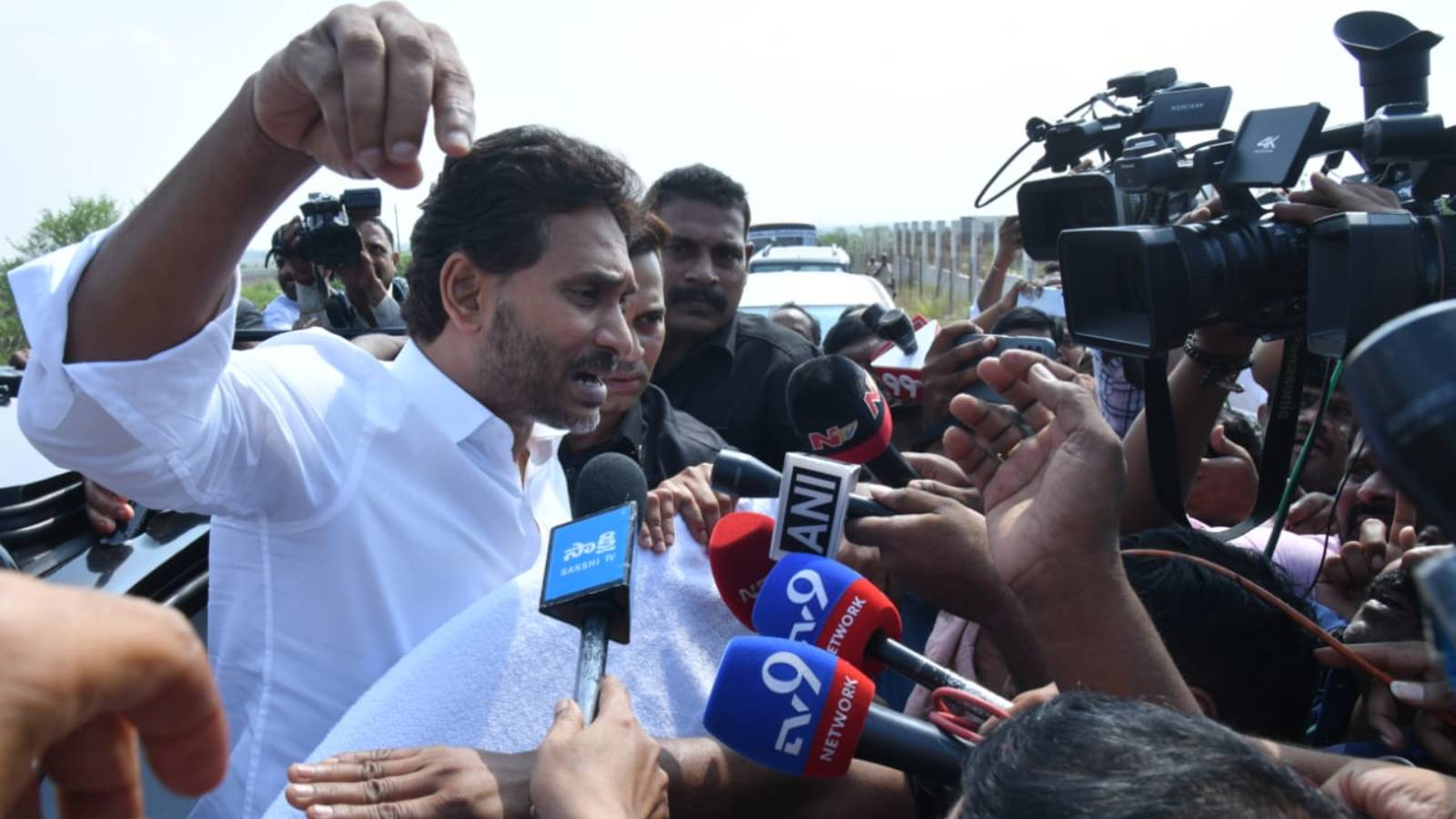
YSRCP leaders staged a protest outside the State Election Commission office in Vijayawada, describing November 1 as a dark day in the state’s democratic history.
They accused coalition leaders of occupying polling stations, forcing polling agents out of booths and attacking party candidates and workers. The opposition also alleged that police and revenue officials were being used to favour ruling party candidates.
MLCs Lella Appi Reddy, Murugudu Hanumantha Rao, Kalpalatha Reddy and Ruhulla participated in the protest. They claimed that repeated complaints to the Election Commission had failed to produce any meaningful response. The party demanded cancellation of polling in areas where irregularities were reported and called for fresh elections.
One of the major concerns raised by the YSRCP was the lack of CCTV cameras and webcasting facilities at several polling stations. Appi Reddy said that out of 12,724 polling stations across the state, only 6,000 to 7,000 reportedly had these monitoring arrangements. He questioned how the remaining booths could be properly monitored.
The party also listed several areas where it alleged electoral malpractice, including Pulivendula, Kadapa, Jammalamadugu, Madanapalle, Chittoor, Chimakurthy, Macherla and Chilakaluripet.
Election Commission Faces Questions Over Poll Management
State Election Commissioner Anil Chandra Punetha defended the election arrangements and said the polling process had been monitored through webcasting and regular communication with district officials.
He said, most districts reported no major problems. While some minor complaints were received, several districts reported no issues at all.
The Commissioner acknowledged a ballot paper printing error in Vijayawada’s 55th ward. Since polling started late, an additional two and a half hours were provided to voters.
On the allegations surrounding Pulivendula, Punetha said he had spoken to the district SP and would take action after receiving the report. He made it clear that the Election Commission could not act without evidence and would examine reports from collectors and police officials before reaching a decision.
His statement that complaints from different political parties were an indication of the commission’s neutrality was particularly noteworthy. However, neutrality cannot be established merely by the number of complaints received. It must be reflected in the commission’s response to every genuine complaint.
Meanwhile, Police Law and Order IG Rajakumari revealed that 275 FIRs had been registered in connection with incidents reported since the nomination process began. Around 40 incidents were brought to the police department’s attention on polling day itself. These figures underline the challenges faced by the authorities during the election process.
Kurnool Becomes a Flashpoint
Kurnool district witnessed several confrontations between YSRCP and TDP leaders and workers. Incidents reported from Adoni, Emmiganur and Kurnool city kept the police busy throughout the day.
At the Government Degree College polling centre covering wards 38 and 39 in Adoni, YSRCP leaders alleged that their polling agents were being prevented from entering while TDP representatives were being allowed inside.
MLC Madhusudhan, Jaya Manoj Reddy, son of former MLA Sai Prasad Reddy, and the husband of the YSRCP municipal chairperson candidate reached the polling station and questioned the police. They also raised allegations of rigging. Police officials maintained that YSRCP agents were already present inside the polling centre. The gathering was eventually dispersed by the police.
A separate confrontation broke out near a polling station in ward 34 after leaders from both parties accused each other of influencing voters. The argument escalated into a clash before police intervened.
Emmiganur also witnessed tension in ward 20. YSRCP in-charge Rajiv Reddy and his supporters reached the polling station alleging electoral malpractice. Police resorted to a lathi-charge to disperse the gathering and took Rajiv Reddy into custody.
In ward 10, a YSRCP rebel candidate and a TDP candidate reportedly clashed, forcing the police to intervene again.
In Kurnool city, former YSRCP MLA Katasani Ram Bhupal Reddy was stopped by the police while moving around polling stations in a vehicle allotted to YSRCP mayoral candidate Sushila. The police objected to his movement in the vehicle without the candidate being present and shifted it to the police station.
These incidents show how fiercely the local body elections were contested. They also highlight the difficulties faced by the police in preventing party confrontations from disrupting polling.
Beyond the Election Results
The municipal elections have become an important test for both the ruling coalition and the YSRCP. The coalition wants to strengthen its position at the grassroots level, while the opposition is looking to demonstrate that it continues to have a political base despite being out of power.
The YSRCP’s decision to approach the Election Commission and demand repolling also reflects its attempt to keep the focus on alleged irregularities.
At the same time, the Election Commission cannot afford to treat complaints as routine political accusations. The reported incidents, the number of FIRs and the concerns over monitoring arrangements deserve proper examination.
The responsibility now rests with the Election Commission to ensure that every genuine complaint is investigated without political favour. CCTV footage, webcasting records and official reports must be examined before decisions on repolling are made.
Counting is scheduled for November 3. The results will indicate which party has gained ground in urban Andhra Pradesh. But the larger question will remain whether the electoral process has maintained public confidence.
Winning local body elections is a measure of political strength. Ensuring that the victory is earned through a fair electoral process is a measure of democratic credibility.