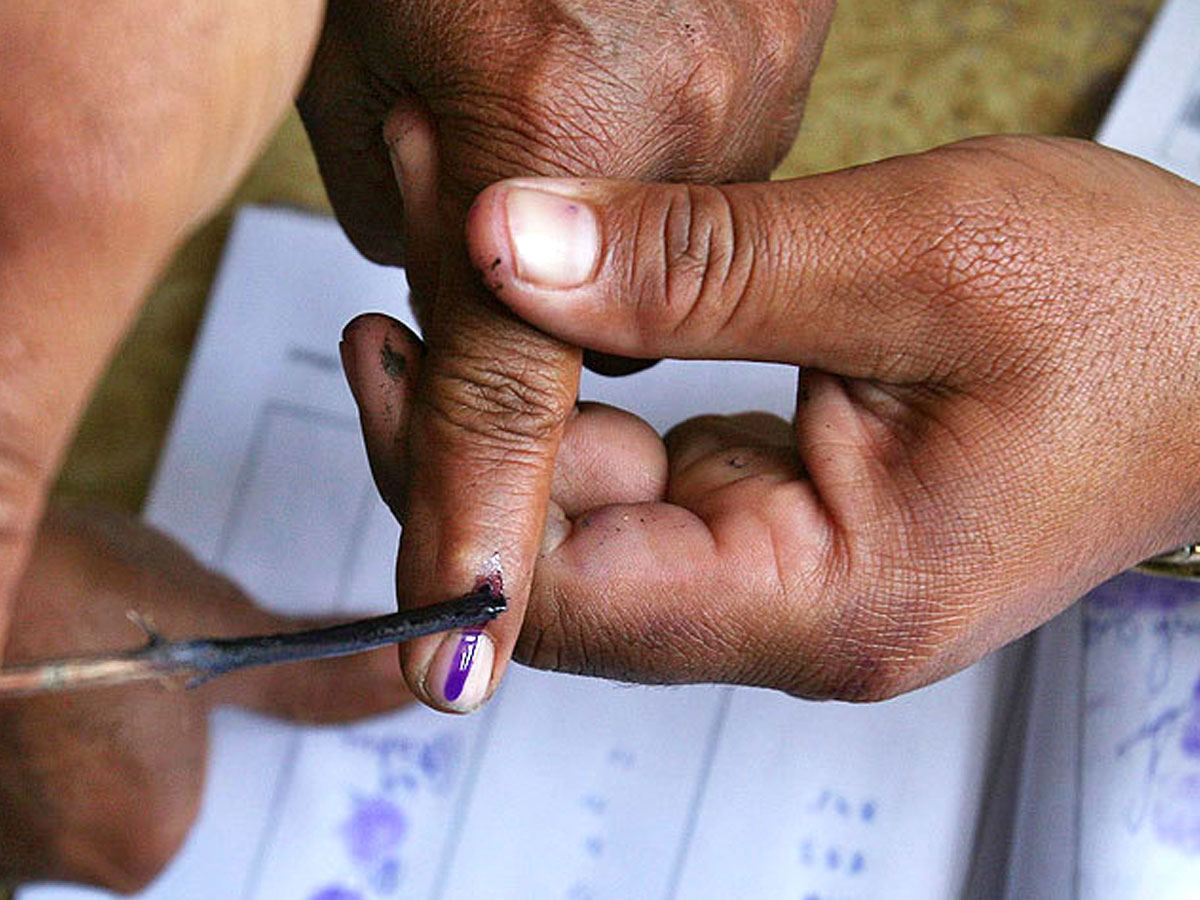
The polling of Indian General Elections will be held on Monday in both Telugu states. Already, many citizens started going to their hometowns to cast their votes.
On the other side, some people are planning long weekend trips as they are not interested in voting.
Especially, this trend is seen among urban citizens across the country. What they fail to realise is the fact that a single vote can make or break governments.
Here are some examples where a single vote changes the fate of leaders and governments.
A single vote dethroned Atal Bihari Vajpayee’s government back in 1999. Vajpayee’s government lasted only 13 months at that time.
When Jayalalitha’s AIDMK, which was a part of the NDA alliance then, withdrew its support, Vajpayee’s government had to undergo a confidence motion in Lok Sabha and eventually lost it by just one vote.
In the 2004 Assembly Elections in Karnataka, AR Krishnamurthy from Janata Dal (Secular) and Dhruva Narayana from Congress contested against each other for the Santhemarahalli (SC) seat.
In the elections, Krishnamurthy got 40751 votes and Dhruva Narayana got 40752 votes. The former lost by just one vote. Later, it was reported that Krishnamurthy’s driver couldn’t cast his vote as he was busy travelling with his boss. If he had cast his vote, things would have been different.
In the 2008 Assembly Elections in Rajasthan, Congress leader CP Joshi lost the CM position by losing elections by one vote. In Nathdwara constituency, Joshi secured 62215 votes while his rival Kalyan Singh Chauhan from BJP for 62216 votes.
Joshi’s wife, mother and driver didn’t cast their votes on that day. Had they cast their votes, he would have won. He was considered a CM candidate at that time. Had he won, he would have become CM for sure because Congress formed the government after those elections.
In the 2018 Assembly Elections in Mizoram, R. L. Pianmawia of Congress lost to Lalchhandama Ralte of the MNF Party in the Tuivawl constituency by just three votes.
In other instances, Adolf Hitler clinched the presidency of the Nazi Party in 1923 by securing victory in elections with a margin of only one vote.
Similarly, in 1868, Andrew Johnson became the president of the United States of America by winning by a mere single vote.