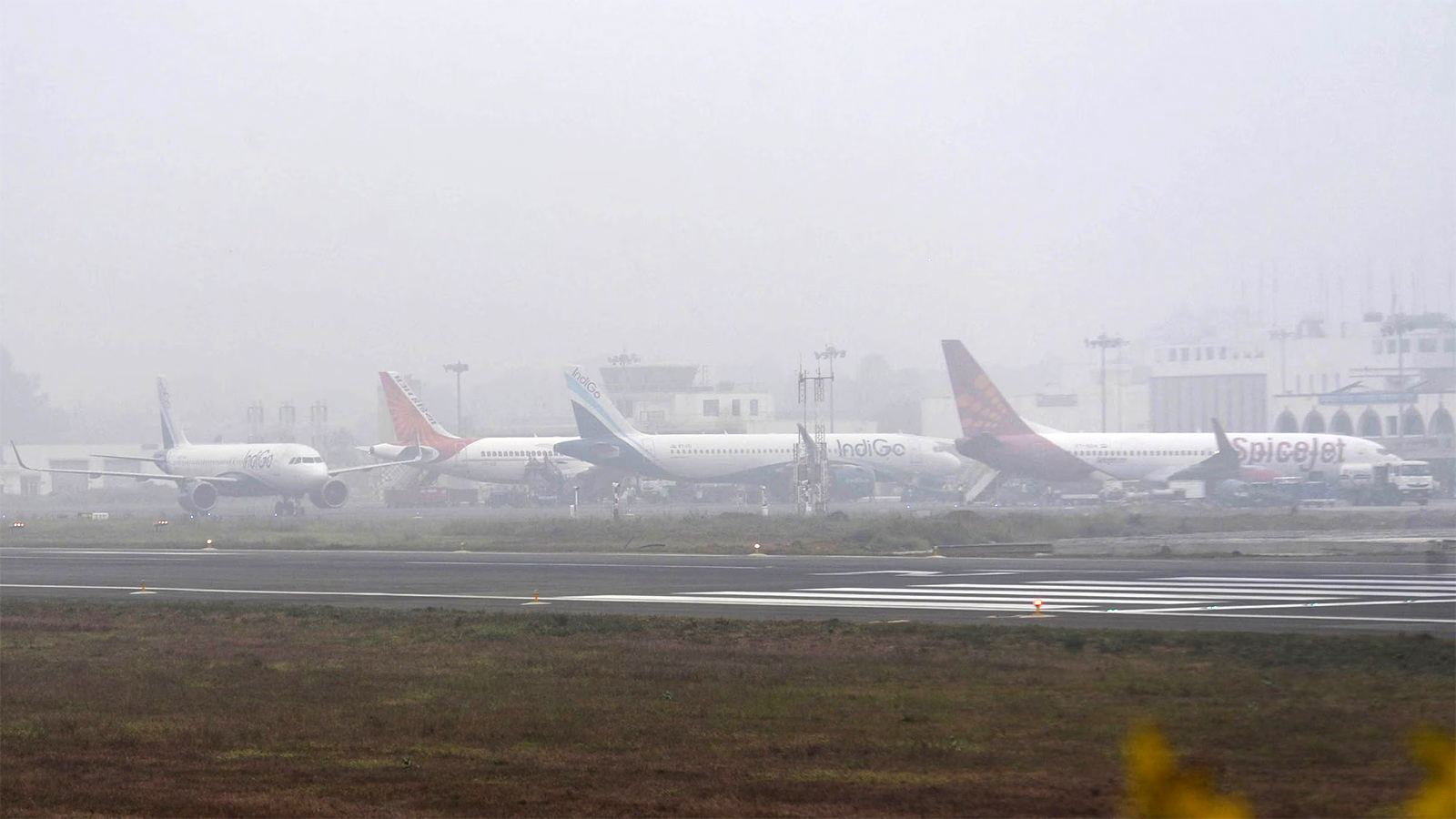
Flight operations in Delhi had only recently begun to stabilise after earlier disruptions. Just as travel started returning to normal, dense fog and worsening air quality caused fresh trouble for flyers across the city and the National Capital Region.
Fog and pollution disrupt visibility
Dense fog reduced visibility across several parts of Delhi and the National Capital Region. Poor air quality worsened the situation, forcing airlines to reassess operations and warn passengers about possible disruptions.
Fresh advisories leave passengers stranded
Airlines issued new travel advisories asking passengers to stay alert. With Indigo already facing backlash over delays and cancellations, this added pressure for travellers planning early morning or late night journeys.
AQI remains in very poor category
Data from the Central Pollution Control Board showed alarming pollution levels. The Air Quality Index stayed in the very poor category at many locations, increasing health risks and complicating airport operations.
Anand Vihar and ITO record severe levels
Anand Vihar reported an AQI of 341, while areas near ITO touched 360. These readings highlight how pollution continues to affect daily life and transport across the capital.
Vulnerable groups remain at risk
Winds on Tuesday brought slight relief, but air quality stayed unsafe. Elderly people and children remained especially vulnerable, with health advisories still in place across several districts.
Airlines warn of delays
Airlines such as IndiGo, Akasa Air, and SpiceJet cautioned passengers about potential delays. You were advised to check flight status updates before leaving for the airport to avoid long waits.
Fog impacts northern India routes
IndiGo stated that winter fog in northern India often disrupts flight schedules. SpiceJet also confirmed delays due to poor visibility in Ayodhya, affecting connecting routes.
IMD issues fresh fog warning
The India Meteorological Department issued a dense fog warning for December 17. Visibility is expected to drop further in isolated areas of Uttar Pradesh and East Madhya Pradesh.
Questions remain over long-term solutions
Despite repeated disruptions, long-term fixes remain unclear. You continue to face uncertainty, raising questions about whether real time monitoring can actually improve flight reliability.