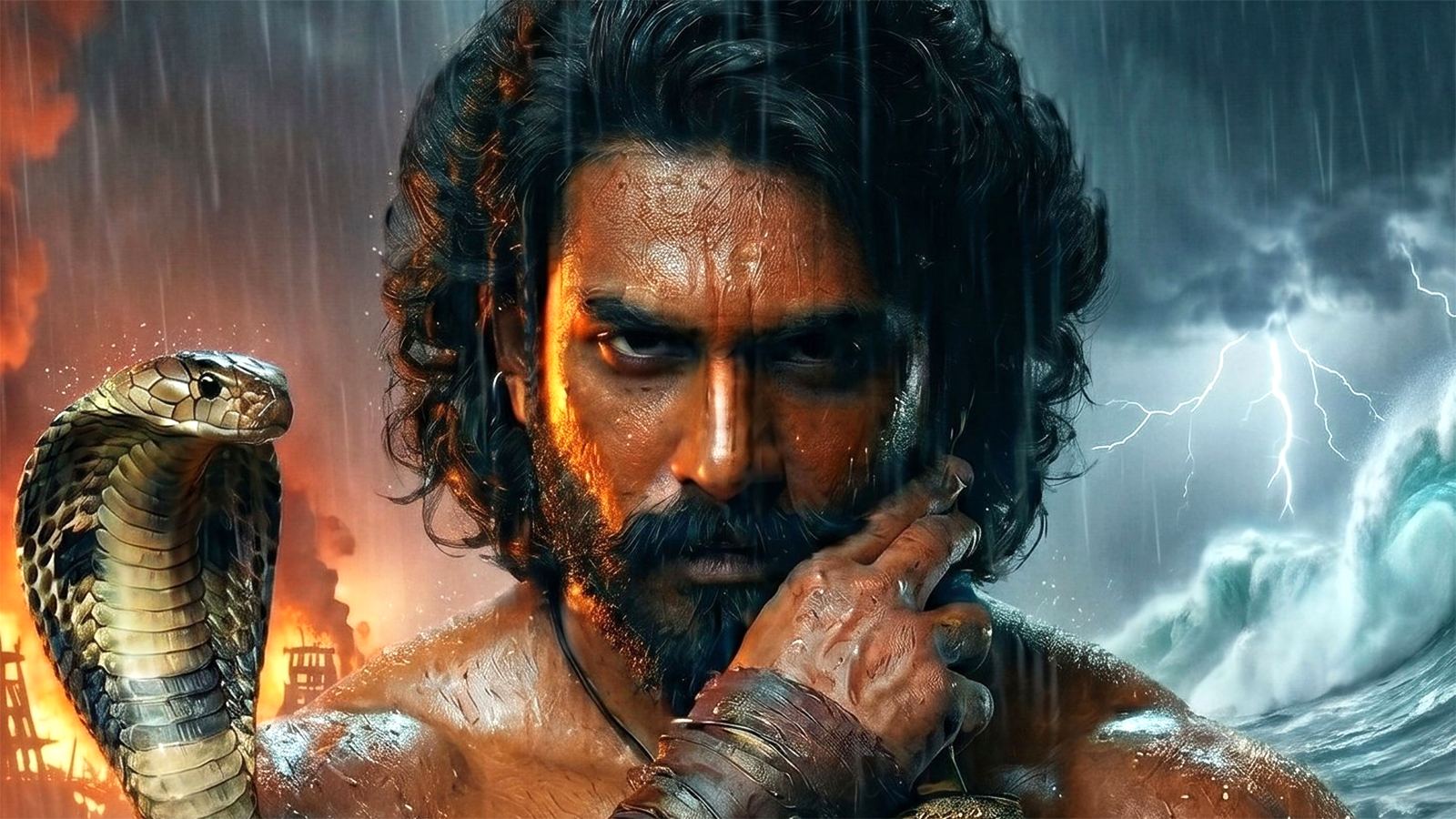
The fate of Nagabandham at the box office has now triggered a fresh debate in Tollywood. Mounted on a budget of over Rs. 100 crores, the film had a mythological-adventure backdrop, heavy promotions, and a clear devotional angle. On paper, it looked like the kind of film that should at least pull crowds in the opening weekend. But that did not happen.
The openings were poor, the weekend numbers were disappointing, and the film has already started looking like a massive disaster. That naturally led to one question: are religious and devotional films losing their box office appeal?
Karthikeya 2 and HanuMan turned into huge pan-India successes by using mythology, faith, and spiritual themes. But after those films, many others tried to enter the same zone, and not all of them worked. Recent films like Hari Hara Veera Mallu, Kannappa, Akhanda 2, and now Nagabandham have all struggled to create the same impact, not just in Telugu but also in the Hindi market, which usually prefers such genre films. So, is the audience getting tired of these films? Maybe to some extent, yes. But the bigger issue is how badly many of these films are being made.
Nagabandham did not flop because audiences suddenly stopped liking devotional or mythological stories. It is flopping because a large section of viewers simply found it to be a bad film. The problem is not Sanatana Dharma, temples, ancient secrets, AI-generated snakes, or spiritual backdrops. The problem is that the film did not engage people enough to make them care. Even reviews reflected the same complaint against Nagabandham, that despite all the scale, mythology, and visual ambition, the film did not have strong enough writing to hold everything together.
Audiences will still come for a religious or mythology-based film if it feels fresh, honest, and emotionally engaging. They are not rejecting the genre. A good example is Mirai, which had its own flaws, but it still managed to do reasonably well because there was sincerity in the way it was made.
That is where many recent so-called pan-India devotional films are going wrong. The moment one film works, suddenly ten more films come with the same kind of marketing language: “war for dharma,” “protect Sanatana Dharma,” “ancient secret,” “divine power,” “chosen warrior,” and “forgotten temple mystery.” After a point, it all starts feeling repetitive. The visuals change, the costumes change, the hero changes, but the pitch remains the same.
Even today, a teaser of a so-called pan-India movie was released with a “The War for Dharma” type caption. This film is produced by a top banner that recently delivered a disaster with Prabhas. But the teaser failed to excite many viewers because it looks like another badly executed, tacky film.
A few years ago, maybe the novelty of the devotional film genre itself was enough to pull some crowds. But now the market is crowded, and too many films are trying to sell themselves using the same religious and mythological packaging. In that situation, the audience is naturally becoming more selective.
They can now clearly see the difference between a film that uses faith to tell a compelling story and a film that uses faith as a shortcut to make quick money by exploiting people’s emotions.