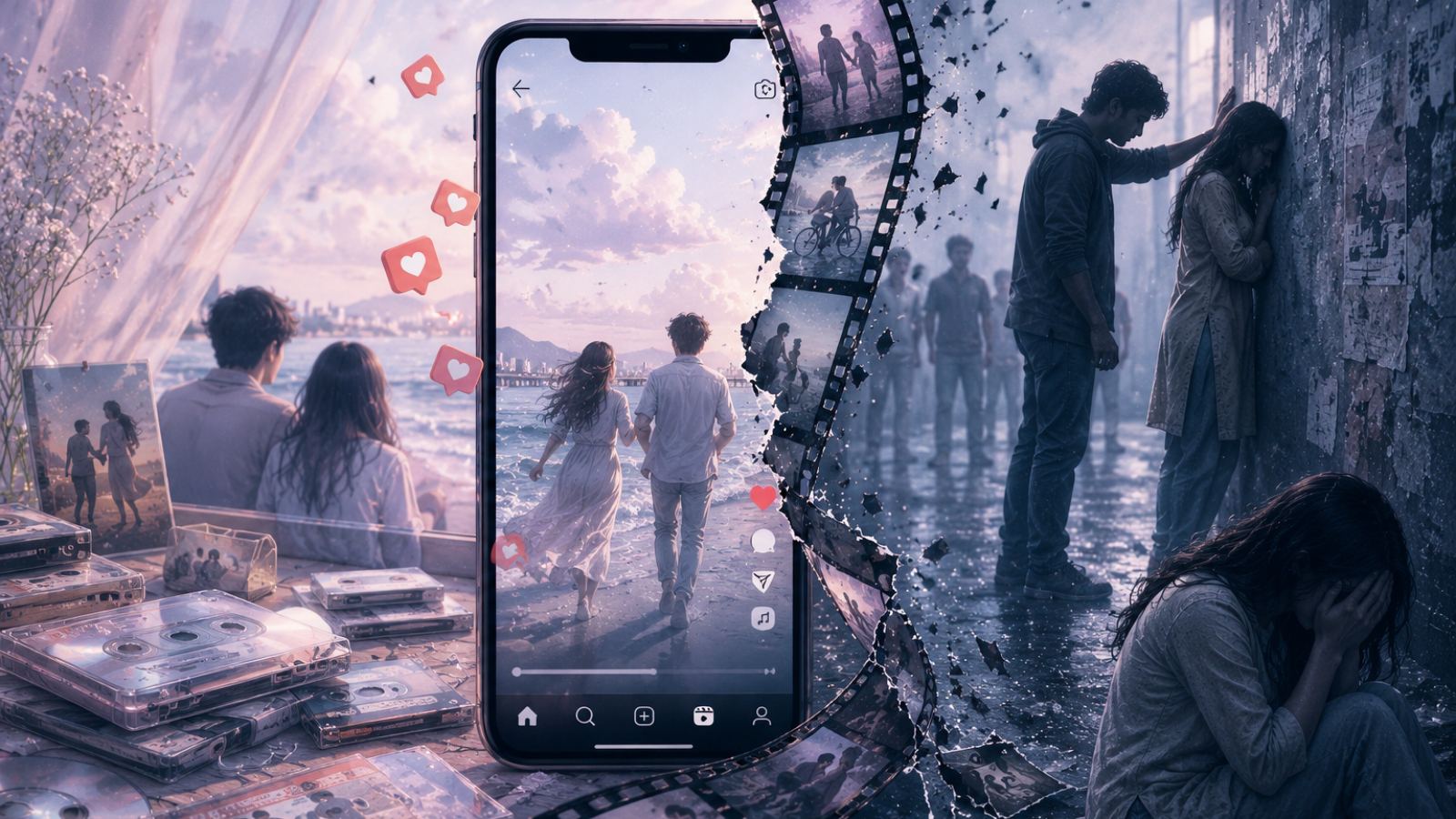
Scroll through Instagram or YouTube on any given day, and you are bound to hit a wave of high-definition edits celebrating the cinema of the early 2000s.
These clips, usually set to a soothing Harris Jayaraj or Mani Sharma melody, paint the era as a flawless golden age of romance, clean comedy, and pure storytelling.
It is a beautiful, comforting illusion, but it is also a massive trap. Social media has effectively re-engineered our collective memory, filtering out the blatant flaws of that period to sell us a pure hit of dopamine.
When we look back at the early 2000s through the lens of a thirty-second reel, we completely forget the staggering amount of mediocrity we actually endured week after week.
For every path-breaking romance or slick action drama that defined our youth, there were a dozen loud, unwatchable films filling up the theatres. It was an era deeply plagued by lazy writing, repetitive formulas, and painfully dated visual aesthetics.
The comedy tracks we now romanticize as peak entertainment were often incredibly loud, relying heavily on slapstick, body-shaming, and crude double entendres to force a laugh.
More disturbingly, our nostalgia completely blinds us to how regressively women were written during this period. Heroines were systematically stripped of agency, reduced to mere visual eye candy or trophies to be won.
Worse still, the writing routinely normalized a deeply toxic rape culture under the guise of mass entertainment, comedy, or heroism.
Take a movie like Idiot (2002), which literally became the OG blueprint for the “roadside loafer” trope. The entire first half is a masterclass in relentless harassment masked as love.
The hero stalks the heroine, threatens her, and aggressively stakes a claim on her life without her consent. Yet, the narrative frames his entitlement as endearing masculinity, eventually forcing the heroine to fall in love with her own harasser.
This normalization wasn’t just limited to the romance tracks; it seeped deeply into the dialogue and comedy of the era’s biggest blockbusters.
In Jalsa (2008), a film still widely celebrated for its sharp wit and chart-buster audio, sexual assault is casually weaponized as a punchline.
During a running comedy bit, the hero casually uses the threat of rape to intimidate, treating a horrific act of violence as a clever, casual tool for male dominance.
By playing these moments for quick, easy laughs, the cinema of that era conditioned audiences to chuckle at situations that were inherently predatory and traumatizing.
Yet, the internet age has canonized these movies by hyper-fixating entirely on their highest points: the legendary music albums and the sheer charisma of the stars.
An incredible soundtrack has the magical power to retroactively elevate a toxic or below-average film in our minds, turning a deeply problematic theatrical experience into a fond childhood memory.
We aren’t actually missing the specific cinema of the early 2000s; we are simply missing the uncomplicated, pre-smartphone world we lived in when we first watched them.
Nostalgia is a notoriously dishonest editor, cutting out the cringe, the terrible screenplays, and the deeply harmful tropes to leave us with nothing but warm feelings.
There is nothing wrong with enjoying a retro throwback, but mistaking a curated edit for absolute cinematic perfection does a grave disservice to how far our storytelling and cultural awareness have actually come.
The next time an early 2000s edit makes you feel like modern cinema has completely lost its soul, remember that you are watching a heavily sanitized highlight reel, not the actual reality of what was on screen.