BOTTOM LINE
Kota Factory Gets Corporate Upgrade
PLATFORM
SonyLiv
RUNTIME
3 Hours (5 Episodes)
What Is the Film About?
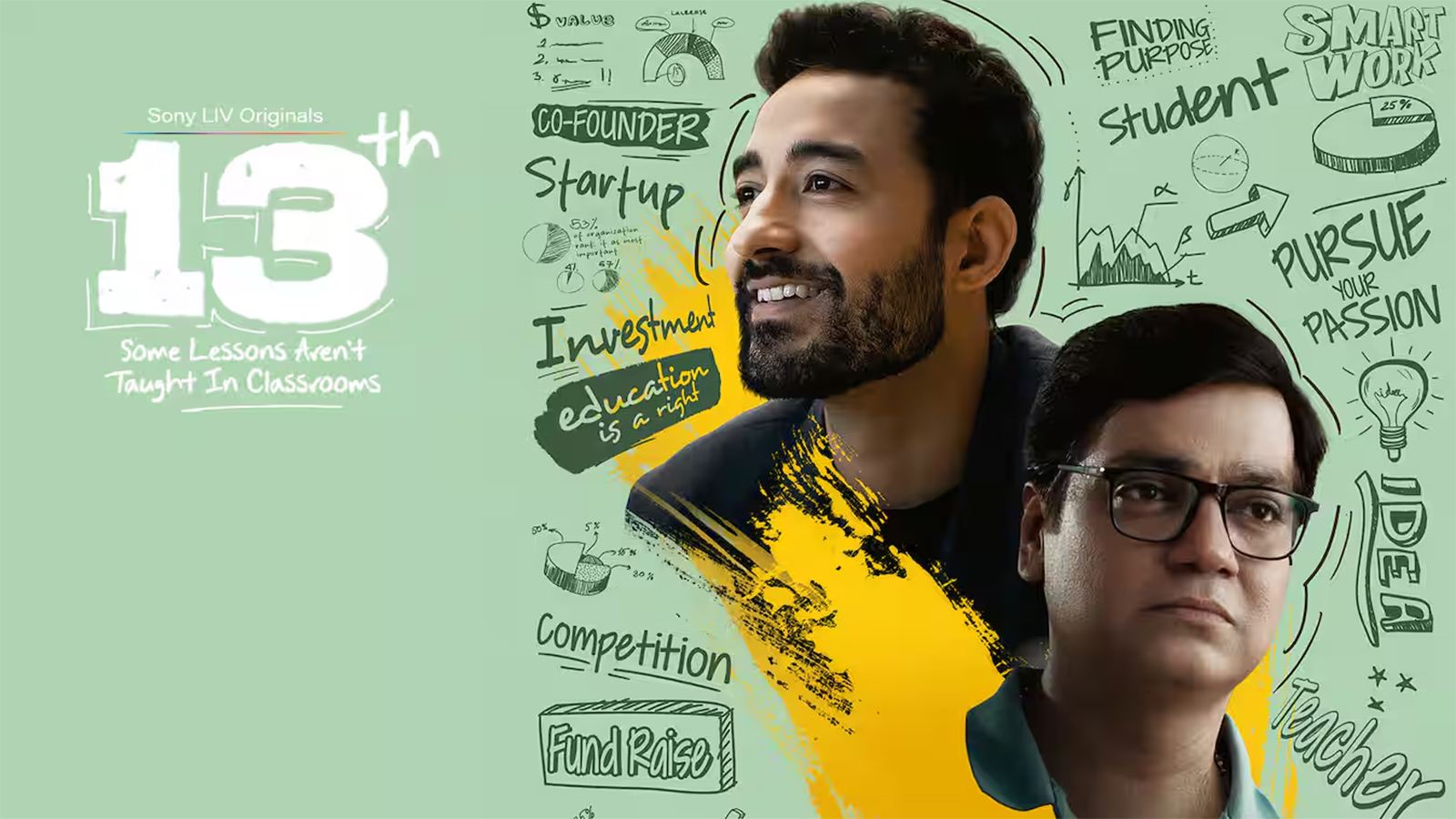
Venture capitalist Ritesh returns to pitch to his former JEE coach, MT Sir. Their partnership stirs up past rivalries and tests Ritesh’s zeal. MT Sir’s entry into an E-Summit forces Ritesh to confront his choices and dilemmas. As the event nears, Ritesh’s rivalry and MT Sir’s pressure escalate, forcing them to face failure. Defeated, they find a new opportunity, using past lessons to rise above their fears.
Performances
Paresh Pahuja, playing both the student and adult avatars of an entitled protagonist, is more at home in the latter. Despite his good performance overall, a younger actor to play the 17-18-year-old Ritesh could have ensured more relatability. Scam 2003’s Gagan Dev Riar is impressive but underused in a one-dimensional role as the low-key, humble and inspirational teacher.
Most of the other characters, Sheena, Mansi, and Abhishek, played by Girija Oak Godbole, Pradnya Motghare, and Keshav Mehta, respectively, display flashes of potential, though they lack agency and are reduced to footnotes in Ritesh and MT sir’s journeys. The on-screen friends conveniently remain sidekicks, whose job is to sit by Ritesh’s side whenever he is down and out.
Analysis
13th, Sony LIV’s latest release this week, is another classic proof of the enduring impact that Kota Factory has create in the OTT market. Every few months in recent years, storytellers and OTT heads have tried to manufacture their clones with the same narrative beats, with a few notable changes in the treatment. This show’s effort to lend another twist to a familiar template yields decent results.
The web series, created by Sameer Mishra and helmed by Nishil Sheth, doesn’t offer any sparklingly fresh insights into the IIT coaching regime and its pressures, but presents a student’s struggles in a unique light by contrasting it with the evolution of ed-tech as a startup model. Structured smartly enough to be consistently relatable, and moving between the past and the present, the show focuses on a unique yet warm student-teacher equation.
Ritesh’s motivation for long-term IIT coaching in Kota is clear. He fails to clear the entrance by a whisker, scoring less in chemistry despite his strengths in mathematics and physics. He wants to use the extra year to overcome his pitfalls, but his life takes many new turns—the exam pattern changes, he gains new competitors, he falls in love, and insecurity gets the better of him.
His teacher, Mohit Tyagi sir, is another version of Jithu bhaiya (from Kota Factory)—he not only teaches IIT, but also life lessons. What’s unique here is its not-so-likeable protagonist: he’s so full of himself, fails to embrace his shortcomings, and loses his way. Years later, the student-teacher relationship is reversed; it’s MT sir’s turn to learn from Ritesh and upgrade himself.
Despite the obvious inspiration from its source material, it doesn’t really try to better it. It romanticises the pressure for IIT entrances, justifying the quest for a seat as if it were a token for ultimate glory. At times, you understand Ritesh’s frustration; one’s never made to feel they’re good enough and is asked to swim their way through, in an ocean.
It’s slightly disappointing that the world always conspires to help Ritesh in every possible way. His father believes in his potential, MT sir believes he’s a genius, and a supportive girlfriend comes forward to bury the hatchet despite her not making the mistake. In both the past and the present, he is entitled, frustrated with the ways of the world, and yet finds people who’re ready to back him up.
In both the backdrops—startup and education—13th’s approach is generic on a writing level. Barring MT sir’s willingness to adapt, you don’t quite understand how his learning paradigm is relevant for a new generation of students or feasible as a business model. Ritesh’s outburst about not backing new ideas and generating new unicorns feels like an impulsive, exaggerated reaction.
However, one needs to understand that films or shows tackling the education system that have clicked in the past have seldom reinvented the wheel or tried to say anything new. 13th, despite its problems, remains an easy, breezy watch for the smooth, low-stakes storytelling – predictable but focused in what it wants to say. The performances and the neat execution help it rise above the rougher edges.
Music and Other Departments?
Though the show doesn’t offer ample scope for music to anchor the proceedings, Goyell Saab’s score stays true to the spirit of the show and brings a seamlessness to the storytelling. The cinematography, by Pratik Parmar, is neat, but what salvages the show to a certain extent is the smart edits, alternating between the past and the present, lending a new dimension to its premise. While a few writing choices are interesting, it lacks an X factor that could help it stand out.
Highlights?
Light and breezy
Neat performances, focused execution
Smart editing
Drawbacks?
Offers nothing new
Remains predictable
Weak characterisation
Did I Enjoy It?
In parts
Will You Recommend It?
If you want something on the lines of Kota Factory
13th Web Series Review by M9