BOTTOM LINE
Period Gangster Saga Is All Show, No Substance
PLATFORM
Netflix
RUNTIME
3 Hours(5 Episodes)
What Is the Show About?
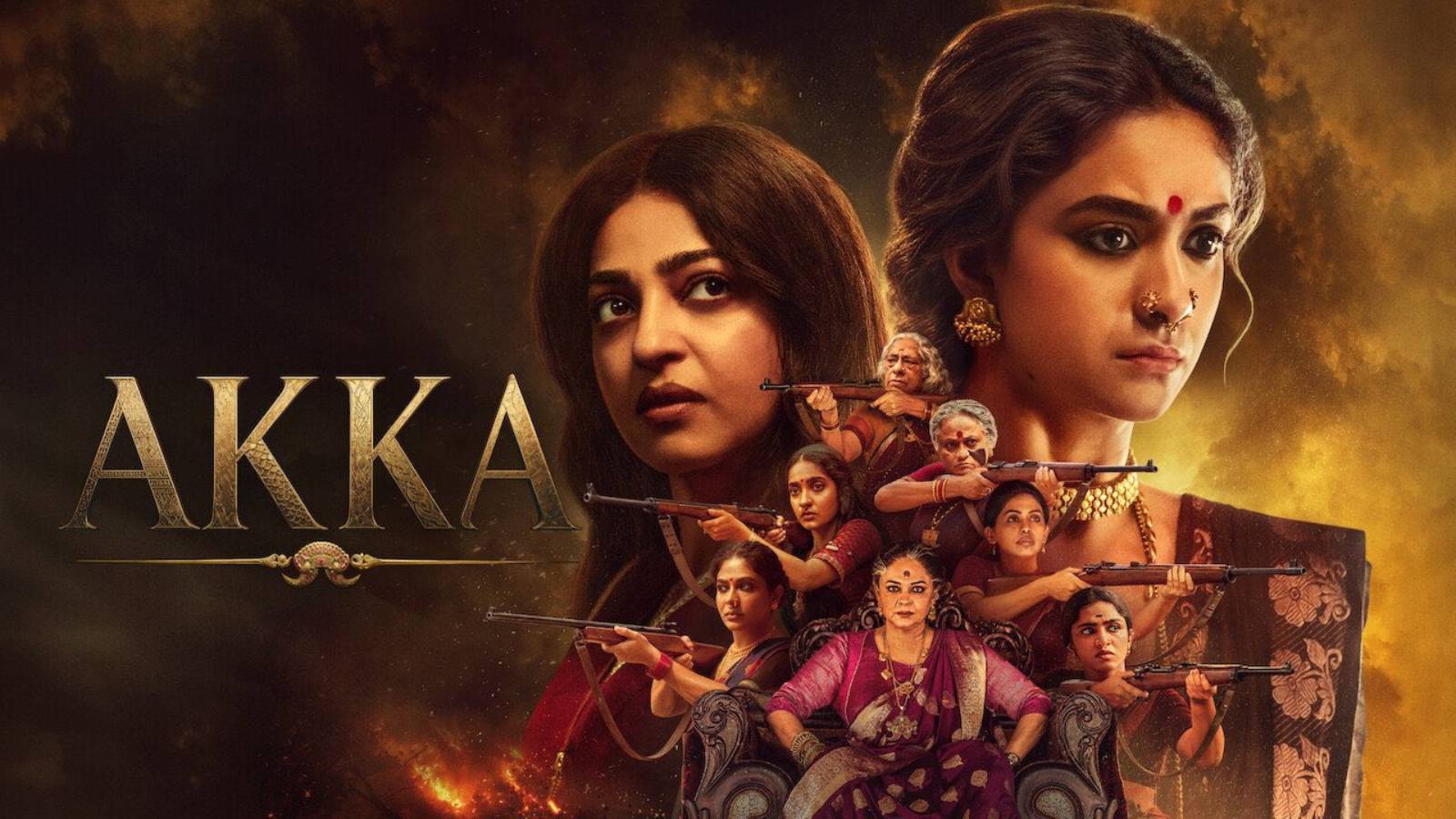
It is the 1980s in Pernuru, a fictional South Indian city governed by matriarchal figures. The regime led by matriarch Bhavani (Keerthy Suresh) is thrown into chaos when an outsider, Rudra (Radhika Apte), arrives with a personal vendetta, plunging the all-female clan into a violent battle for survival and control.
Performances
None of the heavyweights really do justice to their mettle. Keerthy Suresh fares slightly better, lending some gravitas to the royal figure beyond her costumes and mansions. Radhika Apte gets carried away by the character’s appearance and empty aura, delivering airy dialogues that leave viewers wondering what she was up to.
The only instance where the show finds some momentum is when Monika Panwar is in charge. Other noted names, including Mahesh Manjrekar and Tanvi Azmi, are wasted. Vishak Nair’s Nanda could have been a useful character, offering a counterpoint to the central conflict, but he barely makes an impact. Pooja Mohanraj, Poornima Indrajith and Anshumaan Pushkar impress only in parts.
Analysis
Akka has a delicious premise for a gangster drama, pitting a matriarchal head from a royal clan against the daughter of a wronged woman seeking revenge, all set in 1980s India. Beyond the obvious gender reversal, where women call the shots and men yearn for space and identity, there is ample scope for world-building. The tug-of-war is not just about power and vengeance, but also about the conflict between tradition and modernity.
There is so much that Akka could have been. Alas, it is emotionally shrill, overly simplistic in its writing, shallow in its outlook towards gender dynamics, and employs genre tropes to little effect. This is YRF’s third attempt at a web outing, following Mandala Murders (headlined by Vaani Kapoor) and the historic dud Maharaj, both for Netflix. It is surprising how the production house has managed to miss the mark at every turn.
At the heart of the story is the price women pay for their identity. One tries to wreak havoc on an opponent, while the other fights to protect her community from trouble. The show is careful not to romanticise tradition, yet it adopts a surprisingly conservative outlook towards ambition, failing to attach adequate emotional weight to its characters, their highs and lows, or the backdrop.
Many wars are waged, women are poisoned, children are burnt, romances do not fructify, and several people do not get their due. So much of the show deals with unvoiced pain, about what life could have been if not for a single choice, yet you don’t feel for any of it. Instead, it glorifies the obvious: betrayals, power games and violence, the staples of every gangster saga from Satya to Dhurandhar.
Akka is excessively showy, lost in the externalisation of conflict, which only exposes its emptiness further. It builds one grand action set-piece after another, throwing light on tribal rage, rituals and religious symbols, while painting the modern woman as a femme fatale and the royal heiress as a carefully ironed, pattu-wearing symbol of power. The action choreography isn’t particularly impressive either.
There is absolutely no believability to the world-building of the Pernuru dynasty. You are neither in awe of its past nor do you empathise with its present. The show mistakes the casting of big names for creating powerful characters and fails to give them much of an identity beyond their costumes and exaggerated representations of South Indian culture.
Bhavani and Rudra keep having a go at one another time and again. It is as if the material does not know what to do with them after a point. What makes Bhavani powerful? What explains Rudra’s rage? There are umpteen subplots involving people in their respective camps that take up considerable screen time but hardly add any value to the proceedings. It is too vanilla to feel like fiction and too baseless to feel real.
Akka tries to ape the aesthetic of a K’Jo or Sanjay Leela Bhansali period drama without the drama, the music and, most significantly, the sheer conviction in the storytelling. There are no powerhouse performances, memorable characters or even a single paisa-vasool sequence. Netflix appears to be in a contest to outdo itself with one poor show after another.
Music and Other Departments?
The show has a very wannabe, unusual aesthetic, be it the costumes, production design or colour grading intended to create a period effect. It only distances the viewer from the backdrop, failing to give it any authentic grounding. The background score is nothing particularly special or out of the ordinary and cannot mask the show’s other glaring problems. On the writing front, it offers little meat to the conflict and fails to lay a proper foundation. The 158-minute runtime is wasted on several trivial sequences.
Highlights?
Detailing pertaining to the matriarchal rule.
A decent core idea, though not substantiated well.
Drawbacks?
Poor, simplistic writing and world-building with an unappealing aesthetic.
A lack of emotional depth.
Dull action choreography.
Did I Enjoy It?
Not at all.
Will You Recommend It?
Not even to a hardcore Keerthy Suresh fan.
Akka Netflix Web Series Reviewed by M9 News