BOTTOM LINE
Stale Thriller, Silly Execution
PLATFORM
ZEE5
RUNTIME
150 Mins (6 Episodes)
What Is the Show About?
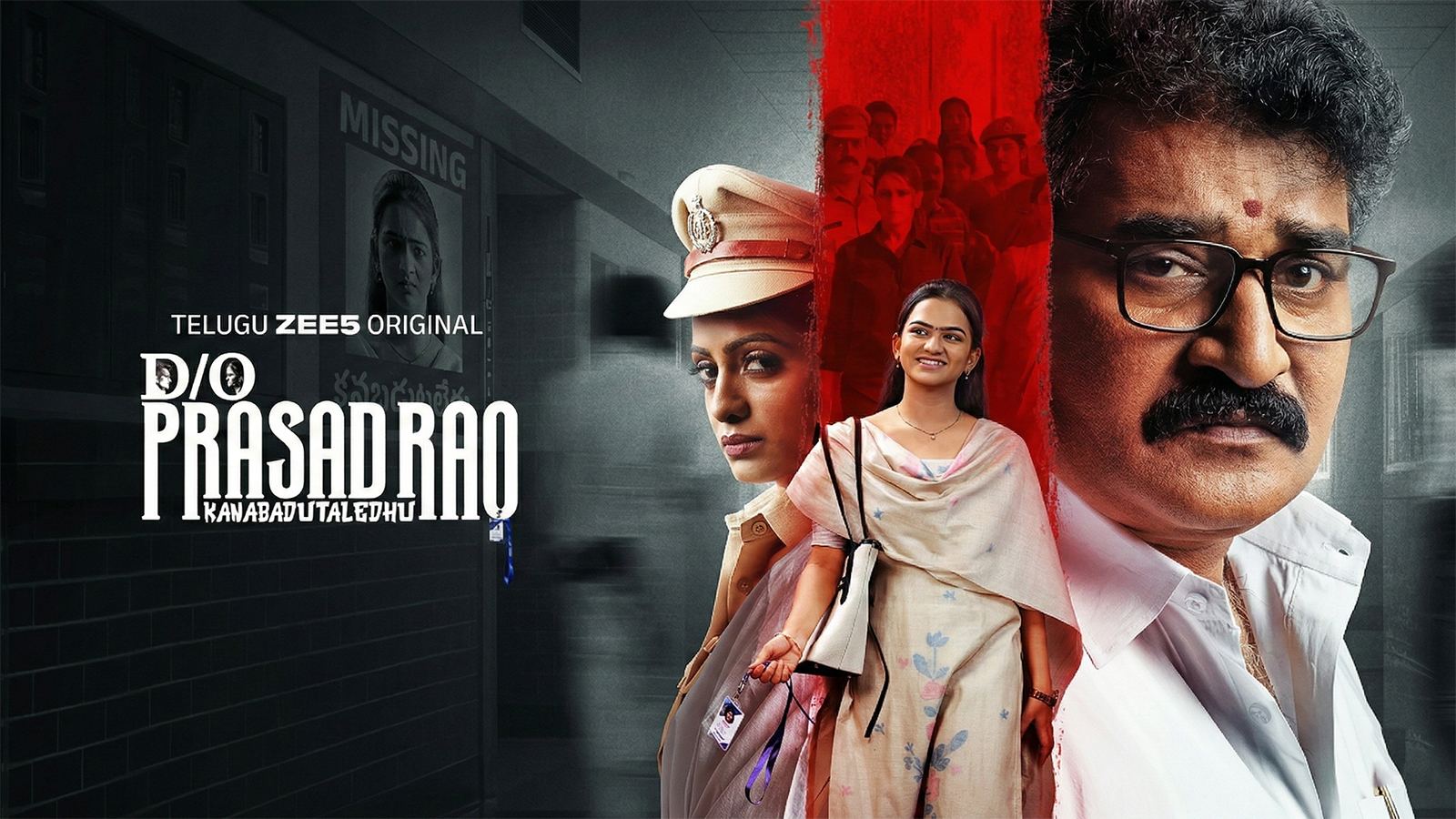
Prasad Rao (Rajeev Kanakala) is a middle-class father whose entire life revolves around his daughter, Swathi (Vasanthika Macha). His world turns upside down when Swathi suddenly stops answering his calls and goes missing. The case is handed over to a no-nonsense cop, Rebecca Joseph (Udayabhanu). As the search unfolds, the story moves back and forth across different timelines that influence the cop’s pursuit in the present day.
Performances
Rajeev Kanakala, who has become the go-to choice for father-figure roles, is sincere as always and handles the emotional scenes well, but we have seen him do this dozens of times before. The script does not give him anything new to chew on. Udayabhanu is the pick of the lot among the key cast, making a comeback in a serious role. She suits the part of a firebrand cop well and looks assured on the screen.
Vasanthika Macha, cast as Swathi, is mostly treated as a victim figure throughout without a proper character arc. Others like Gayathri Bhargavi and Bindu Chandramouli are impressive but are stuck in roles that are far too shallow to leave a mark.
Analysis
On the surface, D/O Prasad Rao Kanabadutaledu has a simple, workable setup for a thriller. The idea of linking a mysterious village past with a current-day missing case serves as a smart hook. By jumping across different timelines, director Krishna Poluru weaves an element of complexity into the narrative. In the initial episodes, this actually works to the show’s advantage, keeping the viewer curious about how these unrelated events eventually influence the current crisis.
However, the show quickly runs into a major problem: it doesn’t know where or when to pause. This feels like a byproduct of OTT-style filmmaking where the creators are desperate to cling to a viewer’s attention, sensationalising every scene as if it were a major twist. It leaves little space for the director to build the right atmosphere or develop characters, as the show tries to force excitement by sprinting from one scene to the next.
The writing feels even more shallow over time. The screenplay, on paper, appears precise and sharp, but none of the sequences genuinely add value to the story. They serve as mere fillers, artificially infusing tension using dramatic close-ups and exaggerated dialogues. While it claims to address universal themes like parenting and a girl’s freedom, the effort feels too preachy and inorganic, even if the intentions seem genuine at times.
The supposedly mind-boggling twists and suspense never really make an impact because the flashbacks mentally prepare you for the ending and a surprise character reveal that turns out to be blah. The plot, revolving around vigilante activism and a father fighting for his daughter, is itself so stale and old-fashioned that the screenplay had to be exceptionally out-of-the-box to stand out amidst the clutter. From the basic premise to the amateurish execution, hardly anything works here.
The investigation element is almost absent; it is hard to understand why the cop is considered special at all. The officer simply asks her subordinates to collect details, delivers dialogues in slow-motion with a cold expression, and occasionally submits reports to her superiors, who instruct her to hurry up. Most characters, including the cop, the mother, and the ultimate culprit, are reduced to one-dimensional cardboard cutouts without any strong basis.
The primary agenda behind the show seems to be creating something on the lines of Maharaja, but within a more rooted setting and minimal violence, focusing on the upbringing of the girl child. Had this been a conventional mystery thriller without the moralising, focusing instead on bitter characters confronting a tricky situation, Krishna Poluru’s treatment may have yielded better results. The director’s own show for the same platform, Recce, is perhaps the best example of that same.
D/O Prasad Rao Kanabadutaledu’s only major strength is its short runtime. While this brevity works against the show’s intent and its characters, it offers a quick respite to the viewer. It tries hard to be a message-oriented thriller, but the message is lost in a sea of noise and outdated tropes.
Music and Other Departments?
The show’s technical finesse leaves a lot to be desired. The background score by Sriram is relentlessly loud, failing to improve the mood of the scenes. To make up for the poor writing, every minor reveal is met with a bombastic musical cue that feels unnecessary and over-the-top. Even though K Mahesh Kumar’s cinematography is basic and breaks no new ground, it at least fits the scheme of the show neatly. The editing is a complete mess, repetitively using fast cuts and reaction shots to manufacture tension. It is a show that wants to be slick but ends up looking cluttered.
Highlights?
Udayabhanu and Rajeev Kanakala’s performances
The short runtime, which spares the viewer from further trouble
Drawbacks?
Melodramatic background score
Outdated story
One-dimensional characters
Did I Enjoy It?
No
Will You Recommend It?
Not at All
D/O Prasad Rao Kanabadutaledu Web Series Reviewed by M9 News