BOTTOM LINE
Style First, Substance Later
PLATFORM
ZEE5
RUNTIME
148Mins
What Is the Film About?
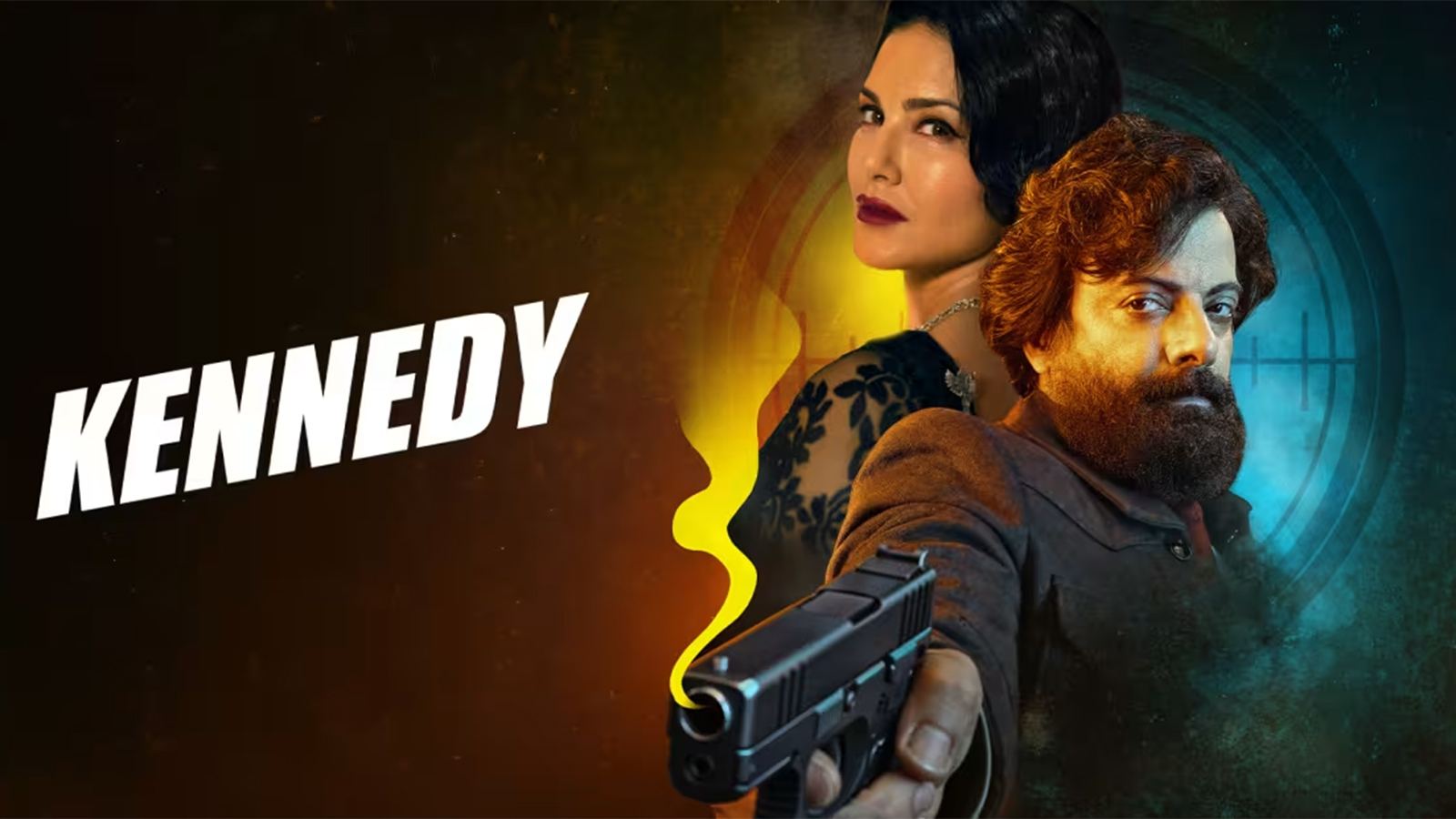
Anurag Kashyap’s Kennedy is a neo-noir thriller following Uday Shetty, an insomniac ex-cop who was presumed dead for years. Operating in the shadows under the alias “Kennedy,” he functions as a ruthless assassin for a corrupt police commissioner in Mumbai.
The plot kicks into high gear when a high-profile murder goes wrong, drawing Kennedy into a web of political conspiracies, blackmail, and systemic rot. As he navigates the city’s grimy underbelly, he seeks a twisted form of redemption while hunting down targets that keep him tethered to his past.
The film is a gritty character study of a man who has lost his identity and soul to a broken system, blending dark humour with visceral violence. It ultimately explores whether a “ghost” can ever truly find peace in a world more dead than he is.
Performances
Before we get onto Rahul Bhat’s performance as Kennedy, we would first like to inform you all that we think we have the perfect Indian voice for Batman in the form of Bhat. The man carries a sizeable portion of the movie on his talented shoulders. He plays Uday Shetty, an ex-cop presumed dead by others, including his family, while also living secretly under the name Kennedy.
After enduring a massive personal tragedy, Uday turns into a menacing, stone-faced, cold-hearted killer for hire, working secretly for the Mumbai police commissioner and other corrupt cops in the city. Why is he on this dangerous path? Well, watch the movie to understand more about his character.
It’s a shame that we don’t see Rahul Bhat that much. The man is extremely talented, yet we see him so little. We first witnessed his real acting talent in Ugly (2013). If that movie was Bhat’s proper introduction, then Kennedy should be declared his graduation.
According to some reports, Bhat underwent a massive transformation, bulking up by 18kg and reportedly staying awake for days to achieve those authentically bloodshot, vacant eyes. And this transformation works wonderfully in the movie. His physical movements and stone-faced appearance give viewers the vibe of a heavy, exhausted predator who wants revenge by whatever means necessary, and we literally mean by whatever means necessary.
Bhat’s deep, still, raspy voice works wonderfully. Despite playing a remorseless hitman, he manages to convey a deep-seated sadness. You aren’t just watching a killer. You’re watching a man mourning his own existence.
Opposite Bhat, we see Sunny Leone for a considerable amount of time. She plays a mysterious femme fatale whose path crosses with Kennedy’s. Her character’s defining trait is a high-pitched, manic, deeply uncomfortable laugh, used as a defence mechanism. It’s unsettling and marks a complete departure from her usual glamorous and glossy roles.
Under Anurag Kashyap’s direction, Leone shows she can act. She showcases a fragility we haven’t seen from her before. She fits into the noir aesthetic better than many doubters expected. But her role is small. And most importantly, many viewers may ask after watching the film: Was her role really that important? Because, despite her compelling work, her presence feels more like a stylistic distraction than a narrative necessity.
Analysis
Kennedy (helmed by Anurag Kashyap) is a blood-stained, neon-soaked dive into Mumbai that ultimately starts feeling like a haunted graveyard rather than a metro city. After making a huge impact at Cannes (receiving a seven-minute-long standing ovation), the film is finally available for Indian audiences to stream.
The setup is classic noir: a guy who’s supposed to be dead is actually doing the dirty work for the people in charge. It’s set during the COVID-19 lockdown, which makes everything feel extra creepy and empty.
Kashyap, quite comfortably, excels at building a rotten world where no one is actually a good person. All the characters in the movie are deeply flawed or battling their inner demons, or, in the case of Kennedy, doing both. The overall ambience we get in the film feels like asking a talented chef (Kashyap) to make one of his favourite dishes, which he does with ease. The story feels super personal, but also shows how the whole system is broken.
By the time almost 60–70% of the movie is done, some of us may think that it comes dangerously close to forgetting all about the actual antagonist, the one who keeps Kennedy awake at night, the one who is responsible for Kennedy’s damaged life.
Despite looking compelling in the limited amount of screen time he gets, Salim eventually feels more like a plot device to keep Kennedy moving than a fleshed-out threat. The search is desperate, but the screen time doesn’t always reflect that urgency.
The film spends a lot of time on Kennedy’s psyche and the eerie lockdown vibes. While great for the feels, these moments eat into the narrative momentum of the actual chase. There are times when the focus shifts completely from a personal vendetta to a cynical look at corrupt power, which makes us almost forget about the real antagonist.
In terms of pace, Kennedy doesn’t rush. The movie does a good job of building tension. There are long silences where you’re just waiting for something to explode, and when the violence finally hits, it’s brutal and messy. However, this slow-paced approach also functions like a double-edged sword for the film.
There are some scenes in the movie, especially in the first half, that are really slow. They begin to feel almost as if Kashyap was just vibing with those moments and their respective atmospheres a bit too much, and the story kind of drags before picking up for the finale.
Kashyap doesn’t shy away from showcasing the movie’s neo-noir, cool, and slightly European aesthetic. Dark shadows and bright lights. The way he shoots Mumbai is incredible. The empty streets and cramped apartments make you feel totally trapped. He turns the city itself into a character that’s basically falling apart.
But sometimes, the direction gives off the vibe that the movie cares more about looking cool than making you feel something. It’s a bit cold and detached, which might leave you feeling a little empty by the end.
The writing is sharp. Kennedy barely says a word, so when he actually speaks, it carries a lot of weight. The dark humour from the corrupt cops is also a nice (and scary) touch. But don’t expect any viral one-liners like in Gangs of Wasseypur in this one.
Yes, Kennedy has some noticeable flaws, but thank God we get a third act where the protagonist finally stops prowling and just explodes. It’s easily the film’s strongest suit, because all that slow-burning tension from the first two acts pays off in a massive, bloody way. Uday’s internal demons and ghosts finally stop hiding, and the transition from a silent stalker to a force of nature is amazing.
Unlike the coldness of the beginning, the finale actually makes you feel for this broken man. It stops being a cool noir and becomes a tragic character study.
Overall, Anurag Kashyap’s Kennedy works as a stylish neo-noir that transforms pandemic-era Mumbai into a haunting wasteland. Rahul Bhat delivers a career-defining, visceral performance as a “dead” ex-cop turned assassin, supported by a surprisingly fragile Sunny Leone.
While the film’s atmosphere, violin-infused score, and cinematography are top-tier, the narrative occasionally drags, nearly sidelining its main antagonist for moody vibes. However, the explosive third act saves the day, shifting from a cold thriller to a tragic, bloody character study.
Performances by Others Actors
The rest of the cast in Kennedy looks good and natural. Mohit Takalkar, as the corrupt Commissioner Rashid Khan, is clinical and cold. He provides the perfect bureaucratic foil to Kennedy’s visceral violence.
Meanwhile, Abhilash Thapliyal plays a soft-spoken companion to the protagonist. He brings a much-needed touch of normalcy (and subtle humour) that highlights the absurdity of Kennedy’s world.
Aamir Dalvi as Salim infuses the antagonist with a calm yet menacing stillness that feels unsettlingly authentic. But he definitely needed more screen time.
Another character that stands out, despite being largely connected to the film’s past, is Anuradha, played by Megha Burman. She serves as Kennedy’s emotional anchor, and her scenes with Bhat are some of the biggest positives to come out of the movie. Her performance captures the tragedy of a life lost to Uday’s wild carelessness, making the personal stakes feel real.
Shrikant Yadav, as Kaale, also manages to grab our attention. His character is a key figure in the movie’s corrupt landscape. Yadav knows what his job is, and he delivers it with precision and flawlessness. He fits seamlessly into the amoral, rotten, neon-lit ambience of Kashyap’s Mumbai.
Music and Other Departments?
Kennedy’s musical score is heavily influenced by classic noir. Think tense violins that make you feel like you’re in a 1940s or 50s detective film, but with a modern, “dirty” twist. The sound design works well, too. The heavy breathing, the clink of a weapon, and the silence of the lockdown streets are amplified to make you feel Kennedy’s paranoia.
However, there are a couple of songs that feel like they’ve been thrown in our faces rather than feeling natural. They also seem a bit out of place. It’s like they’re trying very hard to tell you exactly how to feel, which can come across as a bit pushy.
But the film’s cinematography is a massive win. Thanks to Sylvester Fonseca, the use of shadows and neon-light effects looks top-tier. Meanwhile, the indoor scenes feel claustrophobic, filmed tightly and darkly, which also helps us relate to Uday’s inner demons and isolation.
The editing looks smooth, but it could have been tighter. There are a few sequences that could’ve been trimmed to make the hunt for the antagonist feel punchier. Also, the production design feels very real-world. Everything looks lived-in. The apartments are cramped, the offices look dusty, and nothing feels like a movie set. It feels like a real, decaying world.
Highlights?
Rahul Bhat’s Powerhouse Performance
Explosive Third Act
Atmospheric Cinematography
Sunny Leone’s Range
World Building
Strong Supporting Cast
Drawbacks?
The “Sidelined” Villain
Slow pacing
Style over substance
Loose editing
Intrusive music
Over-stretched subplots
Did I Enjoy It?
Liked the technical craft and Rahul Bhat’s haunting performance, though the middle act felt like a slow-paced slog that sidelined the main villain. However, the explosive and visceral finale makes the overall journey worth it.
Will You Recommend It?
Recommend it for fans of technically sound and slow-burn character studies, especially those who loved Kashyap’s Ugly. However, skip it if you want a fast-paced action flick, as this is a dense, moody journey that demands your full attention.
Kennedy Zee5 OTT Movie Reviewed by M9 News