BOTTOM LINE
Netflix’s Confident Answer to Chernobyl
PLATFORM
NETFLIX
RUNTIME
5 hours 43 Mins (6 Episodes)
What Is the Show About?
Set in 1970s Communist Poland, Lead Children (Ołowiane dzieci) is a 6-part historical drama inspired by the true story of Dr Jolanta Wadowska-Król (Joanna Kulig).
The plot follows the young pediatrician as she discovers a terrifying trend of anaemia and stunted development among children in the industrial town of Szopienice. She soon identifies the cause: massive lead poisoning originating from the local smelting plant.
As Jolanta fights to save an entire generation, she faces a ruthless cover-up by state authorities who value industrial reputation over human lives. Risking her career, safety, and family, she transforms from a quiet doctor into a defiant whistleblower.
The series, drawing comparisons to Chernobyl, culminates in a tense battle against the bureaucratic machine to evacuate families and secure treatment for the children suffering from lead poisoning.
Performances
The acting performances in Lead Children are undoubtedly one of the show’s greatest strengths. The cast’s restrained, naturalistic style prevents the heavy subject matter from devolving into melodrama.
Leading the charge is the amazing Joanna Kulig, who effectively emerges as one of Poland’s finest acting talents at present. She undoubtedly delivers a career-best performance here. She ditches the conventional “hero” tropes and offers a more grounded, restrained, yet courageous and headstrong protagonist.
Instead of bursting into anger or frustration at all times, Kulig mostly relies on her expressions, particularly her razor-sharp side-eyes, which say a lot about the corruption and bureaucratic hurdles of 1970s Poland. Yet, amidst her hardened exterior, we also see shades of her vulnerability, fear, and frustration. Her “never give up” and brave attitude until the very end is what holds this series together.
However, a hero is only as good as the system she’s fighting, and the supporting cast here is stacked. Michał Żurawski is terrifyingly smooth as the Secret Police officer, Hubert Niedziela, trying to keep Jolanta in line. He doesn’t twirl a moustache or make overtly evil expressions to intimidate the protagonist.
Instead, he treats the suppression of a public health crisis like just another boring day at the office, making his eventual face-offs with Kulig feel like a high-stakes chess match.
As Lead Children nears its conclusion, we also see Żurawski struggling to grapple with his emotions, fears, and confidence, falling into desperation and cheap tactics just to save his reputation, dignity, and, in many ways, himself, by whatever means necessary.
Analysis
Lead Children kicks off with a brilliant, slow-burning setup. We follow Dr Jolanta Wadowska-Król as she notices a pattern of feeble-mindedness and anaemia among the children of Szopienice.
The story does a fantastic job of building the mystery, not by asking what is making them sick (we know it’s the lead), but by asking how far the government will go to pretend everything is fine. It’s a classic ticking-clock narrative, but instead of a bomb, the threat is a silent, cumulative poison that’s literally stunting a generation’s growth.
The more we dive into the show’s storyline, the more we realise that the antagonist is actually the entire system, which looks broken beyond repair. We frequently witness clashes between medical ethics and morality, and industrial quotas and greed.
Every time Jolanta makes a breakthrough, the narrative throws a bureaucratic hurdle in her way, such as missing files, broken lab equipment, and “friendly” warnings from the Secret Police. This creates a relentless sense of dread that makes the small victories feel like massive triumphs.
The series aims for the stars right from the get-go, but its sky-high ambitions are well balanced with intimate drama. We see the macroscopic political manoeuvring, but we also spend a lot of time in the cramped apartments of the victims.
By focusing on specific families, the story ensures that the lead levels aren’t just numbers on a chart, they are the very reason a mother can’t get her child to stop shaking. It’s this emotional tether that keeps the story from feeling like a dry history lesson.
However, the series does suffer from some repetitive plot beats and a slow pace, particularly during episodes three and four. There are also subplots related to Jolanta’s domestic life that feel as though they were added somewhat forcibly to raise the stakes and make the protagonist more likeable.
Lead Children (helmed by Maciej Pieprzyca) benefits greatly from strong, confident, bold, clear, and hard-hitting direction. His decision to opt for a slow-burn narrative approach and extensive world-building might test the patience of some viewers at the beginning, but it’s worth it by the time we reach the show’s conclusion.
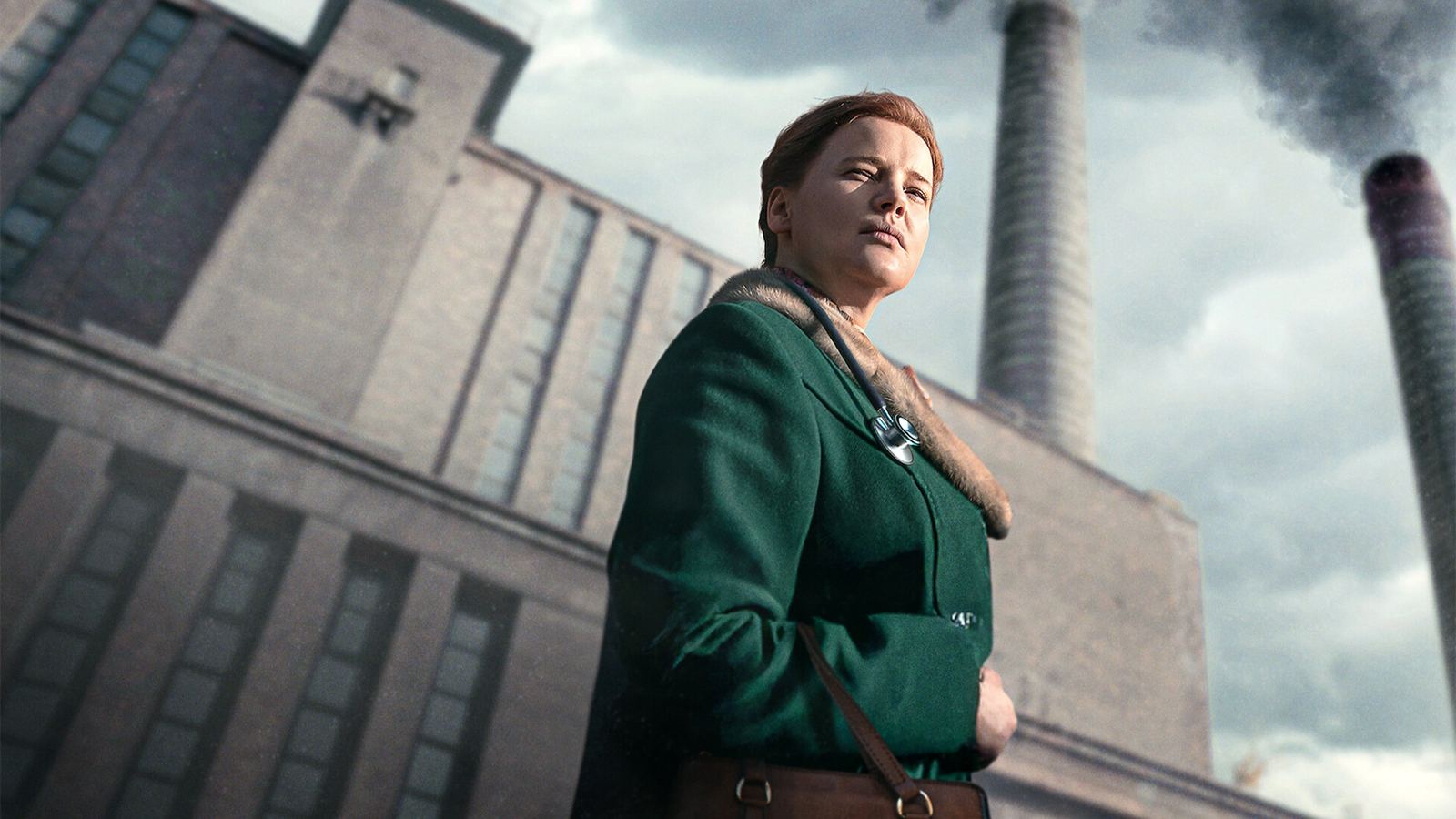
One of the biggest wins here is how Pieprzyca uses Silesia as a character. He doesn’t shy away from showcasing the harrowing, heartbreaking, and gloomy, mud-covered streets of the region, the rusted steel inside the smelters, deteriorating houses and walls, pollutants filling the sky near the plant, and the grey soot on the windowsills.
Pieprzyca perfectly captures the scale of the smelting plant as a looming industrial monster that dwarfs the children playing in its shadow. It’s haunting stuff that creates an immediate sense of claustrophobia. Along the way, he subtly adds to the deteriorating sense of morality and professionalism among characters exhausted by a system that refuses to listen.
The dialogue and writing in Lead Children are another strong aspect of the show. Fans of smart and layered storytelling will love it. It steers clear of the usual overly dramatic monologues we have seen in many whistleblower stories in the past.
Instead, the characters speak in a way that feels incredibly authentic to 1970s Poland, a mix of dry, clinical medical talk and cautious, double-sided political and industrial chatter among those in authority.
And the real magic happens in what isn’t said. The script uses subtext like a weapon. For instance, when a Party official tells Jolanta she’s “doing great work for the industrial spirit”, we can see that he’s actually telling her to shut up and stop looking at the blood tests. It’s sharp, cynical, and avoids being preachy, letting the horrific reality of the lead levels do the talking.
Without spoiling the finale, the narrative concludes on a note that is hauntingly realistic. It avoids the “perfect Hollywood ending” where everything is fixed with a hug and a parade. Instead, it leans into showing the immense personal cost of Jolanta’s crusade. It’s a sophisticated and grounded piece of storytelling that respects the audience enough to know that, in the real world, the good guys don’t always get a clean win.
Overall, Lead Children is a gripping historical drama following Dr Jolanta Wadowska-Król’s courageous fight against state-covered lead poisoning. Joanna Kulig delivers a career-best, restrained performance, supported by a stacked cast that brings the bureaucratic oppression to life. While the pacing occasionally drags in the middle, the series remains a sophisticated, realistic masterpiece that trades clichés for a hard-hitting look at the personal cost of defiance.
Performances by Others Actors
The rest of the cast in Lead Children looks in terrific form as well. We cannot forget about the legendary Agata Kulesza, reuniting with her Ida (2013) co-star to play a jaded senior doctor. Kulesza is the weary pragmatist of the bunch. Her character spends no time giving viewers the impression that she has been seeing the corruption and negligence inside the system for quite some time, and she has accepted it.
Agata’s performance highlights the generational divide between those who have learned to survive within the system and Jolanta’s idealistic defiance.
The chemistry among the smaller guys also looks compelling. Zbigniew Zamachowski plays the local Party leader not as a monster, but as a guy who’s just really, really stressed about his boss finding out the local smog is actually poison. It’s that blend of bureaucratic bumbling and genuine malice that makes the stakes feel so real. But he doesn’t shy from hiding his pettiness and greed while trying everything in his power to impress Secretary Brezhnev.
Even the domestic scenes between Kulig and Sebastian Pawlak (playing her husband) hit hard, showing how Jolanta’s crusade isn’t just a political battle, it’s a slow-motion wrecking ball hitting her entire family. It’s heavy stuff, for sure, but the performances make it impossible to look away.
Music and Other Departments?
The musical score in Lead Children works brilliantly in giving a sense of atmospheric dread. It looks more industrial and unsettling. It feels like a mix of haunting, low-frequency drones and metallic, percussive sounds that mimic the rhythmic thrum of the smelting plant.
Cinematography heavily relies on colours such as slate grey, brown, rusted orange, and sickly yellow. The lighting is consistently flat and overcast, which perfectly captures the suffocating atmosphere of a town where the sun literally can’t pierce through the particulate matter.
The use of shallow focus in the medical clinics makes the world feel small and claustrophobic, while the wide shots of the smelting plant make it look like a terrifying, smoke-yielding entity.
The production design also looks accurate. The costume design department also deserves a shoutout. We see the medical figures like Jolanta wearing embroidered dresses and skirts in different colours, whereas the wives of the men working in the smelters can be seen wearing heavy, itchy-looking wools, coats, and skirts in shades of mud and concrete.
The sound design is good too. The way the background noise of the factory hums constantly throughout the series creates a relentless sense of environmental pressure.
Highlights?
Powerhouse performances
Tight atmospheric direction
Smart, Layered writing
Amazing technical craft
Balance between high-level political manoeuvring and emotional moments with the victims’ families
Drawbacks?
Pacing issues
Mid-season slump
Filler subplots related to Jolanta’s life
Did I Enjoy It?
Absolutely! Performances and the atmospheric, industrial dread of 1970s Poland are highly immersive. The way the series treats a public health crisis like a high-stakes chess match keeps us thoroughly engaged.
Will You Recommend It?
Yes. Especially to fans of prestige dramas like Chernobyl. If you value sharp, cynical dialogue and can handle a deliberate, slow-burning pace that prioritises realism over Hollywood tropes, this is a must-watch for your 2026 watchlist. Definitely one of the best Polish shows to come out this year.
Lead Children Web Series Reviewed by M9 News