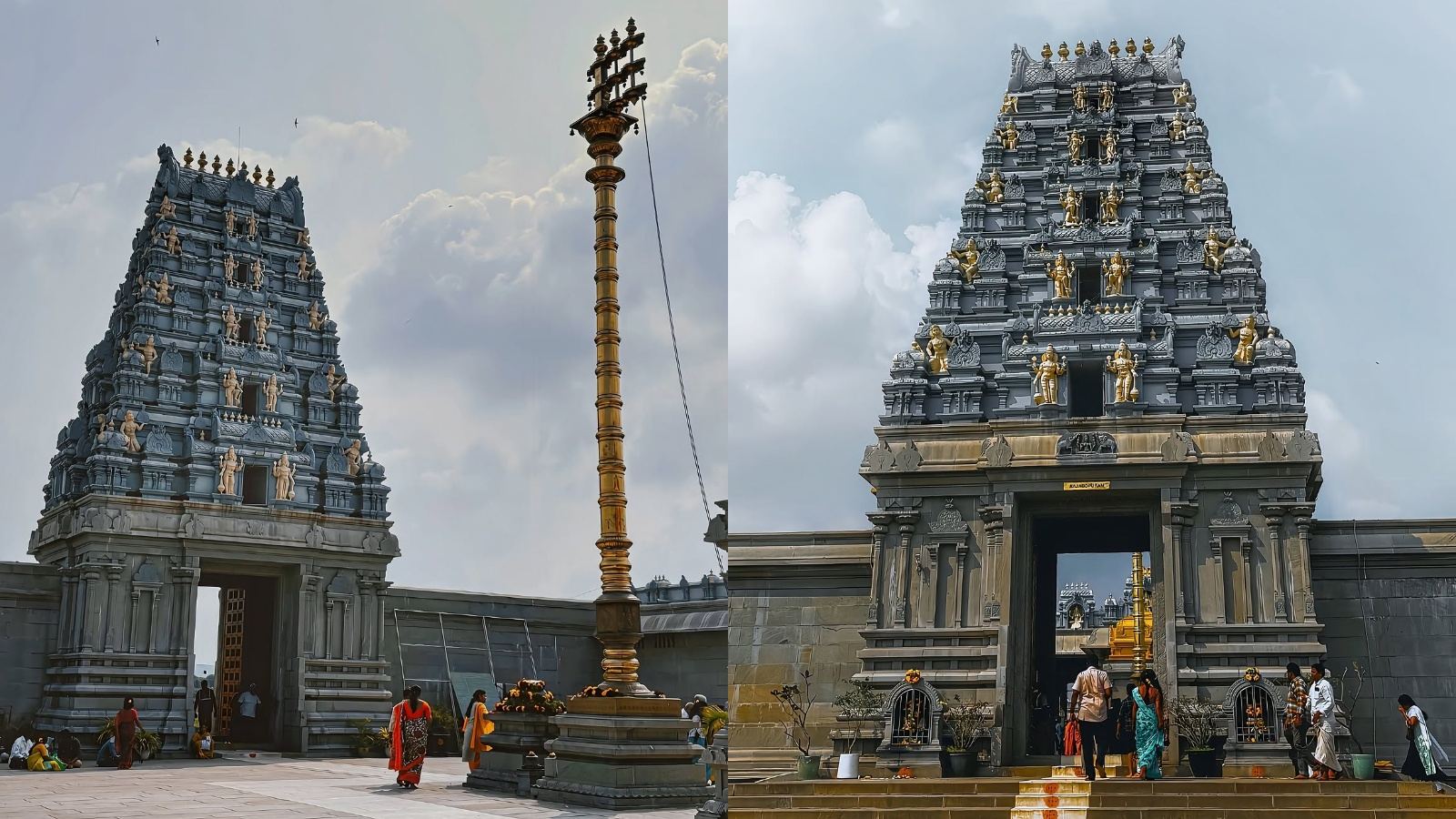
The capital region of Amaravati is aggressively accelerating its transformation into a major socio-cultural and spiritual epic centre with the rapid expansion of the Sri Venkateswara Swamy Temple at Venkatapalem.
Orchestrated directly by the Tirumala Tirupati Devasthanams, the ambitious master plan is being executed across a sprawling 25-acre site positioned elegantly near the banks of the Krishna River.
Following an intense push by the state administration to fully revive capital infrastructure, construction crews have mobilized to physically ground a massive expansion project designed to completely replicate the structural grandeur, sacred energy, and architectural footprint of the original Tirumala shrine.
At the absolute center of this monumental heritage undertaking is a fierce commitment to traditional Dravidian stone craftsmanship, paired with highly sophisticated modern amenities.
Construction is progressing rapidly on the outer Maha Prakaram, highlighted by a towering 120-foot, seven-story Maha Rajagopuram facing the eastern entrance.
To capture the authentic aesthetic of centuries-old temple design, thousands of tons of premium-grade black stone, known locally as Krishna Shila, are being meticulously sourced and transported from traditional carving hubs in Namakkal, Tamil Nadu, alongside dedicated stone quarries in the Palnadu district.
The intricate stone carving will also extend to three five-story Rajagopurams securing the western, northern, and southern corridors, ensuring that every angle of the complex mirrors the sacred geometry of the ancient hill shrine.
Beyond the towering stone monuments, the extensive site map integrates an advanced pilgrim-handling ecosystem designed to manage immense daily footfalls seamlessly.
The first phase of this multi-crore blueprint incorporates vital ceremonial additions, including an Arjitha Seva Mandapam, a Vahana Mandapam, a dedicated shrine for Lord Anjaneya Swamy, and a grand sacred temple tank, or Pushkarini.
Concurrently, massive earthmoving and stone-laying operations are underway to pave exceptionally wide Mada Streets circling the main temple compound, replicating the exact processional routes used for major festivals in Tirumala.
Bolstered by advanced infrastructure like centralized solar power plants, vast free-meal complexes, and dedicated rest houses for thousands of visiting devotees, this landmark project stands as a powerful testament to the state’s vision of anchoring Amaravati’s future growth within a rich, timeless foundation of cultural heritage.