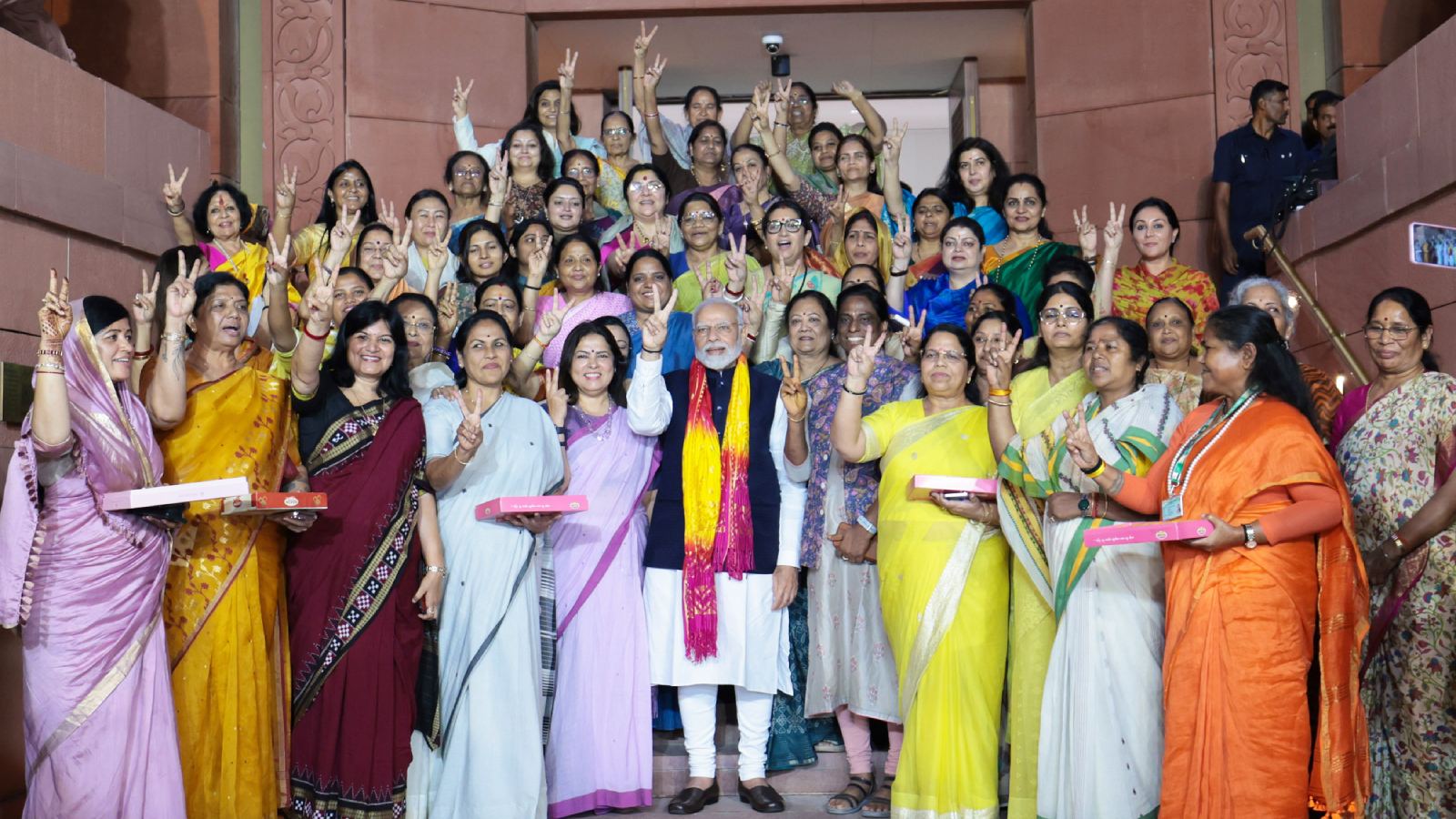
Prime Minister Narendra Modi has once again pushed for women’s reservation, calling it a reflection of the aspirations of crores of women across the country. He has also indicated that the system should be in place before the 2029 elections.
But beyond the messaging, the ground reality is still not very clear.
The Women’s Reservation Bill, or the Nari Shakti Vandan Adhiniyam, was passed in Parliament in September 2023. So technically, the law is already in place. The issue is with implementation.
The main hurdle is the linkage to Census and delimitation. The law says reservation will come into effect only after a fresh Census is conducted and constituencies are redrawn. Since delimitation cannot happen before 2026 and the Census itself has been delayed, the timeline automatically shifts forward.
The Centre is now trying to speed things up. Fresh proposals are being worked on, and there is talk of amendments to enable implementation from 2029.
Even then, there is no complete clarity.
If the current conditions remain unchanged, the rollout could get pushed further. Some estimates suggest it may even go beyond 2029.
This is where the political debate comes in.
While the government says it is committed, opposition parties are raising concerns, especially around delimitation. Critics argue that redrawing constituencies based on population could benefit some states more than others.
There is also a question on timing. If there was enough consensus to pass the bill, why link it to processes that take years? That has become a key point in the debate.
At the same time, the benefits are clear. Women make up nearly half of the population, but their representation in Parliament remains limited. Increasing it to 33 percent can bring better balance and wider representation.
There is also a social angle. More women in politics can encourage wider participation and gradually break long-standing barriers.
But challenges remain. Seat rotation, impact on sitting leaders, and delays in Census and delimitation all add uncertainty.
In simple terms, the law is ready, but the system is not.
The intent is clear. The politics is active. But everything now depends on execution. Whether 2029 becomes the turning point will depend on how quickly things move from promise to reality.