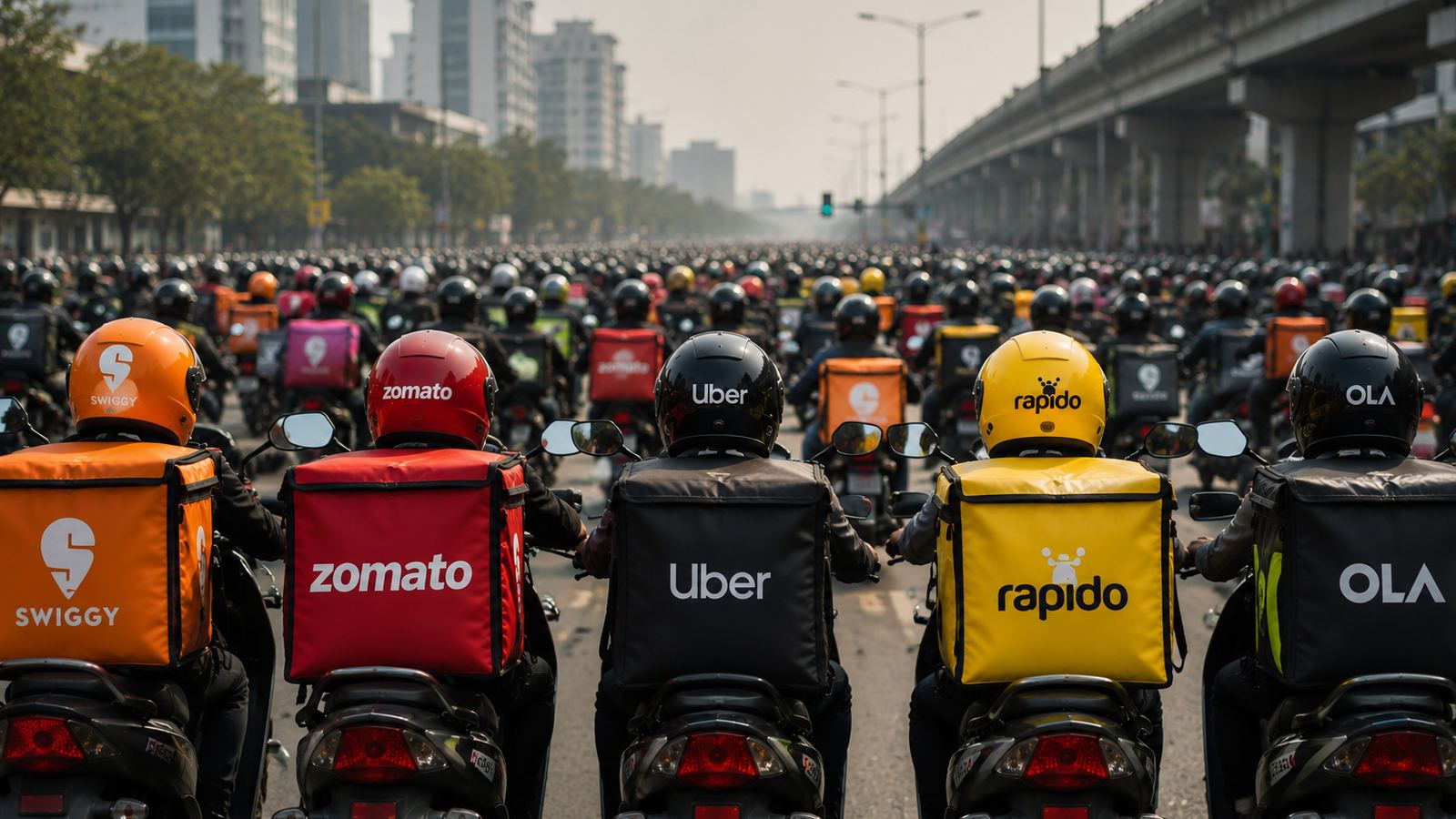
The statewide flash strike called by app-based transport and delivery workers across Telangana represents a long-brewing crisis reaching a breaking point.
For thousands of drivers and delivery partners associated with platforms like Ola, Uber, Rapido, Swiggy, and Zomato, logging off and going off the roads during peak hours is not merely a tactic of disruption, but a desperate plea for a sustainable livelihood.
At the center of this movement is a fundamental demand for fair remuneration. With rising fuel prices, escalating maintenance costs, and high platform commission deductions, the actual take-home pay for gig workers has drastically shrunk over recent years.
By demanding a regulated minimum base fare alongside fair per-kilometer and per-minute charges, workers are challenging the unilateral fare-fixing algorithms that currently dictate their daily earnings. They are asking for predictability and financial security in a sector that has long operated with minimal safety nets.
This strike also highlights a crucial gap between policy intent and ground-level execution. Although the state introduced gig worker welfare legislation, unions point out that key regulations, the setup of an official Welfare Board, and updated Motor Vehicle Aggregator Guidelines remain largely pending.
While the sudden halt of cab and delivery services inevitably causes inconvenience to commuters and daily consumers across cities like Hyderabad, it serves as a stark reminder of how heavily modern urban life relies on these invisible platform workers.
If aggregator platforms and state authorities do not move quickly to establish standardized fare regulations and structural social security, temporary disruptions could easily evolve into prolonged operational instability for the entire platform economy.