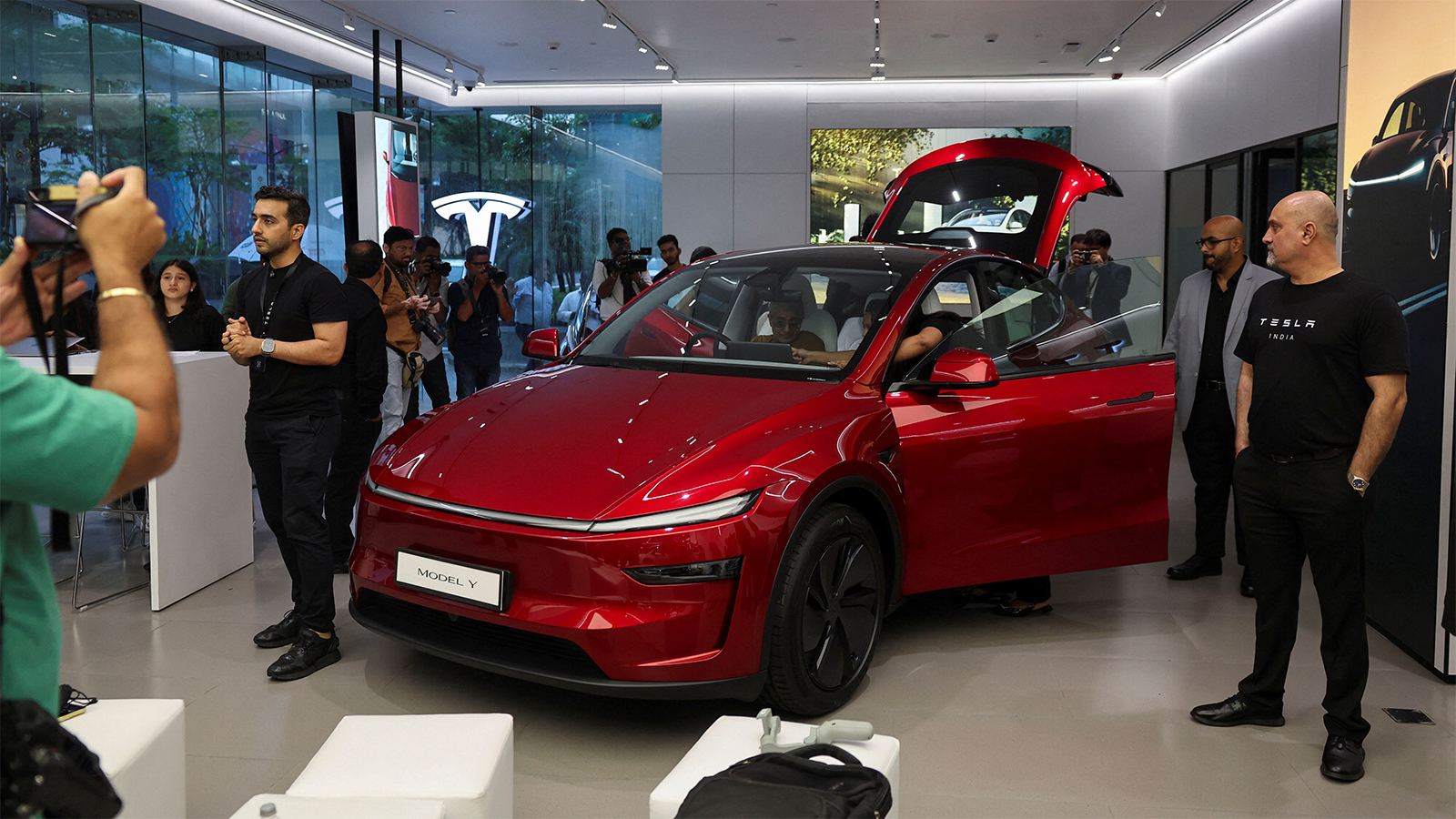
Tesla’s much awaited entry into India has not created the impact many expected from the world’s leading EV brand. Bloomberg reports that since its mid-July launch, Tesla has received just over 600 orders, a weak figure in a country of 1.4 billion.
The main barrier is price. Imported Tesla cars attract a 70 percent duty, pushing costs beyond reach for most buyers. The Model 3 and Model Y start above Rs. 60 lakh, more than double their U.S. price. Local brands like Tata, Mahindra, Hyundai, and Kia offer feature rich EVs at far lower prices.
Experts believe Tesla’s best chance is domestic manufacturing. Producing locally could reduce prices to Rs. 28 to 35 lakh, helping Tesla compete directly with Indian EV makers. Without this move, Tesla risks being stuck as a luxury brand with limited appeal.
Another challenge is India’s developing EV infrastructure. With around 25,000 public charging stations, the country falls short of the 1.3 million required by 2030. Until charging networks expand, owning a Tesla or any premium EV will remain difficult for the average consumer.
Most first time Indian buyers spend under Rs. 7 lakh on a car, leaving Tesla’s current options out of reach. Companies like Tata, Kia, and MG have found success with affordable EVs designed for Indian conditions. This price sensitivity makes Tesla’s premium-only approach a mismatch.
Innovation alone will not help Tesla succeed in India. To grow, the company must lower costs through local production, strengthen charging networks, and build partnerships. Without these changes, Tesla may remain a luxury curiosity rather than a mass market EV leader.