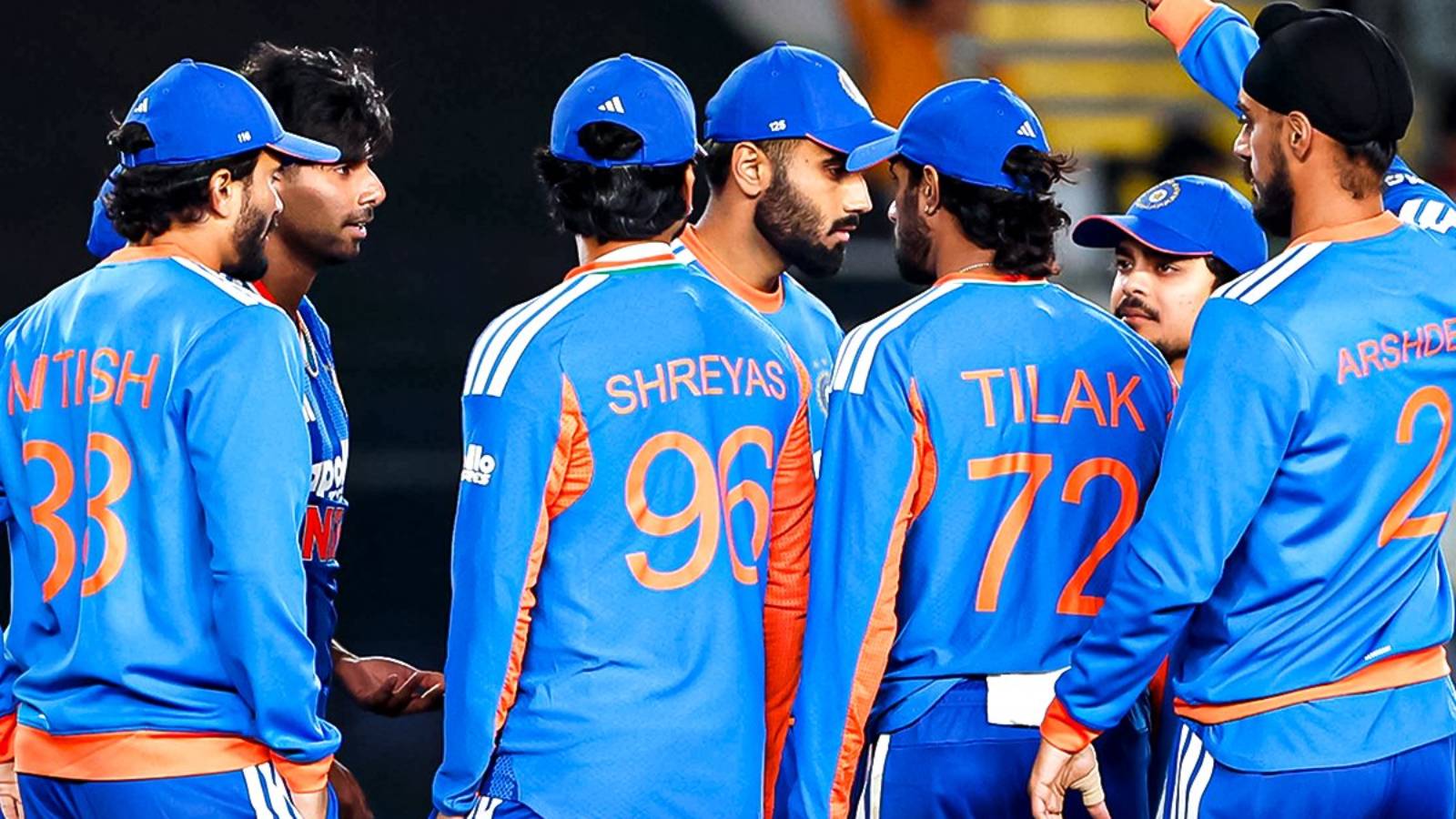
India suffered an 87 run defeat against New Zealand in the fourth T20I at Eden Park, Auckland, on October 30. The loss came after India had already sealed the five match series with a 3-0 lead.
New Zealand’s win has made the scoreline 3-1, with the final T20I still to be played. Despite, India’s team selection and Shreyas Iyer’s batting have also become talking points after the defeat.
India made two changes to their playing XI, bringing back Ishan Kishan and Mayank Yadav in place of Vaibhav Sooryavanshi and Bhuvneshwar Kumar.
While Ishan returned after missing the second and third matches due to injury, Vaibhav’s omission came despite his impressive performance in the previous game.
Why Did India Drop Vaibhav Sooryavanshi?
Vaibhav Sooryavanshi had scored 45 runs off just 19 balls in the third T20I against New Zealand. He also shared an important opening partnership with Abhishek Sharma, helping India chase down the target comfortably.
Despite, the team management decided to bring Ishan Kishan back into the playing XI after he recovered from his injury. Ishan’s return was understandable, but dropping Vaibhav after his performance raised questions about whether the young batter was given enough backing.
India had already won the series 3-0 before the fourth match. It was an opportunity to experiment with the playing XI and give young players more time at the international level. Vaibhav had made good use of his opportunity, but he had to make way as soon as an established player became available.
Ishan, meanwhile, was dismissed for a duck against New Zealand, while Sanju Samson managed only four runs. Both players failed to provide the start India needed In the chase.
This does not mean either batter should be judged on one innings, but it does raise a question about whether India could have continued with Vaibhav after his previous performance.
Bhuvneshwar Kumar Needed More Backing?
India also left out Bhuvneshwar Kumar, bringing Mayank Yadav into the playing XI. Mayank picked up three wickets for 48 runs, but New Zealand still managed to score 259 runs in their 20 overs.
Bhuvneshwar’s experience and ability to swing the new ball remain valuable qualities. A bowler can go through a difficult period, but poor form is not necessarily a reason to stop backing him, especially when he has the skills and experience to contribute.
India had already secured the series, so the remaining matches offered an opportunity to give Bhuvneshwar a longer run. Instead, the team management decided to bring Mayank back into the attack.
Mayank did take three wickets, but India’s bowling unit struggled to control the New Zealand batters. The decision to leave out Bhuvneshwar is therefore worth discussing, particularly when India are still assessing their bowling combinations.
Shreyas Iyer’s T20I Captaincy Is Promising, But Does His Batting Justify His Place?
Shreyas Iyer’s appointment as India’s T20I captain brought a new leadership chapter after Suryakumar Yadav’s tenure. His leadership has shown promise, but his batting performances need to be assessed separately.
Shreyas Iyer had scored 657 runs in 25 T20I innings since becoming captain in June 2026. He had an average of 32.20 and a strike rate of 147.71, including one century and two half centuries. His highest score was an unbeaten 102 against West Indies in October.
Does Shreyas Iyer Fit India’s Current T20 Batting Approach?
India’s T20 batting approach puts a strong focus on attacking intent. The team wants to make full use of the powerplay, maintain a high scoring rate in the middle overs and have enough firepower for the final overs.
A middle order batter does not need to attack every delivery. There are situations where rebuilding an innings is important, particularly after early wickets. Despite, the batter also needs to know when to accelerate and prevent the scoring rate from dropping.
Iyer’s captaincy and his batting value are two separate matters. India can continue to back him as captain while still expecting better contributions from him with the bat. His place in the XI should also be assessed on his performances and the role he is expected to fulfil.
New Zealand made full use of the opportunity after Shreyas Iyer won the toss and elected to bowl. Glenn Phillips smashed 107 off 49 balls, including 10 sixes and six fours, while Michael Bracewell scored 65 off just 25 deliveries. Finn Allen also contributed 31 runs, and Daryl Mitchell added 24 as New Zealand posted 259/7 in 20 overs.
Mayank Yadav was India’s leading bowler with three wickets for 48 runs. Arshdeep Singh, Prince Yadav, Nitish Kumar Reddy and Axar Patel took one wicket each, but the Indian bowlers could not stop New Zealand from scoring freely.
India’s chase got off to a poor start as Jacob Duffy dismissed Sanju Samson and Ishan Kishan in the opening over. Abhishek Sharma scored 27, while Tilak Varma made 35 and Naman Dhir added 28. Nitish Kumar Reddy also scored 21 off 10 balls, but India kept losing wickets and finished at 172/9 in 20 overs.
The 87 run defeat has made the series score 3-1, but India have already secured the series. The fifth T20I in Hamilton will give the team management another opportunity to assess its combinations.
The team has the series win, but the final match is still an opportunity to give players confidence and identify the right combinations for future assignments.