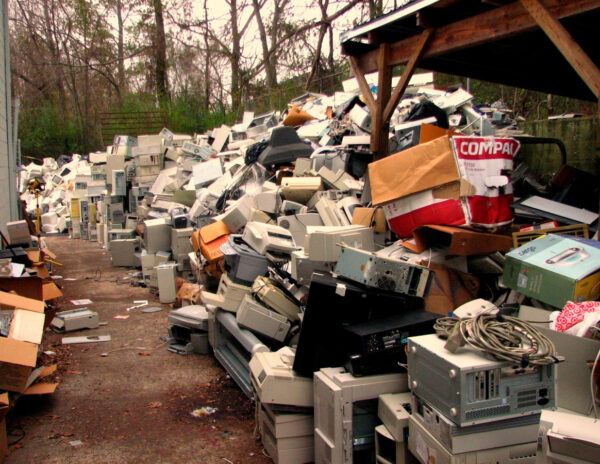
 We are heading towards a more tech-oriented future, but with the light of progress comes a looming darkness. The world is becoming increasingly saturated with tech waste, which is detrimental to our environment.
Reports indicate that as of last year, nearly half a billion small electronic components such as cables, lights, wires, and drives were discarded, and this number is highly concerning.
From charging bricks to USB-C cables, these “fast tech” items are a significant source of pollution, mainly because they are often single-use and, due to their low cost, people tend to replace them when damaged. Additionally, many of these products are not repairable, further exacerbating the waste problem.
The report even suggests that an average household accumulates around 30 unused electrical items that are simply collecting dust.
While these items may not be repairable, they contain materials that can be recycled at various stages.
Among the half a billion pieces of tech waste, there are 260 million disposable vapes, 30 million LED, solar, and decorative lights, 26 million cables, 10 million USB sticks, 7 million cordless headphones, and 5 million mini fans. The list goes on, but this should be a cause for concern.
Even beyond this massive e-waste, there are 9 billion kilograms of cables, toys, vapes, novelty clothing, and similar devices that are often not recognized as e-waste.
There should be more awareness campaigns, as people often dispose of these items without a second thought instead of recycling them.