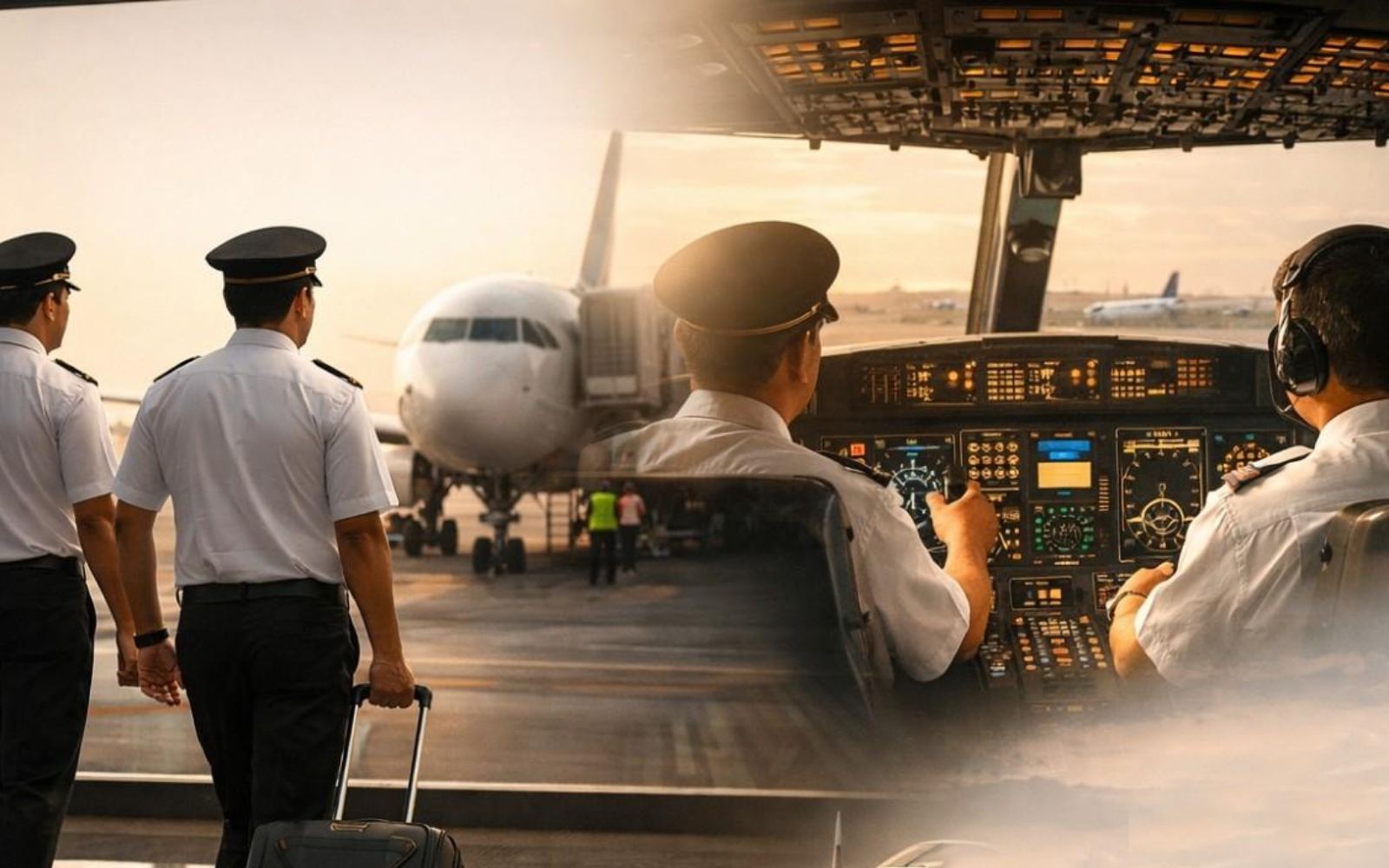
A parliamentary committee has flagged a serious shortage of pilots in India. The issue highlights structural gaps in the country’s fast growing aviation sector. Experts believe this could impact future operations.
The concern comes months after IndiGo faced a major crisis. The airline saw widespread delays and cancellations. Crew shortages and operational issues had disrupted travel across the country.
The committee noted that India’s pilot to aircraft ratio is around 14. This is much lower than the global benchmark of 18 to 20. Such a gap increases pressure on existing staff.
It also pointed out that Indian airlines operate with very limited buffer capacity. Global carriers usually maintain 20 to 25 percent spare crew. This helps them handle disruptions more effectively.
With no such buffer, even small issues can escalate quickly. Minor delays can turn into large scale disruptions. This makes the system more fragile.
Between 2020 and 2024, about 5,700 Commercial Pilot Licences were issued. This is below the projected demand of 7,000 pilots between 2024 and 2026. The gap is expected to widen further.
Over the next decade, India may need 25,000 to 30,000 pilots. This sharp rise in demand adds more pressure on training and recruitment systems. The current pace may not be enough.
Airlines are increasingly depending on foreign pilots. In 2025, around 236 temporary licences were issued. The committee has called this approach unsustainable in the long run.
The report also raised concerns about passenger rights. It recommended a proper legal framework for compensation, refunds and grievance handling. This is seen as a necessary step.
These findings reveal deeper systemic issues. Without urgent reforms in training and regulation, India’s aviation growth could face serious challenges in the coming years.