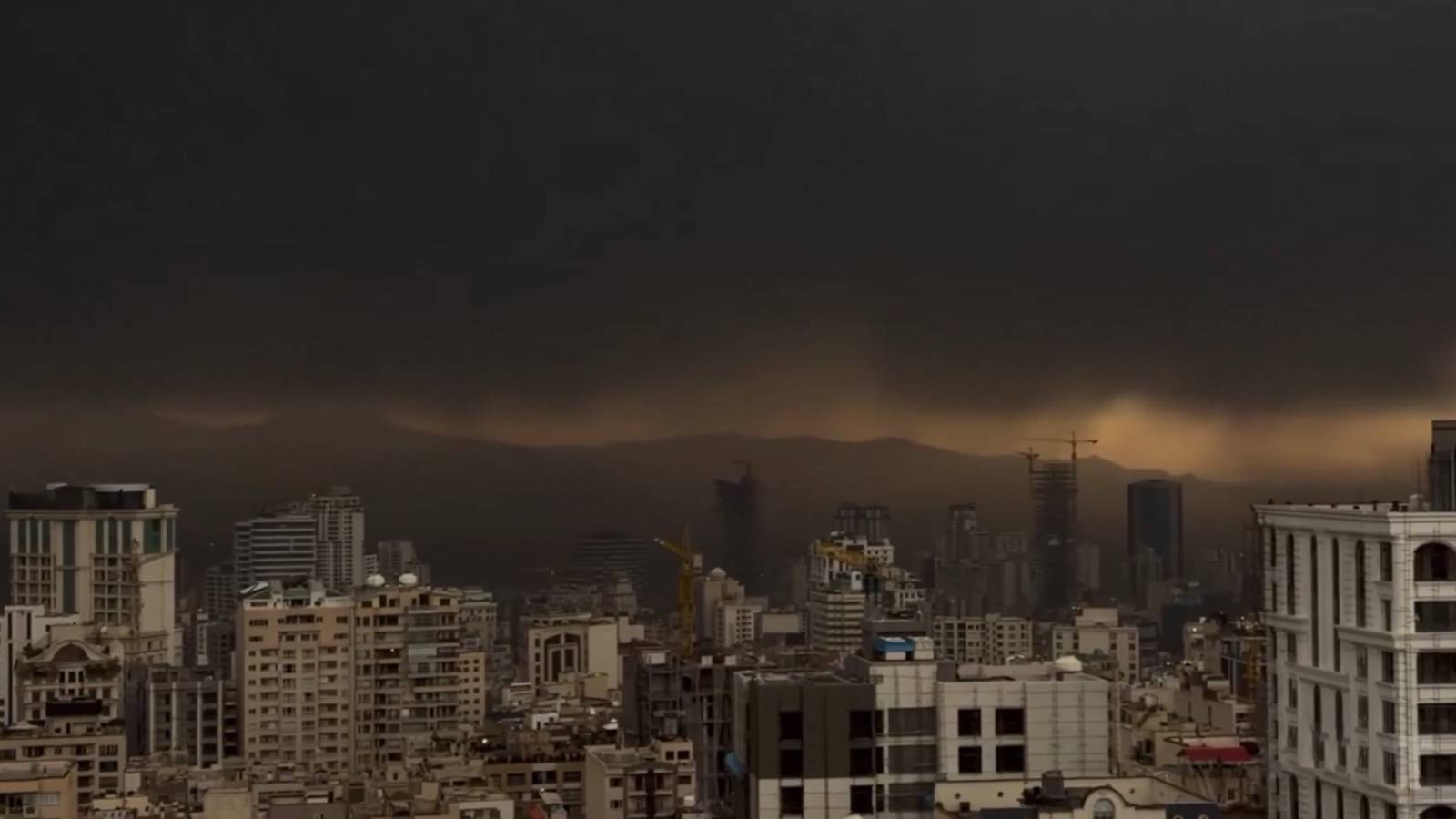
The ongoing conflict between the United States and Iran has already resulted in significant civilian casualties and injuries. Now, a recent airstrike targeting oil depots in Tehran has raised fresh health concerns for residents of the Iranian capital.
On Sunday, several people across Tehran reported an unusual black, oily rain falling in parts of the city. Videos shared online showed streets, rooftops and parked vehicles covered with a dark residue.
The phenomenon reportedly appeared after smoke clouds spread across the city. Reports suggest that US and Israeli strikes hit multiple large oil facilities in Tehran, releasing heavy smoke into the atmosphere.
One eyewitness who recorded the scene described the rainfall as “poison falling from the sky.” The footage quickly spread across social media platforms and drew global attention.
Iranian authorities later warned that the rainfall could contain pollutants released from burning oil infrastructure. Residents were advised to stay indoors and avoid direct contact with the rain.
Officials also reportedly closed several schools and workplaces as a precaution. The move was aimed at reducing exposure to the polluted air and contaminated rainfall.
Environmental agencies monitoring the situation said air samples near the targeted sites show high levels of pollutants. These pollutants can irritate the lungs and worsen breathing problems.
Doctors have warned that people with asthma or other respiratory conditions may face greater health risks. Prolonged exposure to polluted air could also lead to long term health issues.
The strikes have drawn criticism from several quarters. Critics argue that attacks on energy infrastructure and nearby civilian areas could increase environmental and health dangers.
Images and videos of the black rain are now spreading worldwide. The incident has intensified concerns about the human and environmental cost as tensions in the region continue to rise.
Thick black clouds and oil‑saturated rain are shrouding Iran’s capital this morning after major airstrikes hit refineries and storage sites south and west of the city. CNN’s Fred Pleitgen reports. CNN operates in Iran only with government permission. pic.twitter.com/Cv0EEHDwom
— CNN (@CNN) March 8, 2026