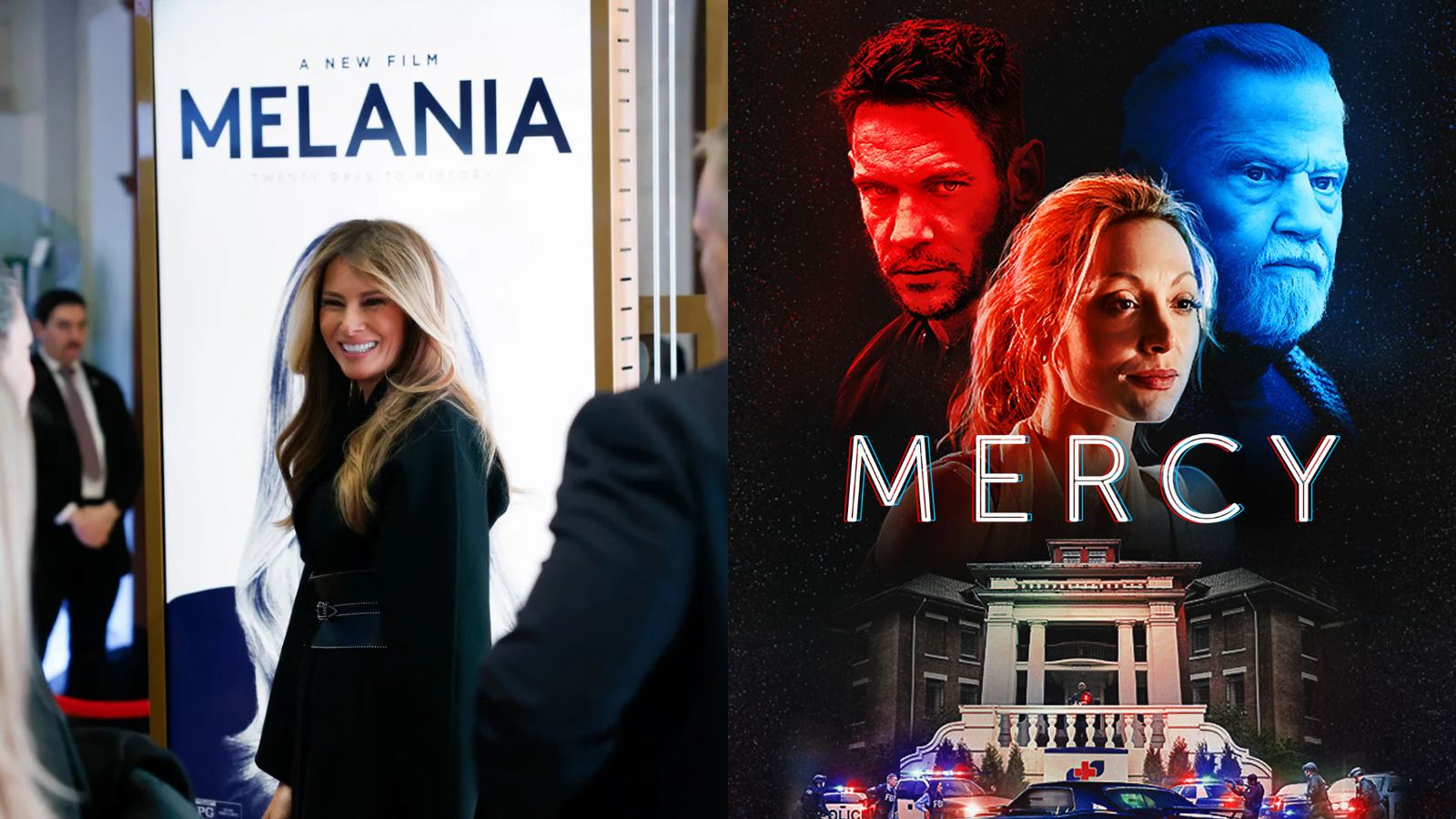
Amazon’s recent film slate is facing growing criticism, not for poor quality, but for the messages these films promote. Many feel the content is slowly shifting from critical storytelling to controlled narratives that shape public perception.
Two projects, the 2026 courtroom drama Mercy and the documentary Melania, highlight this trend. Both films appear to focus less on questioning power and more on managing how certain ideas and figures are presented.
Mercy portrays artificial intelligence as morally superior to human judgment. The film presents AI as calm and unbiased, while human judges are shown as emotional and unreliable.
This framing suggests that justice is best handled by algorithms. It avoids serious concerns like data bias, accountability, and who controls such systems, which makes the message feel one-sided.
Given Amazon’s investments in AI and government tech contracts, the film feels less like fiction and more like subtle promotion. Many viewers see it as a soft push towards trusting automated systems.
Melania follows a similar pattern in a different way. Though marketed as a documentary, it offers a carefully curated image of Melania Trump without meaningful critical analysis.
With strong corporate backing, the film appears more focused on image building than honest storytelling. It presents access without asking uncomfortable questions, which weakens its credibility as nonfiction.
Together, these films reflect a shift in mainstream cinema. Instead of challenging authority or exposing flaws, they smooth over issues and portray power as trustworthy and misunderstood.
This trend risks turning cinema into a tool for corporate and political messaging. When that happens, films lose their role as spaces for reflection, dissent, and independent thought.