BOTTOM LINE
Better, Assured Round Two, Even if Flawed
PLATFORM
Amazon Prime Video
RUNTIME
3 Hours (5 Episodes)
What Is the Show About?
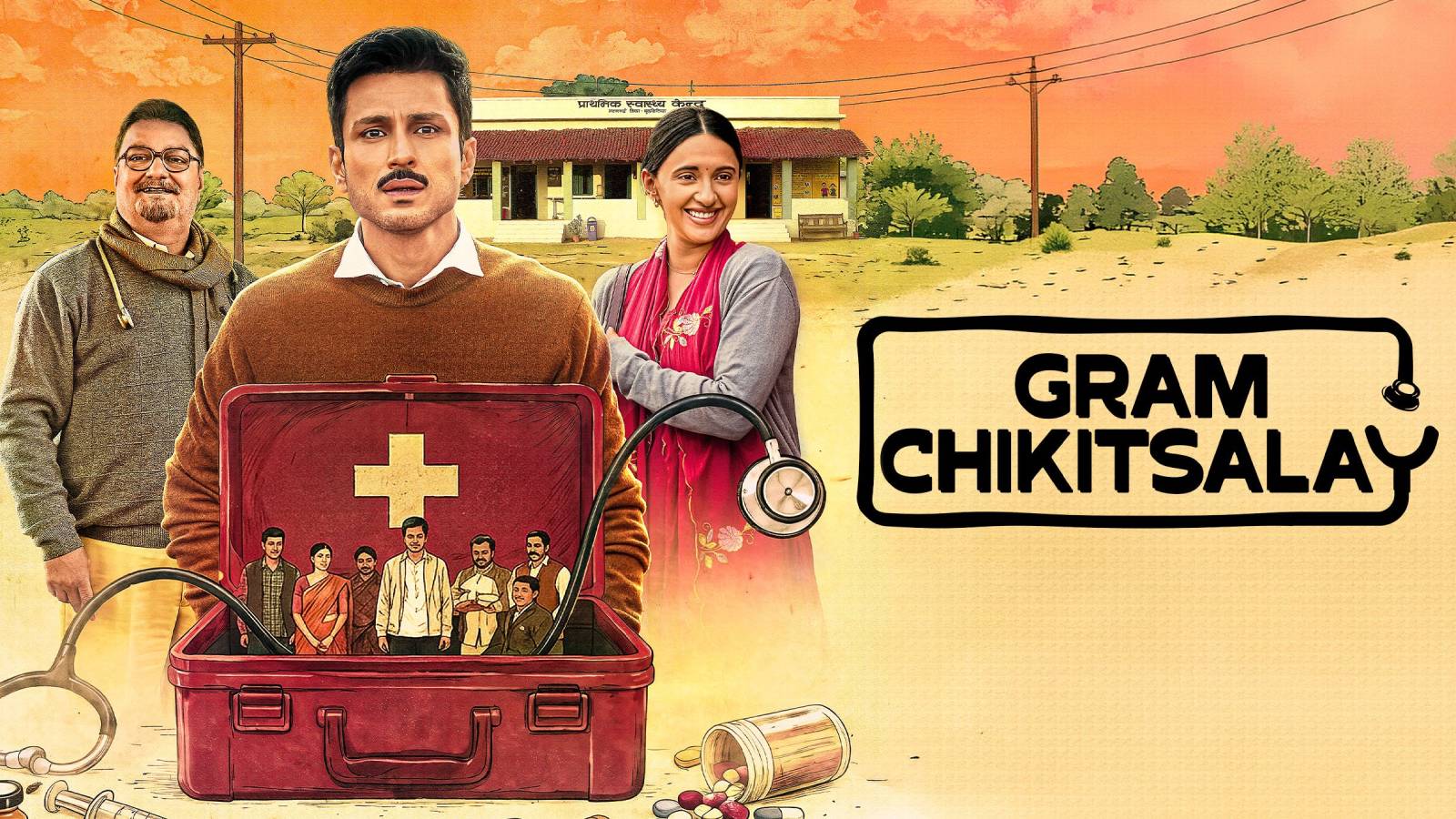
Dr Prabhat is a young doctor striving to revive the neglected PHC in rural Bhatkandi. As he aims for the Adarsh PHC Award, his rival Dak Sab tries hard to derail his efforts. When a life-saving emergency forces Prabhat and Gargi, his doctor friend in the village, to come together, they need to put their egos behind and stay true to the ethos of their profession.
Performances
Amol Parashar’s soft-boy, urban presence is tailor-made for the show’s laidback setting. He is sincere in portraying the character’s awkwardness and missteps while he finds his way in the village. As the bitter, middle-aged man facing a threat to his livelihood, Vinay Pathak brings believability to the part. At some level, he makes you understand why he makes those problematic choices.
Akanksha Ranjan Kapoor’s Gargi comes alive with the actor’s elegance and the gravitas she brings to her performance as a good-willed doctor, despite the writing limitations. Anandeshwar Dwivedi, Garima Vikrant Singh, and Akash Makhija as team Prabhat in the PHC do what is expected of them, playing real, flawed, and yet likeable roles.
Analysis
Gram Chikitsalay has been TVF’s dark horse, trailing behind its more popular titles like Kota Factory, Panchayat, and Gullak. Its first season was a slow starter, largely due to its undeniable similarities to Panchayat, particularly its depiction of a city-bred protagonist finding his way in a laidback village. Despite those comparisons, it managed to garner impressive viewership on Prime.
With the second season now out, the show needed to deliver on its own merit, rather than relying on the TVF brand or being viewed as a companion piece to Panchayat. It succeeds on that front. There is a newfound earnestness in the storytelling. Rather than focusing solely on a disillusioned protagonist, there is a concerted effort to paint an honest portrait of Bhatkandi.
Prabhat, this time, is no longer worried about his earlier life in a metropolis and is committed to making a mark with his PHC in the village. There is growing trust in the centre, even as it struggles to procure medicines for the patients. His friendship with fellow medico Gargi takes a new turn while they jointly compete for the Adarsh PHC Award, a bid that his rival Dak Sab tries to foil.
The season is driven by multiple subplots, including Dak Sab’s daughter striving to become a doctor, a ward boy going to great lengths to secure his job with a bribe, a middle-aged patient diagnosed with kidney stones, the stigma surrounding a woman’s reproductive health, and the plight of a child ostracised by the village for apparently being the son of a ‘witch.’
There are flawed people all around. Casteism and class hierarchy thrive in the region. Yet, the show isn’t about offering convenient solutions to all social ills, but about a group of characters who go about their jobs with integrity while paving a slow yet steady path for change. The writing showcases what everyone strives for without really judging them.
Even with his good intentions, the protagonist Prabhat is constantly called out for his privileged outlook towards the village. Gargi even reminds him that Bhatkandi needs a doctor more than a revolutionary.
If you can stomach the formulaic ‘outsider saves the village’ trope, the show is tailor-made for pleasant, easy viewing.
Prabhat does not enjoy the comfort of a good man emerging victorious towards the end. While Dak Sab appears the obvious bad, manipulative man in the story, karma catches up with him when his daughter is caught cheating in a college test. She even reminds him it is a byproduct of seeing her father at work, day after day, gaslighting his patients.
Though the soft treatment of a show set in a village on the cusp of change is understandable for the target audience it wants to cater to, it is disappointing that it does not call a spade a spade. It constantly makes its characters adapt to problems rather than really confronting them. It ultimately normalises deep-rooted issues, making a hero out of the protagonist for doing something basic.
Every show is meant to have its own grammar, though at some level, one wants it to be relevant to the times too. One wonders if the creators truly made an effort to mirror the ever-changing daily realities of small-town India. It could have been possible to retain its sleepy, slice-of-life vibe and still be more contemporary in its writing, rather than creating an escapist, easily digestible cocoon.
Gram Chikitsalay Season 2 is a definite improvement over the first. The canvas is compact, many more characters get space to breathe, and most subplots are rounded off convincingly enough. It has all the ingredients of a typical TVF show – sanitised, generic, and comfortable, even if not entirely realistic.
Music and Other Departments?
Composer Anand Bhaskar delivers a score that is simple, subtle, and equally vibrant, which nudges the narrative forward without trying hard to make its presence felt. The cinematography by Tribhuvan Babu Sadineni is easy on the eye and avoids anything showy; sometimes doing the basics is what matters. The writing is slightly simplistic, but the performances, compact runtime of the episodes, and the technical finesse help it sail through without much fuss.
Highlights?
Believable performances
Pleasant, feel-good viewing
Technically neat
Drawbacks?
Simplistic, at times lazy writing
Easy conflict resolution
Soft, sanitised treatment of complex issues
Did I Enjoy It?
Generally yes
Will You Recommend It?
If you’re in the mood for something light, feel-good
Gram Chikitsalay Season 2 Web Series Reviewed by M9 News