BOTTOM LINE
Smart Reimagining of a Typical Mafia Story
PLATFORM
Hoichoi
RUNTIME
2Hrs 40Mins (7 Episodes)
What Is the Show About?
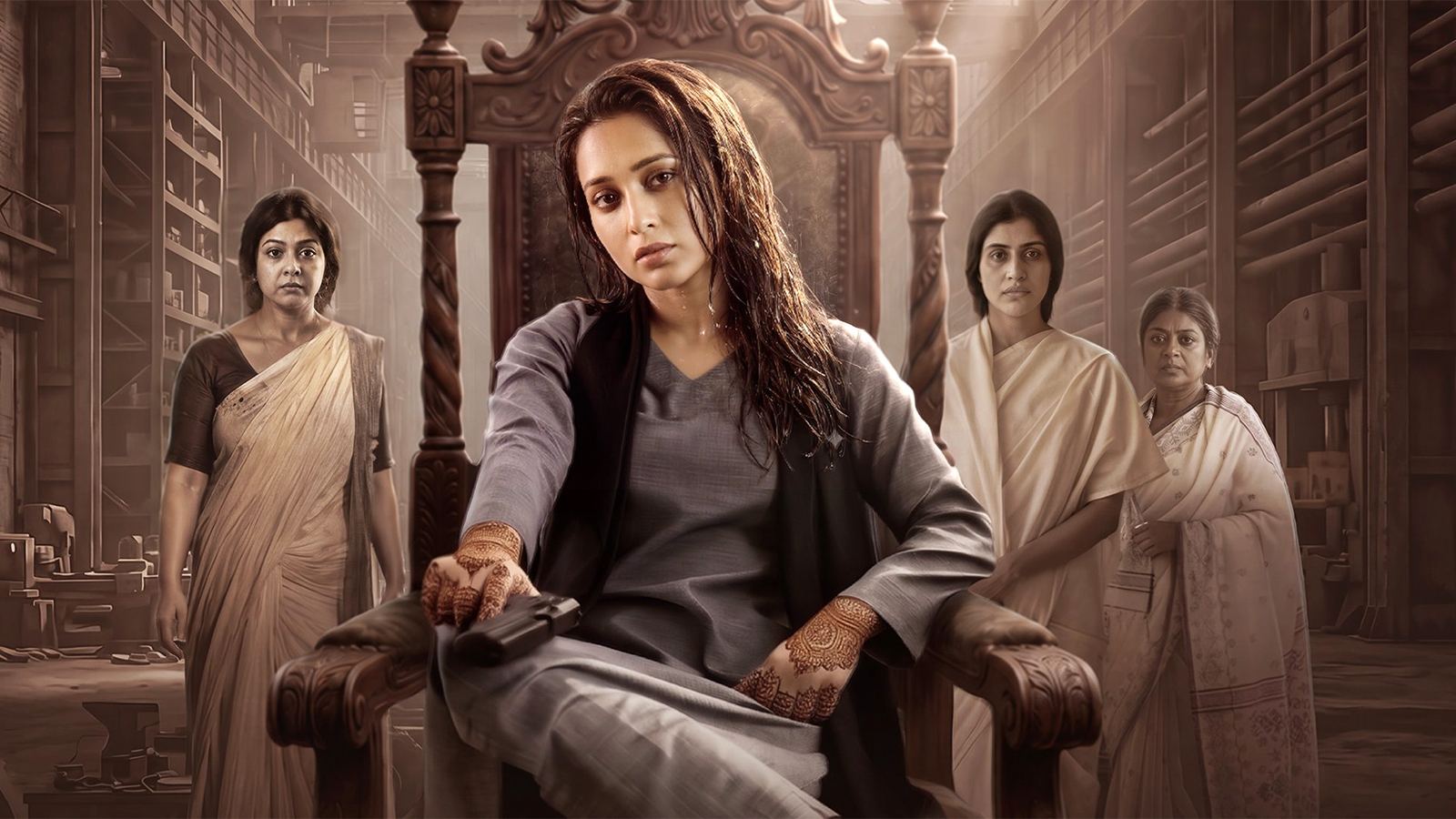
A brutal massacre on a wedding night orchestrated by Nilmoni Mishra destroys the Sarkar empire. Four grieving widows are left behind. Led by the pregnant Meera, these women refuse to bow down. In their bid for revenge, they hatch a plot to systematically dismantle Mishra’s power. They sacrifice everything to restore their legacy, where blood must answer blood.
Performances
Mimi Chakraborty leads from the front in an organically heroic role of a woman leading a valiant charge against her rivals. She looks agile, fit for the part and enjoys the attention that the story gives to her. Baisakhi Marjit, as the matriarch among the four widows, effectively serves as an emotional anchor to the story. She guides the women with assurance and plays her role gracefully.
One wishes Payal De and Debjani Singha had more to do with the revenge than Mimi alone. Durbar Sharma and Joydeep Mukherjee are the pick of the lot among the men, though they are cast in stereotypical roles as gangsters or goons. Arna Mukhopadhyay and Judhajit Sarkar are strictly okay.
Analysis
Queens is the second OTT release in Bengali this week (after Taarkata) about power, personal loss and revenge. It is, of course, a coincidence. Hoichoi’s show is a welcome surprise because, in times where stories have relentlessly milked female victimisation, it is a tale of four widows who do not let their tragedies define them. When survival is their only option, there is no right or wrong.
Spanning 7 episodes with a rough runtime of 25-30 minutes each, Queens gives you no time to settle down. It is an opulent wedding at the influential Sarkar household, and the bride is pregnant- news that the couple plans to announce after the marriage. Yet, the worlds of the four women in the house come to a grinding halt with a brutal shootout that kills the patriarch and his three sons.
Naturally, the women are so shaken that they are not in a position to respond. The killers, Sarkar’s arch rivals, are out in the open and believe his death has eliminated all the opposition in the crime empire. While it seems like the women are powerless, wailing in self-pity, it takes one ruthless emotional response to trigger their latent anger, and there is no stopping them henceforth.
Led by the youngest bride, Meera, they orchestrate the fall of the Mishras so strategically in an underworld setup where there are no second chances. What helps the show is its ability to highlight the emotional intelligence of its pivotal female characters, Meera, Sabitri, Jhuma, and Polly. They adapt and upstage the men in their own game, also because they have nothing to lose.
It is not that the women remain untested in their pursuit of vengeance. They hatch a plot clinically, at various levels, fully aware of their vulnerabilities. At every critical situation, when meek surrender seems to be the only option, the characters, Meera, in particular, come out all guns blazing. It also helps that they’re fighting a racket that exploits women from neighbouring countries.
One ‘mass’ moment that particularly stands out is the strategy that Meera adopts to free herself as she’s kidnapped, with a slow motion-shot signally clearly that the ‘boss is at work.’ It tells you that the filmmaker understands the grammar of populist cinema and flips the gender game smartly, without doing anything drastically different with the plot.
Beyond the fights between the Sarkar bahus and the Mishras, Queens also exposes how the marginalised or poor are used as convenient pawns in crimes. They are left with little choice and hope when the game is all about power and money. That moment where Sarkar’s wife stares at the security personnel’s daughter as she eats at her home explains the complex power hierarchy.
The show is not without its loopholes. Meera appears ever-ready to confront danger and seems to have a solution for everything. Even in life-threatening crises, she is a tad too cool for comfort (not that she should not be, but it could have been more believable). It is still commendable that her pregnancy in no way figures in her redemption plans, which actually contributes to the role’s authority.
The writers also could’ve done a thing or two about making the conflict resolution in the show more complex. Yet the final episode, in which the women, despite being at the mercy of the powerful men, have their say with minimal bloodshed, is impressive. As expected, the creators set the stage for a new season where the women look beyond survival and must sustain themselves in the game in the long run.
Queens is a smart feminist reimagining of a typical mafia story. The premise of victimised women emerging triumphant in a male bastion is naturally uplifting, indicating their sisterhood and resilience.
Music and Other Departments?
Composer Mainak Mazoomdar clearly understands the world in which the characters operate and ups the ante whenever necessary. While it may not be particularly memorable, it integrates seamlessly with the narrative, a key trait of an effective score. Cinematographer Prosenjit Chowdhury uses the exterior, live locations efficiently to enhance the raw action. The writing is generally precise, and the episodes are crisp enough to sustain interest.
Highlights?
Smart premise with the gender-flip
Precise, sharp writing sans much flab
Mimi Chakraborty’s performance
Drawbacks?
Meera (i.e. Mimi) being relatively unchallenged
Not all characters are well-etched
Simple, convenient resolution of conflicts
Did I Enjoy It?
Yes, though the story may not be new, the gender-flip gives it freshness
Will You Recommend It?
If you enjoy gangster/mafia stories set within the mainstream space and still offering something unique
Queens Hoichoi Bengali Series Reviewed by M9 News