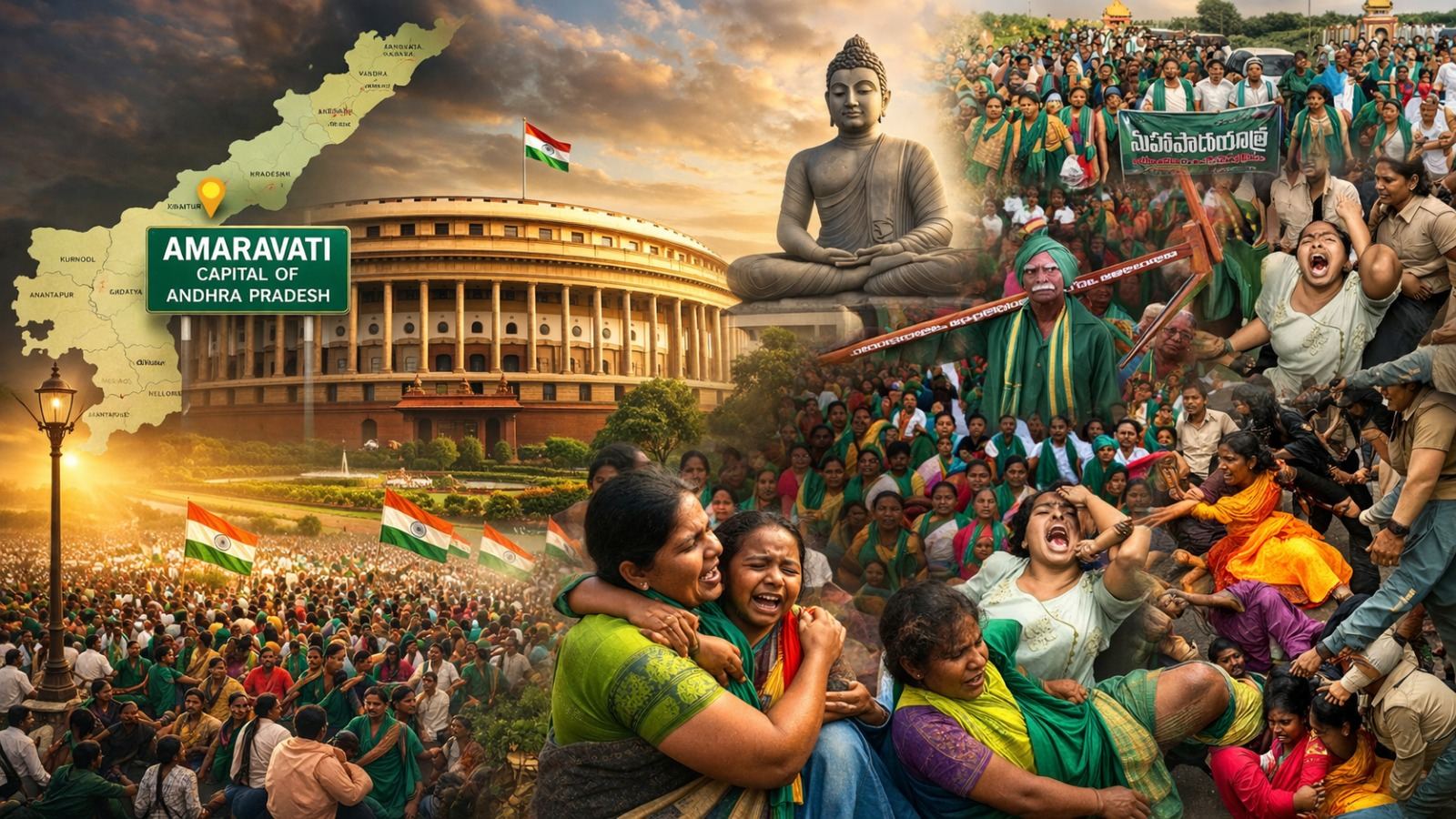
The Amaravati movement stands as one of the longest and most emotionally intense public struggles in recent Andhra Pradesh history. What began as a reaction to the three-capital proposal slowly turned into a sustained grassroots resistance, led not just by farmers, but powerfully by women who stood at the front for 1,631 days.
This was not a routine protest. It unfolded under constant pressure. Section 144, repeated arrests, late-night searches, and heavy police deployment turned capital region villages into controlled zones. Despite this, the movement did not lose momentum.
Women became the face of this resistance. From rallies to padayatras, they stayed on the ground through every phase. Incidents involving police action, clashes, and reported mistreatment only strengthened their resolve rather than weakening it.
The human cost of the movement was significant. Reports indicate that around 270 individuals, including farmers and agricultural workers, lost their lives during the course of the agitation. Each loss added emotional weight, but the protests continued without pause.
Legal pressure formed another layer. Hundreds of cases were reportedly filed against protestors, including women and elderly participants. In several instances, individuals faced multiple cases. Even strict legal provisions were invoked, reflecting the scale of the crackdown.
Yet, the movement largely remained peaceful. Whether it was the “Nyayasthanam to Devasthanam” padayatra or long marches like Amaravati to Arasavalli, protestors chose endurance over confrontation. Even during moments of tension, escalation was avoided.
What makes this movement stand out is its discipline and continuity. It survived political changes, administrative barriers, and fatigue. For many involved, Amaravati was not just about a capital city. It was about identity, livelihood, and trust in governance.
In the end, the Amaravati movement is not defined only by politics. It is defined by persistence. By the ability of ordinary people, especially women, to stay committed for years and continue a fight they believed in without stepping back.