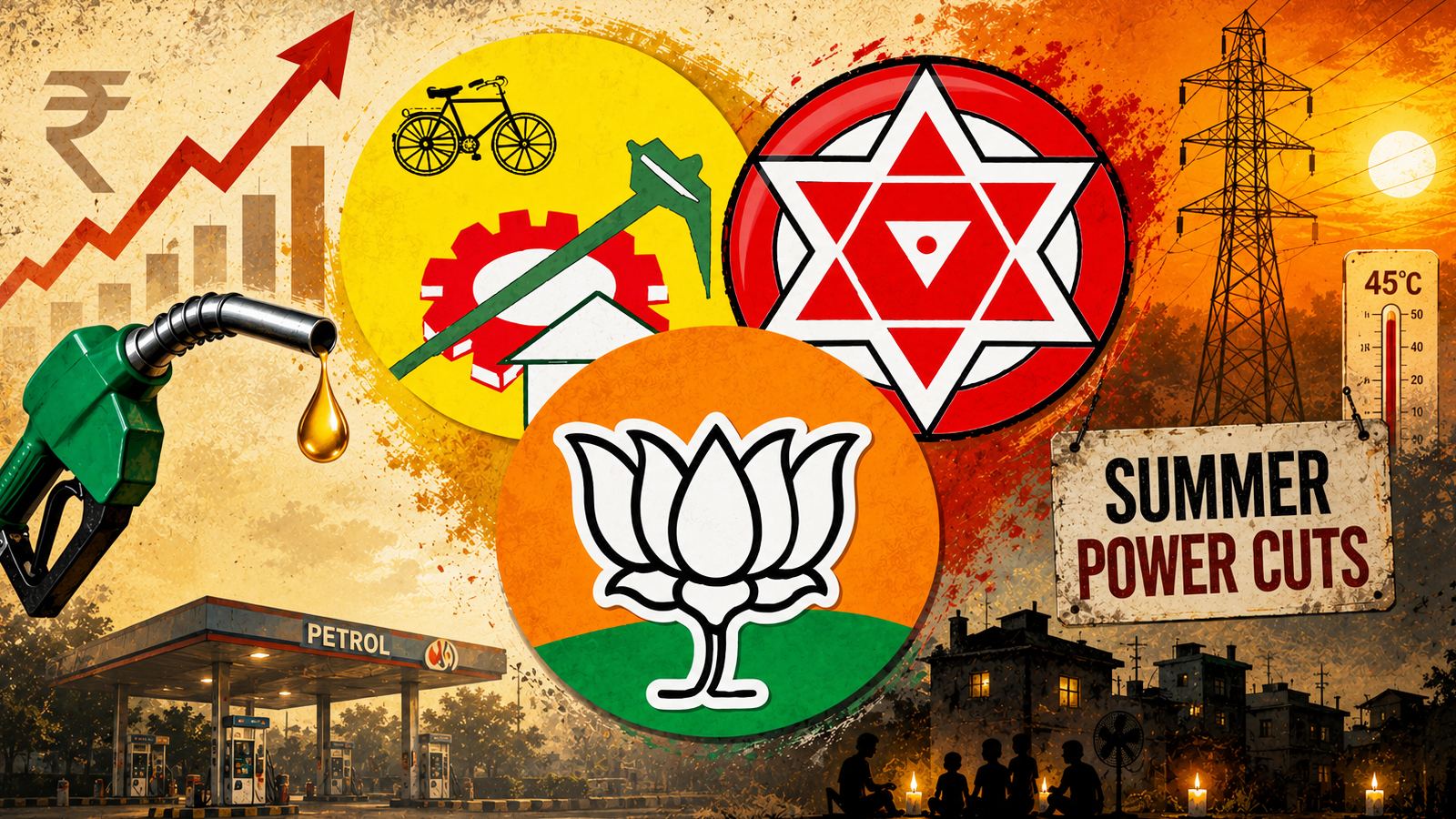
The frustration simmering on the ground in Andhra Pradesh is completely real, and it touches on the rawest nerve of regional politics. No matter how complex global crude oil shocks or supply chain disruptions are, an ordinary citizen walking into a fuel station or sitting in a dark, humid room during a heatwave doesn’t care about macroeconomic context. They care about relief. With petrol in cities like Guntur and Vijayawada crossing the agonising ₹117-per-litre mark, solidifying Andhra Pradesh as the state with the highest fuel prices in the country, the financial pinch is immediate.
When you add erratic summer power disruptions to this financial strain, the political atmosphere becomes highly volatile. Public memory is notoriously short, and the initial goodwill of a historic electoral mandate can evaporate rapidly under the heat of a harsh summer. Historically, erratic utility management and soaring living costs have been the definitive catalysts that topple mighty coalitions in the state. If a government cannot keep the basic daily necessities of its electorate affordable and stable, it hands the opposition a tailor-made, emotionally charged narrative on a silver platter.
However, labeling this as the definitive end of days for the ruling Kutami alliance is premature. While power grid officials are currently scrambling behind the scenes to manage unprecedented, history-making peak demands of over 15,000 MW amid 46°C heatwaves, the government’s political survival depends entirely on their next administrative moves. If the leadership aggressively absorbs these financial shocks, restructures local fuel cesses, and forces grid stability over the next few weeks, they can weather the storm. If they fail to provide that visible relief, the countdown to a severe anti-incumbency wave will officially begin.